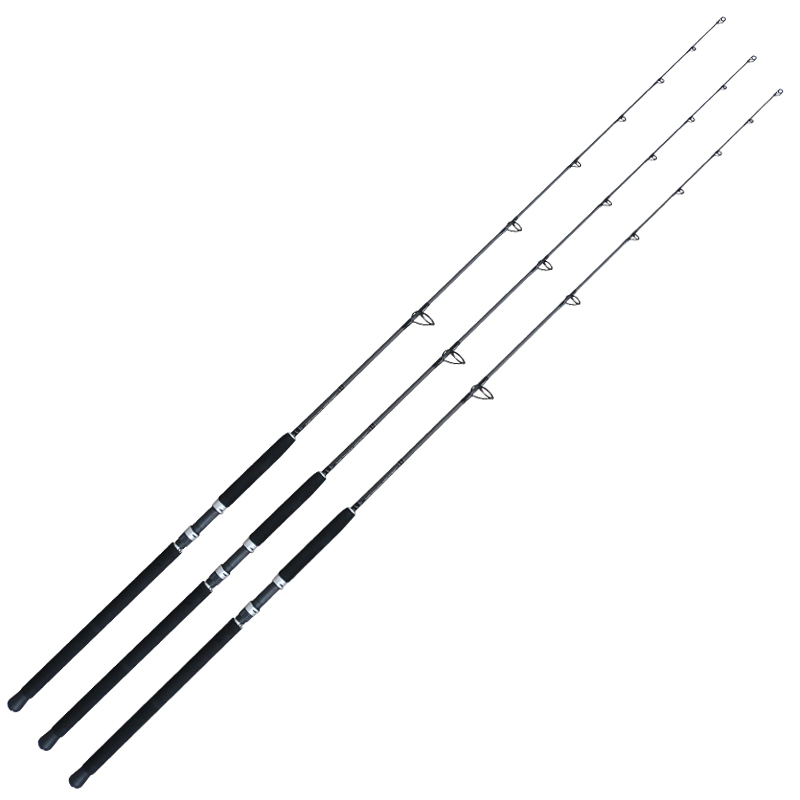
Offshore topwater fishing pushes both angler and equipment to their absolute physical limits. Throwing heavy, wind-resistant lures to aggressive pelagic species like Bluefin Tuna and Giant Trevally requires highly specialized tackle. The environment is unforgiving. The mechanics of the sport demand a tool balancing extreme casting distance with punishing lifting power. When a 100-pound predator smashes a surface lure on tight braided line, the initial shock-loading is violent. Equipment failure in these moments is a high probability if the gear is not purpose-built.
A standard saltwater fishing rod routinely fails under these specific demands. Anglers attempting to use generic heavy-action blanks frequently experience shattered graphite, pulled hooks, severe physical fatigue, and poor lure presentation. The buying decision for offshore tackle hinges entirely on matching blank material, precise PE ratings, and component durability to specific target species and lure weights.
Blank Construction is Paramount: A high-quality carbon popping rod offers the necessary recoil for casting heavy lures while maintaining the backbone required to break the spirit of deep-diving pelagics.
Action Dictates Presentation: Moderate-fast to parabolic actions are required to properly "chug" large poppers or sweep stickbaits without ripping hooks out of the fish's mouth.
Component Integrity is Non-Negotiable: Heavy braid (PE5-PE10) and high drag pressures demand double-footed, under-wrapped guides (e.g., Fuji SiC) and heavy-duty locking reel seats.
Beware the Crossover Compromise: While dual-purpose jigging/popping rods exist for budget-conscious anglers, they inherently compromise casting distance and lure control compared to dedicated offshore popping setups.
Why a Dedicated Poping Rod is Mandatory for Offshore Topwater
The Mechanics of Topwater Lure Presentation
Working large cup-faced poppers and heavy sinking stickbaits requires precise energy transfer from the angler to the lure. Offshore topwater lures typically weigh between 30g and 150g. Some extreme GT poppers exceed 200g. Moving these heavy payloads through the air and across the water surface demands specific blank dynamics. A specialized rod tip must absorb the immediate shock of the pop while transferring enough kinetic energy down the line to displace massive amounts of water. The lure needs to grip the surface and throw a geyser of water to trigger a predatory response.
When you attempt this with a generic boat rod, the results are highly inefficient. If the tip is too stiff, the lure skips and tumbles across the surface, failing to create the necessary sonic footprint. If the blank is too soft, it absorbs your sweeping motion. The rod feels mushy and fails to drive the popper through the water column. A dedicated blank features a finely tuned tip section that loads progressively. This allows you to impart rhythmic, aggressive sweeps without exhausting your arms and shoulders within the first hour of casting.
Sinking stickbaits require a different mechanical approach than cup-faced poppers. You need a tip that recovers instantly after a long sweep to pick up slack line. A slow-recovering blank leaves bows in the braid, causing missed strikes when a fish hits on the pause. The carbon matrix must snap back to straight immediately, keeping you in direct contact with the lure at all times.
Structural Demands of the Strike and Fight
The moment a pelagic fish strikes a topwater lure, the structural integrity of the rod is instantly tested. Offshore topwater fishing exclusively utilizes braided line with near-zero stretch. The rod blank must absorb 100% of the initial shock-loading. A GT striking a popper at full speed creates a violent impact that will instantly shatter inferior graphite.
Beyond the strike, the rod must transition seamlessly from a responsive casting tool into a rigid lever. As the fish dives, the load moves down the blank. The upper third of the rod yields to protect the line and keep the hooks pinned. The lower two-thirds lock up to provide lifting power. This transition zone is the hallmark of premium offshore engineering. It allows you to lift dead weight from the depths, applying maximum pressure to the fish while minimizing the torque transferred to your lower back.
If a rod bottoms out—meaning it bends completely into the handle and has no more lifting power to give—the angler loses all mechanical advantage. The fish dictates the fight. Purpose-built blanks are designed to retain a reserve of power in the bottom 20 inches, ensuring you can always turn a fish's head when it nears the boat.
Core Evaluation Dimensions for an Offshore Poping Rod
Blank Material: The Role of the Carbon Popping Rod
The foundation of any serious offshore setup is the blank material. Historically, heavy saltwater rods relied heavily on fiberglass composites for durability. While glass is nearly indestructible, it is exceptionally heavy, thick, and suffers from slow recovery rates. In topwater fishing, where you may cast blindly for hours, the physical weight of a glass rod induces severe fatigue.
Modern offshore applications rely on the carbon popping rod. High-modulus carbon fiber blends offer superior casting distance, drastically reduced weight, and lightning-fast tip recovery. The crisp nature of carbon allows for explosive casts that punch through coastal winds. High-modulus carbon is inherently brittle under extreme bending loads. To counteract this, manufacturers utilize advanced resin technologies, such as Nano-alloy matrices. These specialized resins fill the microscopic voids between the carbon fibers, preventing shear failure and allowing the blank to bend under 30 to 40 pounds of drag pressure without fracturing.
The manufacturing process involves wrapping multiple layers of carbon prepreg at opposing angles. This cross-wrapping technique prevents the blank from twisting under heavy torque. When a 150-pound tuna makes a sudden run under the hull, the rod resists twisting out of your hands, keeping the guide train aligned with the line path.
Length and Action Trade-Offs
Selecting the correct rod length involves navigating a strict compromise between casting distance and mechanical leverage. The optimal length window for offshore topwater applications sits tightly between 7'6" and 8'6".
8'3" to 8'6" Models: Generate higher tip speeds, resulting in superior casting distance. They provide better line clearance over the boat's gunwales and outboard motors when a fish makes a sudden boat-side dash. Best suited for open-water casting where distance is the primary goal.
8'0" Models: The industry standard all-rounder. Balances casting distance with manageable lifting power. Ideal for anglers who need one rod to handle multiple scenarios.
7'6" to 7'10" Models: Sacrifice some casting range but offer a massive mechanical advantage during the fight. Preferred for targeting massive fish where lifting power supersedes casting distance.
The inverse relationship between rod length and angler leverage is a basic physics concept. A longer rod acts as a longer lever against you. When lifting a stubborn Tuna from deep water, an 8'6" rod exerts significantly more pressure on your back than a 7'6" rod. Regarding action, a moderate-fast taper is the industry standard. This action provides the necessary shock absorption to prevent heavy-gauge hooks from tearing out of the fish's mouth during violent headshakes, while still offering a crisp enough tip to work large lures effectively.
Decoding PE Ratings, Lure Weights, and Hook Synergy
Offshore rods utilize the Japanese PE (Polyethylene) rating system rather than standard pound-test ratings. The PE rating measures the diameter of the braided line, which directly correlates to the rod's power class and intended application.
Understanding the synergy between the rod's power, the heavy braid, and the terminal tackle is essential. Driving thick, heavy-gauge treble or single hooks into the bony jaws of a GT requires immense force. If the rod is too soft, the blank will bottom out before sufficient pressure is transferred to the hook point, resulting in pulled hooks. The stated lure weight range must be strictly observed. Matching the lure weight to the rod's sweet spot ensures the blank loads fully during the backcast, utilizing the carbon's natural recoil to launch the lure rather than forcing you to muscle the cast.
Offshore PE Rating and Application Matrix
| PE Rating | Approximate Braid Strength | Optimal Lure Weight | Primary Target Species | Typical Drag Setting |
| PE 4 - 5 | 50lb - 65lb | 30g - 80g | Mahi, Yellowtail, School Bluefin | 12lb - 18lb |
| PE 6 - 8 | 80lb - 100lb | 80g - 150g | Large Yellowfin, Mid-size GT | 18lb - 25lb |
| PE 8 - 10+ | 100lb - 130lb+ | 130g - 200g+ | Monster GT, Giant Bluefin | 25lb - 35lb+ |
Component Specifications That Drive Reliability
Guide Trains Built for Heavy Braid
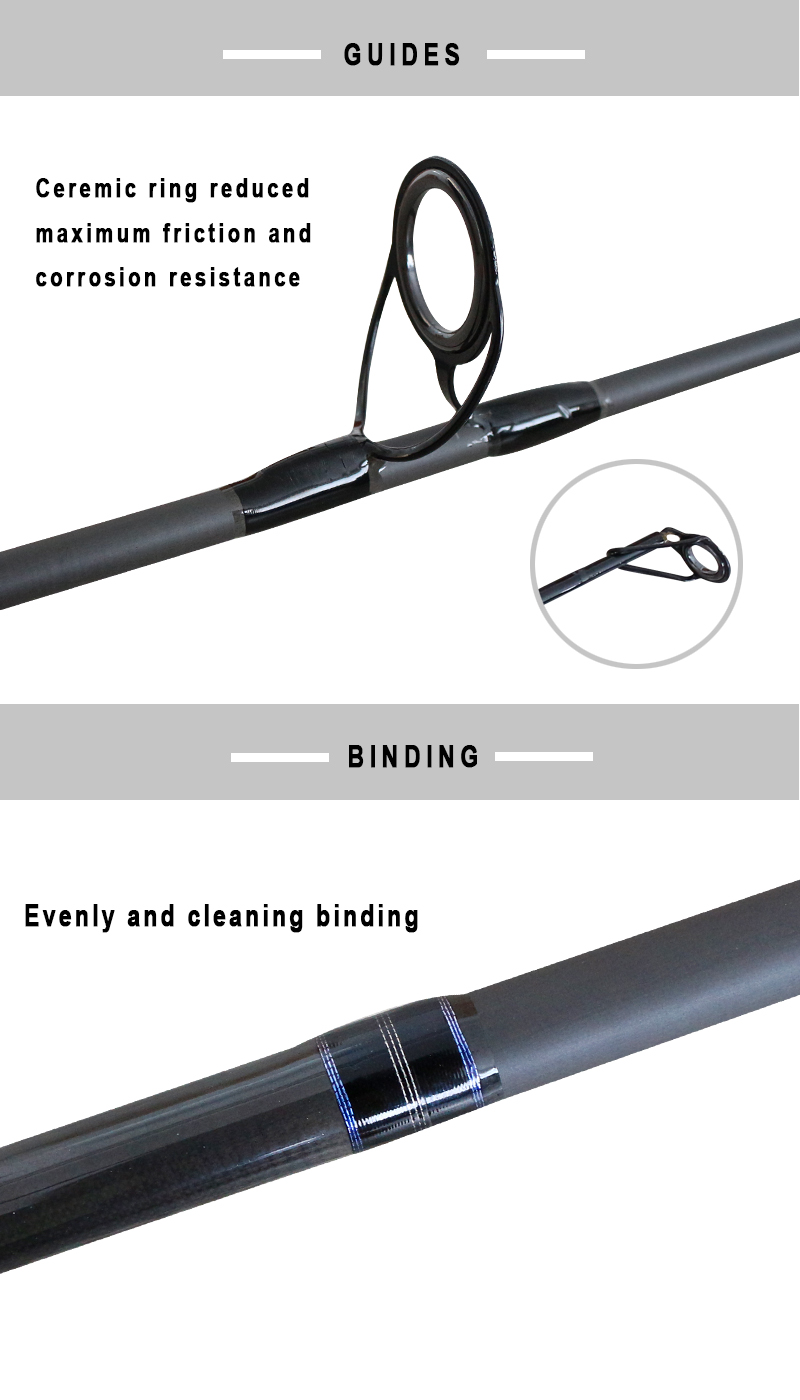
The guide train on an offshore rod dictates how well the system handles heat and friction. Standard single-foot guides will fail catastrophically under offshore topwater conditions. The pressure of heavy braid sawing back and forth under 25 pounds of drag causes grooving in cheap inserts, bends weak frames, and frequently pops inserts right out of their housings.
The baseline requirement for this application is a set of double-footed, heavy-duty guides. Frames such as the Fuji MN or KW series are engineered to prevent line tangles and withstand immense crushing forces. The inserts must be highly polished, heat-dissipating materials like Silicon Carbide (SiC) or Torzite. The guides must be secured with double or triple under-wrapping. This technique involves wrapping a layer of thread directly onto the blank before seating the guide on top. Under-wrapping provides a critical cushion, preventing the rigid metal feet of the guides from digging into and crushing the carbon blank when the rod is bent into a deep parabolic arc.
Guide sizing is equally important. Offshore anglers rely on heavy wind-on leaders connected via bulky knots like the FG knot or PR knot. The stripper guide and running guides must have a large enough ring diameter to allow these knots to pass through cleanly during a high-speed cast. If the guides are too small, the knot will catch, resulting in wind knots, damaged guides, or snapped lines.
Reel Seats and Grip Ergonomics
The reel seat is the critical junction between you, the rod, and the reel. Large offshore spinning reels generate massive torque during a fight. Standard plastic reel seats will flex, twist, and eventually crack under this rotational force. A heavy-duty DPS style reel seat with thick locking nuts is mandatory. Many premium models feature double locking nuts to ensure the reel remains absolutely immobilized during hours of casting and fighting.
Grip ergonomics directly impact your stamina. High-density EVA foam is the preferred material, offering extreme durability and a secure grip even when covered in saltwater and fish slime. The foregrip must be sufficiently long and thick to allow you to apply maximum lifting pressure with both hands when necessary. The butt section should feature a heavy-duty gimbal, allowing the rod to lock securely into a fighting belt. This stabilizes the setup and transfers the load from your arms to your core.
Categorizing Poping Rods by Target Species and Application
The Versatile Beginner/All-Rounder Profile
For anglers entering the offshore topwater arena, selecting the first setup can be daunting. The ideal entry-level Poping Rod is typically an 8-foot model rated for PE5 line, capable of throwing lures in the 30g to 100g range. This specific profile offers maximum versatility.
This mid-weight specification allows you to target a multitude of saltwater species, including school-sized bluefin tuna, mahi-mahi, yellowtail, and roosterfish. It provides enough backbone to control respectable fish without forcing you to over-commit to a punishing, ultra-heavy PE10 setup. A PE5 rod is light enough to cast all day with minimal fatigue, making it the perfect tool for learning the mechanics of working stickbaits and poppers effectively.
Tuna and Pelagic Profiles
Targeting large Tuna requires a specific blank action due to the species' fighting behavior. Tuna are deep-sounding fish that utilize their massive pectoral fins to swim in tight, vertical circles directly beneath the boat. Fighting a Tuna is a pure test of endurance.
The success criteria for a Tuna-specific rod mandate a blank that bends deeper into the lower sections. A parabolic action acts as a massive shock absorber. By yielding further down the blank, the rod relieves significant pressure from your lower back and arms. This deep flex maintains constant, unrelenting pressure on the fish, slowly breaking its spirit during prolonged, vertical sounding fights without exhausting you.
Giant Trevally (GT) and Reef Predator Profiles
The requirements for targeting Giant Trevally are the exact opposite of Tuna fishing. GTs are ambush predators that strike violently and immediately attempt to power back into sharp, shallow reef structures to cut the line. The fight is won or lost in the first thirty seconds.
A GT-specific rod features a much stiffer lower section. The blank must shut off quickly, providing immediate, aggressive stopping power. You must be able to lock down the drag and physically halt the fish's forward momentum before it reaches the coral. These rods are brutal on the body, prioritizing maximum leverage and raw lifting power over comfort.
The Jigging/Popping Crossover Myth
A common pain point for many anglers is the desire to consolidate gear. Those who do not fish offshore frequently often seek a single rod capable of both vertical jigging and topwater casting to avoid purchasing two separate premium setups. This leads to the jigging/popping crossover myth.
The technical trade-offs of a crossover setup render it highly inefficient for serious offshore applications. Vertical speed jigging requires short rods, typically between 5'6" and 6'6", to maximize vertical leverage and minimize the physical effort required to work heavy metal jigs. These short lengths are fundamentally incapable of generating the tip speed required for long-distance casting. An 8-foot popping rod is far too long and cumbersome for effective vertical jigging. Investing in a dedicated offshore popping rod prevents costly tackle failure, ensures proper lure presentation, and drastically reduces the number of lost fish.
Implementation Risks and Angler Fatigue Mitigation
The Danger of High-Sticking
One of the most common causes of catastrophic rod failure in offshore fishing is angler error, specifically high-sticking. High-sticking occurs when you bring the rod past a 90-degree angle relative to the position of the fish. This typically happens at the boat side when you raise the rod high into the air in an attempt to lift the fish closer to the gaff.
High-end carbon blanks are engineered to distribute heavy loads evenly across the entire length of the rod. When a rod is high-sticked, the load distribution is bypassed. The entire weight of the fish is concentrated into the top 12 to 18 inches of the tip section. Because high-modulus carbon is stiff and lacks the extreme flexibility of fiberglass, this concentrated force will cause the tip to shatter instantly. You must maintain a rod angle of 45 to 60 degrees during the end-game, using short, controlled pumps to bring the fish to the surface.
Balancing the Setup with Premium Reels
A premium rod is only as effective as the reel it is paired with. Balancing the setup is critical for mitigating angler fatigue. The physical weight of the rod must be counterbalanced by the weight of the reel. A setup that is heavily tip-heavy will place constant strain on your wrist and forearm during hours of blind-casting. A butt-heavy setup feels sluggish and unresponsive.
Matching the rod to a high-end, high-drag offshore spinning reel is non-negotiable. Reels in the 14000 to 18000 class are required to ensure the reel's drag capacity and line retrieval rate match the rod's lifting power. A PE8 rod capable of applying 30 pounds of lifting force is useless if paired with a mid-tier reel whose drag washers melt or whose main gear strips under 15 pounds of pressure. The entire system must operate in perfect mechanical harmony.
Conclusion
Define your primary target species and average lure weight before looking at rod specifications to ensure you select the correct blank action.
Audit your current offshore spinning reels to verify they have the drag capacity and rigid frame construction required to balance a heavy-duty popping blank.
Select a high-visibility, multi-color PE braid that matches the rod's exact PE rating to maximize casting distance and prevent blank failure.
Practice tying low-profile connection knots, such as the FG knot, to ensure your heavy wind-on leaders pass cleanly through the double-footed guide train.
FAQ
Q: What is the best length for an offshore popping rod?
A: The optimal length is between 7'6" and 8'6". An 8-foot rod provides the best all-around balance, offering sufficient tip speed for long casting distances while maintaining manageable mechanical leverage for the angler during a heavy fight.
Q: Can I use a jigging rod for topwater popping?
A: No, using a jigging rod for popping is highly inefficient. Jigging rods are short to maximize vertical leverage, making them incapable of generating the casting distance required for topwater fishing. Dedicated popping rods require longer lengths and specific tip actions.
Q: What does a PE8 rating mean on a popping rod?
A: A PE8 rating refers to the Japanese Polyethylene line sizing system. It indicates the rod is designed to handle PE8 braided line, which roughly correlates to 80lb to 100lb breaking strain. It signifies a heavy-power rod built for large pelagics.
Q: Why do popping rods need double-footed guides?
A: Offshore popping rods operate under extreme drag pressures. Standard single-foot guides will bend, twist, or snap under the heavy friction and load of tight braided line. Double-footed guides provide the structural rigidity necessary to withstand these crushing forces.
Q: How do I prevent high-sticking a carbon rod?
A: Never raise the rod past a 90-degree angle relative to the fish. Keep the rod between 45 and 60 degrees, especially when the fish is close to the boat. Use short, controlled pumps and rely on the reel's drag.
Q: What is the difference between a GT rod and a Tuna rod?
A: A Tuna rod features a parabolic action that bends deeply into the blank, acting as a shock absorber to relieve fatigue during vertical fights. A GT rod has a stiffer lower section to provide immediate stopping power near shallow reefs.

