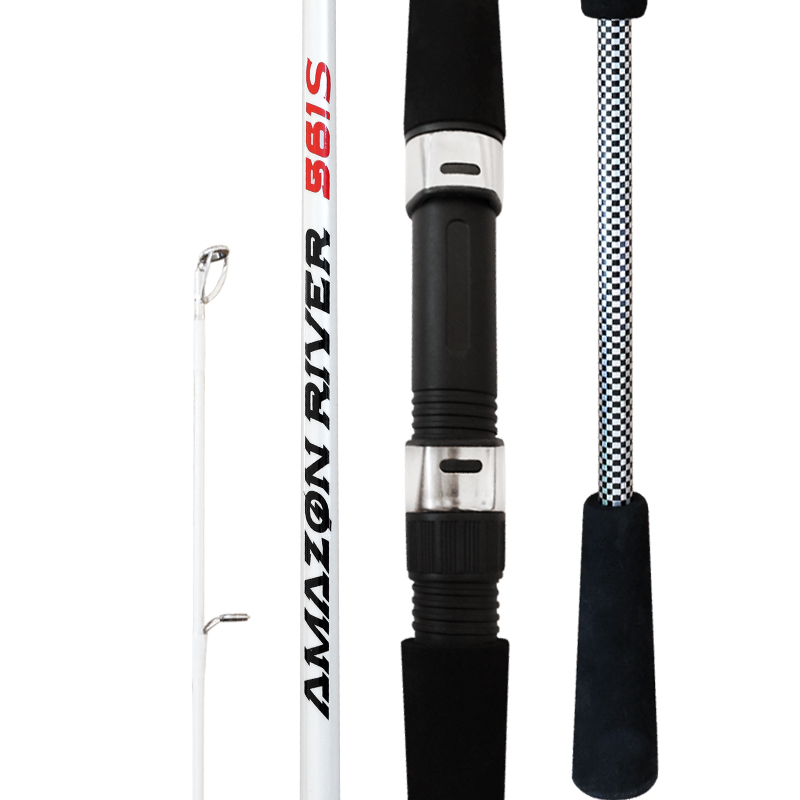
The mechanical reality of rod failure often becomes apparent at the worst possible moment—during the sustained, dynamic stress of fighting a heavy, powerful game fish. When a blank snaps under pressure, it rarely stems from a single flaw. Instead, it results from a combination of material limitations, structural fatigue, and applied force exceeding the design parameters. Anglers targeting large species must balance the absolute necessity of lifting power and structural durability against the realities of angler fatigue, rod weight, and tactile sensitivity. Selecting the right equipment requires looking past marketing claims and understanding the physical properties of the materials used in blank construction.
An objective, engineering-focused breakdown of how different blank materials perform under maximum stress is required to select a Fishing Rod that will not fail under critical loads. Whether winching bottom fish from deep reefs or stopping pelagic species on long runs, the structural integrity of the blank dictates the outcome of the fight. Different materials handle compression, tension, and impact in vastly different ways, making material selection the most critical factor in heavy-duty angling.
Fiberglass remains the industry benchmark for sheer durability and surviving catastrophic load angles, requiring minimal maintenance though introducing a significant weight penalty.
A purpose-built carbon fiber fishing rod offers superior strength-to-weight ratios and sensitivity, but requires strict adherence to proper fighting angles and protective care to avoid brittle fractures.
Composite materials (glass and graphite blends) provide the most pragmatic middle ground, offering a sensitive tip section backed by a high-durability lifting core.
Material selection must be dictated by the specific application—sustained offshore trolling demands different structural tolerances than casting a heavy-duty freshwater spinning rod in dense cover.
Defining "Heavy Loads" and Rod Failure Mechanics
The Physics of Rod Stress
Understanding rod failure requires distinguishing between static and dynamic loads. A static load involves deadlifting a consistent weight, such as pulling a heavy sinker straight up from the bottom. Dynamic loads occur during sudden runs, violent head shakes, or boat-side surges where the force applied to the blank multiplies instantly. These shock loads test the absolute limits of the material's tensile strength and flexibility. When a fish surges, the rod must flex to absorb the energy, transferring the stress down the blank toward the thicker, stronger butt section.
Hoop strength plays a critical role in a blank's survival. This refers to the rod's resistance to ovalizing and collapsing under compression when bent. As a hollow tubular blank flexes, the outer curve stretches (tension) while the inner curve compresses. If the hoop strength is insufficient, the circular cross-section flattens into an oval, leading to an immediate buckling failure. Raw blank wall thickness and material mass serve as direct indicators of load capacity. Thicker walls inherently resist ovalization better than thin-walled designs, which is why heavy-duty blanks prioritize material volume over weight reduction.
Under extreme stress, specific zones on the blank become highly vulnerable. We can categorize these common failure points into three distinct areas:
Ferrule Joints: In multi-piece rods, these represent structural interruptions where stress concentrates heavily during a deep bend.
The Transition Zone: The area near the tip section often fails if the load does not transfer smoothly to the mid-section, especially during sudden shock loads.
The Fulcrum Point: The blank area directly above the reel seat acts as the primary pivot during heavy lifting. If the wall thickness here cannot support the leverage applied by the angler, the blank will shatter.
High-Sticking vs. Material Limits
Differentiating between inherent material defects and user-induced failures is essential for evaluating rod durability. True material defects—such as resin voids, uneven fiber distribution, or delamination—usually reveal themselves during the first few heavy load cycles. However, the vast majority of broken rods result from improper load distribution caused by the angler. Even the most over-engineered blank will fail if forced to bear weight at angles it was not designed to accommodate.
The mechanics of "high-sticking" represent the most common cause of catastrophic failure. High-sticking occurs when an angler elevates the rod past a 90-degree angle relative to the fish or the load. This severe angle removes the thick, powerful lower third of the blank from the equation. The stress shifts entirely to the thin, fragile tip section. Because the tip lacks the diameter and wall thickness to handle heavy compression, it snaps. This failure happens regardless of material quality; physics dictates that thin tubular structures cannot support heavy loads at acute angles.
Fiberglass: The Benchmark for Maximum Durability
Structural Advantages of E-Glass and S-Glass
Fiberglass blanks dominate the heavy-duty sector due to their exceptional linear strength, flexibility, and crush resistance. Solid fiberglass blanks offer near-indestructible performance, though they are exceptionally heavy. Tubular fiberglass provides a better balance, utilizing thick walls to maintain massive hoop strength. E-glass (electrical glass) is the traditional standard, offering high flex and moderate weight. It bends deeply under load, acting as a massive shock absorber. S-glass (structural glass) features a higher tensile strength and stiffness, allowing for slightly thinner walls and lighter overall weight while maintaining extreme durability.
| Material Type | Flexibility | Impact Resistance | Weight Profile | Primary Application |
| E-Glass | Very High | Excellent | Heavy | Heavy trolling, bait soaking |
| S-Glass | Moderate-High | Excellent | Medium-Heavy | Surf casting, heavy reaction baits |
| Standard Carbon | Moderate | Low | Light | Jigging, bottom fishing |
| Composite Blend | Variable | High | Medium | All-purpose heavy duty |
Fiberglass's inherent toughness makes it the undisputed standard for heavy-duty applications. Offshore trolling, surf fishing for large sharks, and targeting powerful pelagic species require gear that can survive brutal, sustained punishment. When a marlin or giant tuna strikes, the initial shock load can destroy lesser materials. Fiberglass absorbs this kinetic energy smoothly, protecting the line from snapping and keeping hooks firmly embedded during violent thrashing.
Impact tolerance sets fiberglass apart from modern composites. Boat decks are hazardous environments. Rods frequently bang against gunwales, rocks, or truck tailgates. Fiberglass handles blunt force impacts without compromising its internal structural integrity. A deep scratch or gouge in a fiberglass blank rarely leads to immediate failure, allowing the rod to continue performing safely even after sustaining visible physical abuse.
Low-Maintenance and Environmental Resilience
Fiberglass resists structural degradation from harsh environmental factors far better than other materials. Saltwater exposure, intense UV radiation, and extreme temperature fluctuations have minimal effect on the integrity of the glass fibers. While the outer epoxy or clear coat may yellow or chip over time, the core structural matrix remains highly stable. This resistance to environmental fatigue ensures the blank retains its original lifting power year after year.
The minimal maintenance required to keep fiberglass blanks structurally sound appeals to charter captains and heavy-duty anglers. Beyond basic freshwater rinsing to protect the metal guide frames and reel seats, the blank itself demands almost no specialized upkeep. Decades of heavy-load cycles rarely induce the micro-cracking or fiber fatigue seen in stiffer materials, making fiberglass a true lifetime investment for heavy lifting.
Trade-offs and Limitations
The primary drawback of fiberglass is its significant weight penalty. The dense nature of the material requires a large volume of mass to achieve the desired stiffness and power. This weight translates directly to angler fatigue, especially during prolonged casting sessions or extended fights. Holding a heavy glass rod for hours strains the wrists and shoulders, which is why fiberglass is more commonly left in rod holders until a fish strikes.
Tactile dampening presents another limitation. Fiberglass drastically reduces vibration transmission. The soft, flexible nature of the material absorbs the subtle vibrations caused by a fish picking up a bait or a lure ticking against bottom structure. This lack of sensitivity makes pure fiberglass a poor choice for techniques requiring precise bottom contact or bite detection, relegating it primarily to reaction strikes and heavy bait soaking.
Carbon Fiber and Graphite: Strength-to-Weight Efficiency
How Tonnage and Modulus Affect Lifting Power
The terms carbon fiber and graphite are often used interchangeably in rod manufacturing. The performance of a carbon fiber fishing rod depends heavily on its modulus rating. Modulus refers to the stiffness of the carbon fibers. Higher modulus graphite is stiffer, meaning less material is needed to achieve a specific action. This results in a lighter, highly sensitive blank. However, the modulus spectrum involves a strict trade-off: as stiffness increases, the material becomes more brittle and less impact-resistant. Lower modulus carbon (like 24-ton or 30-ton) flexes more and withstands heavy lifting better than ultra-high modulus (like 40-ton or 50-ton) materials.
Modern carbon fiber achieves exceptionally high tensile strength and lifting power without the bulk of fiberglass through engineered fiber alignment. Manufacturers use precise patterns, often wrapping fibers at varying angles (such as 45 or 90 degrees) around the mandrel. This cross-directional wrapping drastically increases hoop strength, preventing the thin-walled carbon tube from ovalizing under extreme compression. The result is a blank that can deadlift massive weights while remaining incredibly thin and light.
Applications and Risks Under Heavy Loads
Carbon fiber excels in deep-water bottom fishing and heavy jigging. In these scenarios, the angler requires extreme sensitivity to detect subtle bites hundreds of feet below the surface, combined with the raw power to turn a heavy fish away from jagged reef structures. The stiffness of carbon transmits vibrations instantly to the angler's hand, while the high tensile strength provides the immediate stopping power necessary to control the fight.
The critical risk associated with carbon fiber is the threat of micro-fractures. Because the material is highly rigid, blunt force impacts—such as a heavy jig hitting the blank during a cast, or the rod falling against a metal rail—can bruise the carbon matrix. These unseen micro-fractures compromise the hoop strength at that specific point. When the rod is later placed under a heavy load, the damaged section collapses, leading to a catastrophic, explosive failure that often leaves the angler confused about the cause.
Strict transportation, storage, and handling protocols are required to maintain the structural integrity of carbon fiber. Rods must be transported in padded sleeves or hard tubes. Anglers must avoid resting the blank against sharp edges while fishing. When lifting a heavy fish over the rail, the load must be supported by the thickest part of the blank, never by grabbing the mid-section or high-sticking the tip.
Composite Blends: The Pragmatic Middle Ground
Engineering the Best of Both Worlds
Composite blanks merge the distinct advantages of different materials to create a highly versatile tool. The construction principles typically involve layering a highly sensitive, lightweight graphite core with durable fiberglass outer wraps. The graphite provides the necessary stiffness for casting distance, hook-setting power, and sensitivity. The fiberglass layers act as an external shield, drastically increasing the blank's hoop strength and impact resistance. This layered approach prevents the carbon core from ovalizing under heavy loads.
Manufacturers often design seamless transitions from tubular carbon lower sections to solid glass tips. This specific engineering maximizes both sensitivity and structural load limits. The tubular carbon mid-section provides the backbone required to lift heavy fish, while the solid glass tip offers extreme flexibility and durability. This prevents the tip from snapping during high-angle boat-side maneuvers or sudden shock loads.
High-quality composite builds often carry extensive manufacturer warranties, sometimes spanning 7 to 10 years. The structural redundancy of composite materials justifies these long-term reliability guarantees. Because the fiberglass mitigates the brittleness of the carbon, the blanks survive the daily abuse of heavy-duty angling far better than pure graphite, reducing warranty claims for the manufacturer and ensuring consistent performance for the user.
Ideal Use Cases for Composites
Composite blanks make an ideal freshwater spinning rod for targeting massive species like muskie, sturgeon, or large flathead catfish. These fish inhabit abrasive environments filled with rocks, submerged timber, and heavy current. The angler needs the sensitivity to feel a bite in deep water, the backbone to drive large hooks into bony jaws, and the durability to drag a heavy fish out of dense cover without the blank shattering under the strain.
The cost-to-performance ratio of composite rods is highly favorable. They often provide professional-grade durability and versatile performance at a highly accessible price point. While they may not be as feather-light as pure high-modulus carbon, they offer a level of peace of mind that pure carbon cannot match, making them the workhorse choice for guides and serious heavy-tackle anglers.
Evaluating Supporting Components Under Heavy Stress
Guides, Wraps, and Reel Seats
A fishing rod blank is only as reliable as its supporting hardware. When subjected to extreme heavy loads, weak components will fail long before the blank reaches its breaking point. Heavy loads exert massive torque on the guide frames, attempting to twist them off the blank or crush the ceramic inserts. If a guide tears out during a fight, the line angle changes drastically, instantly creating a stress riser on the blank that usually results in a snap.
The role of guide wraps in the distribution of stress cannot be overstated. Heavy-duty rods require double-wrapping and under-wrapping. Under-wrapping involves placing a protective thread layer directly on the blank before the guide foot is seated. This prevents the rigid metal guide feet from gouging and fracturing the carbon or glass blank under high compression. Double-wrapping over the guide foot ensures the hardware remains locked in place during sustained, heavy drag runs.
Heavy-duty component specifications are non-negotiable for large game. Double-footed stainless steel or titanium guides are required to handle the lateral torque. High-durability epoxy wraps must be thick enough to seal the threads against saltwater intrusion while remaining flexible enough to bend with the blank. Machined aluminum reel seats with dual locking rings are essential to prevent the reel from twisting or tearing loose under maximum drag pressure.
Matching Material to Specific Angling Environments
Sustained Drag vs. Short, Violent Bursts
Open water trolling demands specific material properties. Stopping a tuna or marlin requires handling sustained, heavy drag and significant thermal dissipation for hours. Fiberglass or heavy composite rods excel here because they maintain a deep, parabolic bend that keeps constant pressure on the fish while absorbing the rhythmic shock of tail beats. The deep flex protects the line from breaking and reduces the physical strain on the angler.
Structure winching requires an entirely different mechanical approach. Pulling a largemouth bass from heavy vegetation or dragging a grouper out of a coral cave demands instant, high-torque winching power. A stiff, high-modulus carbon rod provides the immediate lockdown power needed to turn the fish's head before it can retreat into the structure. Flexibility is a liability in this environment; raw stopping power is the priority.
Pushing the Limits of Modern Resins
Advanced nano-resins and cross-directional carbon wrapping are revolutionizing blank construction. These high-tech resins bind the carbon fibers together more tightly at a microscopic level, eliminating weak spots and drastically improving impact resistance. This technology allows traditionally thin profiles to handle loads previously reserved for heavy conventional gear, blurring the lines between lightweight design and heavy-duty performance.
Despite these advancements, a lightweight spinning rod still possesses strict physical limitations when raw, sustained winching power is required. Anglers must match the rod power to the reel's maximum drag output. Applying 30 pounds of drag to a blank designed for 15 pounds of pressure will result in failure, regardless of the nano-resin used. Understanding the physical limits of the taper and wall thickness ensures the rod operates safely within its engineered parameters.
To ensure your gear survives the fight, follow these actionable steps:
Inspect rod blanks for wall thickness at the ferrule and the tip transition zone to gauge true lifting capacity before purchasing.
Verify the manufacturer's warranty terms specifically regarding heavy-use breakage and impact damage to ensure long-term protection.
Ensure your chosen rod is paired with a reel capable of matching its lifting power, keeping drag settings within the blank's stated line rating.
Implement strict transport and storage protocols for carbon blanks to prevent unseen micro-fractures that cause catastrophic failure under load.
FAQ
Q: What is the strongest material for a heavy-duty fishing rod?
A: Solid fiberglass is structurally the strongest and most durable material, capable of surviving extreme abuse, impact, and heavy compression. However, heavy composite blends are often preferred as they provide massive lifting power without the severe weight penalty of pure fiberglass.
Q: Do carbon fiber fishing rods break easily under heavy drag?
A: Carbon fiber rods do not break easily under heavy drag if the load is distributed properly and the drag is set within the rod's rating. However, they are highly susceptible to failure if high-sticked or if the blank has suffered unseen micro-fractures from prior blunt force impacts.
Q: Is fiberglass or graphite better for a heavy freshwater spinning rod?
A: A composite blend is usually best. It offers the sensitivity of graphite to detect bites and the durability of fiberglass to handle heavy fish in abrasive environments. Pure graphite is excellent for open water, while pure fiberglass is better for soaking heavy baits.
Q: What makes composite fishing rods ideal for targeting large fish?
A: Composites combine a stiff, sensitive graphite core with a tough, flexible fiberglass exterior. This layered construction prevents the blank from ovalizing under extreme compression, offering a perfect balance of bite detection, casting performance, and brute lifting power.
Q: How does rod action and wall thickness affect a blank's lifting power?
A: Wall thickness dictates hoop strength; thicker walls resist collapsing under heavy loads. Rod action determines where the blank bends. A slower action distributes heavy loads deeper into the thick butt section, increasing overall lifting power and reducing stress on the fragile tip.
Q: Can a lightweight spinning rod reliably handle large saltwater species?
A: Yes, provided it is built with advanced nano-resins and cross-wrapped carbon fibers. However, the angler must rely heavily on the reel's drag system to tire the fish, as a lightweight blank lacks the raw winching power to muscle large species quickly.
Q: What is "high-sticking" and how does it cause rod failure?
A: High-sticking occurs when the rod is lifted past a 90-degree angle to the fish. This shifts all the pulling force away from the strong lower section of the blank and concentrates it entirely on the thin, fragile tip, causing it to snap under compression.

