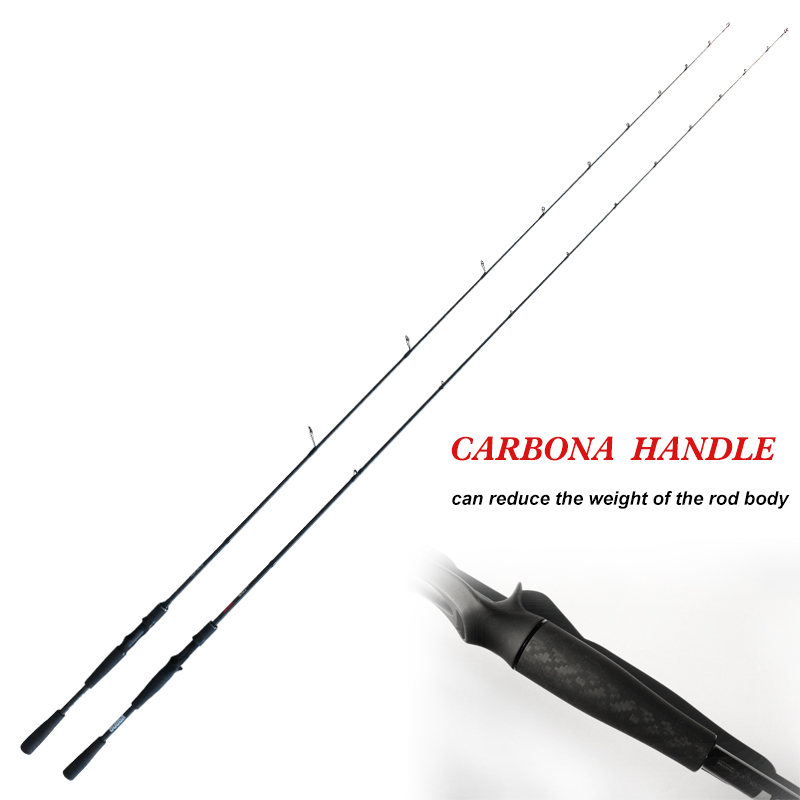
Fishing bottom-contact baits like jigs and soft plastics relies entirely on tactile feedback. You have to interpret unseen underwater environments and detect subtle strikes through the blank. Using a general-purpose rod for these applications causes missed bites, poor hook penetration, and lost fish in heavy cover. Generic specifications fail to provide the necessary combination of sensitivity and backbone. Selecting the optimal Bass Rod requires a strict evaluation of blank material, action, power, and construction. This guide breaks down the technical specifications required to confidently evaluate and select a rod purpose-built for jigs and soft plastics.
Key Takeaways
Action Dictates Hooksets: Fast or extra-fast actions are non-negotiable for jigs and plastics, providing the immediate power transfer required to drive thick-gauge single hooks.
Power Matches Cover: Medium-heavy to heavy power ratings are required to extract fish from the brush, grass, and structural cover where jigs are typically deployed.
Material Drives Transmission: A high-modulus carbon fishing rod offers the highest degree of vibration transmission, allowing anglers to differentiate between a rock, mud, and a subtle bite.
Construction Matters: A single piece bass rod eliminates the dead spots found in multi-piece ferrules, ensuring maximum sensitivity and structural integrity under heavy loads.
Success Criteria for a Bottom-Contact Bass Rod
Bite Detection and Bottom Transmission
Fishing jigs and Texas rigs requires you to visualize the bottom contour through your hands. The rod must act as a direct telegraph wire from the lure to your fingers. Mechanically, this means the blank must transmit both low-frequency and high-frequency vibrations with absolute clarity. Low-frequency vibrations occur when you drag a heavy tungsten weight over gravel, chunk rock, or submerged timber. You feel a distinct, rhythmic tapping. High-frequency vibrations occur when a fish inhales the bait. This often feels like a sharp tick or a sudden, unnatural heaviness on the line.
A rod built for reaction baits dampens these vibrations. A rod built for bottom contact amplifies them. If you cannot distinguish between your jig dragging across a muddy bottom and a bass subtly picking up the bait on the fall, your equipment is failing you. The baseline requirement is absolute sensory clarity. Every pebble, branch, and weed stalk must register instantly in your palm. When fishing in heavy wind, a sensitive blank becomes even more critical, as wind bows your line and forces you to detect bites on a semi-slack line.
Hook Penetration Mechanics
Setting a single, thick-wire hook through a bulky plastic trailer and into the hard, bony jaw of a bass requires violent force. The physics of this hookset demand immediate energy transfer. When you swing on a fish, any excessive bending in the rod blank absorbs the energy you are trying to send to the hook point. Rod deflection must be minimized during the initial hookset phase.
Think of the hookset as a collision. A softer rod acts like a crumple zone, absorbing the impact. A stiff rod acts like a battering ram, driving the point home. Jigs and Texas rigs often utilize 4/0 or 5/0 heavy-gauge hooks. Penetrating the plastic weed guard, the soft plastic trailer, and the fish's jaw requires a blank that locks up quickly. If the rod bends too deeply into the midsection before applying pressure, you will lose the fish. The force required to pop a hook point through a dense beaver-style bait and into cartilage is substantial, and your rod must deliver that force instantly.
Fish Extraction and Leverage
Driving the hook is only the first phase of the battle. Immediately following the hookset, you must extract the fish from heavy cover. Jigs and soft plastics are rarely thrown in open water. They are pitched into laydowns, flipped into matted vegetation, and skipped under boat docks. These environments heavily favor the fish.
You need extreme low-end torque, commonly referred to as backbone. The lower two-thirds of the rod must resist bending under heavy loads. This leverage allows you to turn the fish's head upward and pull it away from submerged branches or thick grass before it can wrap your line. A rod lacking sufficient backbone will leave you powerless to control a surging fish in tight quarters. When you hook a fish in a laydown tree, the first two seconds dictate the outcome. You need the mechanical advantage to winch the fish over the branches immediately.
Standard Extraction Steps in Heavy Cover:
Execute a vertical or sweeping hookset to drive the heavy-gauge hook.
Keep the rod tip elevated to force the fish's head upward.
Engage the reel immediately to prevent the fish from diving back into the root system or grass mat.
Use the rod's backbone to drag the fish over the top of the cover rather than pulling it through the densest sections.
Core Bass Rod Specifications for Jigs and Plastics
Action: The Case for Fast and Extra-Fast
Rod action describes exactly where the blank bends when pressure is applied to the tip. It dictates how quickly the rod transitions from a flexible tip to the stiff backbone. Moderate actions bend near the middle of the rod. They are excellent for crankbaits because they absorb the shock of a striking fish, preventing treble hooks from tearing out. However, moderate actions absorb too much energy for soft plastics, resulting in failed hooksets.
For bottom-contact baits, fast or extra-fast actions are mandatory. A fast action rod bends primarily in the top 25 to 30 percent of the blank. An extra-fast action bends only in the top 15 to 20 percent. This rapid transition to the backbone provides the immediate power necessary for single-hook applications.
Choosing between fast and extra-fast depends on your specific bait weight and casting distance. Extra-fast actions excel for pitching heavy jigs at close targets. The incredibly stiff blank drives the hook instantly on a short line. Fast actions offer slightly more tip flex, making them better for casting lighter Texas rigs or weightless soft plastics over longer distances. The slight flex aids in loading the rod for a longer cast while still providing ample hook-setting power.
Table: Fast vs. Extra-Fast Action Comparison
| Feature | Fast Action | Extra-Fast Action |
| Flex Point | Top 25-30% of the blank | Top 15-20% of the blank |
| Primary Application | Long casts, Texas rigs, lighter jigs | Short pitches, heavy jigs, vertical fishing |
| Casting Dynamics | Loads easily for distance casting | Requires heavier baits to load properly |
| Hookset Speed | Rapid power transfer | Instantaneous power transfer |
Power: Medium-Heavy to Heavy Ratings
Rod power refers to the blank's overall resistance to bending. It dictates the lifting strength of the rod and the weight of the lures it can effectively cast. Power ratings must match the cover you are fishing and the weight of your presentation.
Medium-heavy power is the undisputed workhorse for standard soft plastics. It perfectly handles Texas-rigged worms, weightless Senkos, light swimbaits, and standard jigs ranging from 3/8 ounce to 1/2 ounce. A medium-heavy blank provides enough tip to cast these moderate weights accurately while retaining enough backbone to handle fish in sparse to moderate cover like scattered coontail or isolated laydowns.
Heavy power ratings become necessary when the cover thickens or the bait weight increases. If you are pitching into dense lily pads, flipping flooded bushes, or throwing 3/4 ounce to 1-ounce football jigs in deep water, a heavy power rod is required. The stiffer blank handles the heavier lure weight during the cast and provides the brutal lifting power needed to winch fish out of heavy vegetation like matted hydrilla.
Optimal Rod Length
Rod length dramatically impacts casting distance, accuracy, and hook-setting leverage. For jigs and soft plastics, the sweet spot lies between 7'0" and 7'5". The physics of rod length are straightforward: a longer rod moves more line per sweep. When you set the hook at the end of a long cast, a 7'4" rod takes up significantly more slack line than a 6'6" rod. This ensures tighter line and better hook penetration at a distance.
Longer rods also offer superior pitching leverage. A 7'3" to 7'5" rod allows you to swing a jig smoothly underhand, achieving greater distance and a quieter entry into the water. Conversely, slightly shorter rods in the 7'0" range offer better accuracy in tight quarters. If you are skipping jigs under low-hanging docks or navigating tight shoreline brush, a 7'0" rod is much easier to maneuver and roll-cast.
Material and Construction: Evaluating a Sensitive Bass Rod
Carbon Fishing Rod Blanks vs. Composites
The material composition of the blank dictates its weight, stiffness, and sensory transmission. Modern blanks are constructed using graphite or carbon fiber, measured in modulus or tonnage. Higher modulus ratings indicate stiffer, lighter, and more sensitive material. A high-tonnage carbon fishing rod requires less material to achieve a specific stiffness. This results in thinner blank walls, significantly reducing the overall weight of the rod.
More importantly, high-modulus carbon transmits vibration far better than lower-grade materials. The stiff fibers carry the kinetic energy of a bite straight down the blank to your hand. Fiberglass or composite blends should be strictly avoided for bottom-contact baits. While fiberglass is incredibly durable and excellent for crankbaits, its soft, parabolic nature dampens vibration. Dragging a jig with a fiberglass rod feels like fishing with a rubber band; the sensory feedback is entirely muted. Advanced resin systems in modern carbon blanks further reduce weight by minimizing the amount of glue holding the carbon fibers together, resulting in a crisper feel.
The Structural Advantage of a Single Piece Bass Rod
Energy transfer relies on continuous pathways. Any interruption in the blank material degrades vibration transmission. Ferrules, the joints connecting multi-piece rods, act as physical roadblocks for kinetic energy. When a fish bites, the vibration travels down the tip, hits the ferrule, and loses intensity before reaching the handle.
A single piece bass rod eliminates these dead spots. The continuous flow of carbon fiber ensures maximum sensory feedback. Furthermore, single-piece construction offers superior structural integrity. When applying maximum force during a close-quarters hookset, a ferrule creates a localized stress point. A continuous blank distributes the load evenly, drastically reducing the risk of rod failure under heavy pressure.
Guide Trains and Reel Seats
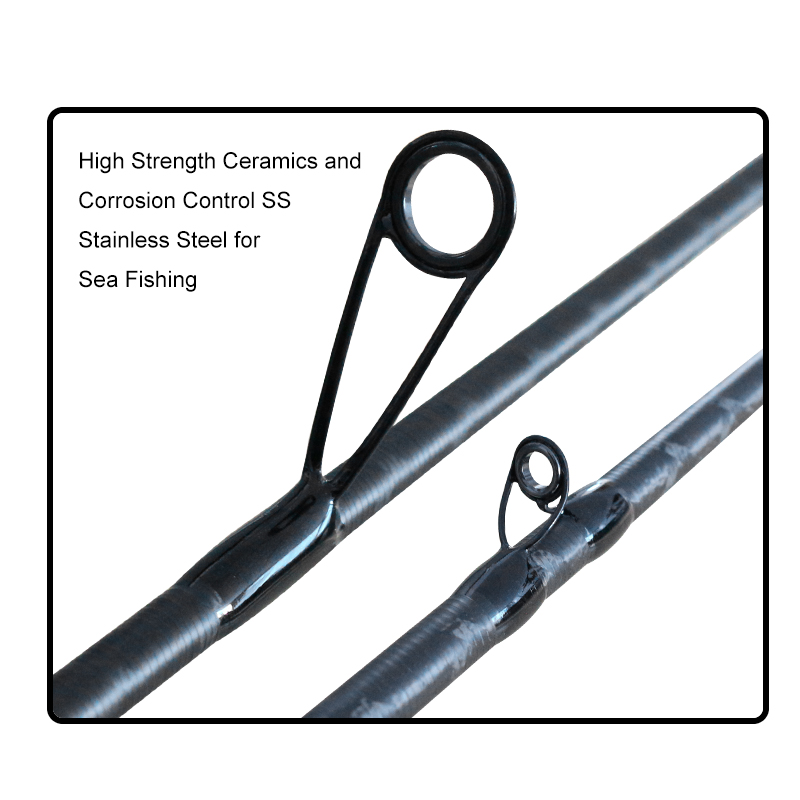
The components attached to the blank heavily influence the rod's overall performance. Guide weight directly impacts rod crispness. Heavy, bulky guides make the rod tip heavy. This causes tip bounce after a cast and dampens the blank's natural sensitivity. Lighter guides, such as those framed in titanium or high-end stainless steel with SiC inserts, reduce tip weight. This keeps the blank crisp, responsive, and highly sensitive.
The reel seat is your primary point of contact with the rod. An exposed-blank reel seat features a cutout that allows your fingers to rest directly on the carbon fiber. This direct skin-to-carbon contact bypasses the dampening effect of cork or EVA foam grips. A truly sensitive bass rod will always feature an exposed blank design, maximizing your ability to detect subtle pressure changes. Custom carbon fiber reel seats take this a step further by eliminating plastic entirely, offering the ultimate in vibration transmission.
Trade-Offs and Overall Value Factors
Sensitivity vs. Durability
Rod design is a constant balancing act between sensitivity and durability. The primary risk of high-modulus carbon is brittleness. As carbon tonnage increases to achieve maximum sensitivity and minimal weight, the blank becomes more susceptible to impact damage. High-end jig rods are not built to withstand abuse. Hitting the rod tip against a trolling motor, high-sticking a fish at the side of the boat, or violently snapping a snagged lure free can easily shatter a high-modulus blank.
You must treat high-performance bottom-contact rods with care. They are precision instruments designed for a specific task. If you require a rod that can survive being stepped on or tossed carelessly into a truck bed, you will have to sacrifice significant sensitivity and opt for a lower-modulus or composite blank.
Versatility vs. Specialization (The Foundational Arsenal)
Building a rod arsenal requires strategic choices. A dedicated, extra-fast, heavy-power pitching stick is highly specialized. It excels at dropping heavy jigs into thick cover but performs poorly with lighter baits. If you are building a foundational arsenal, versatility should be your priority.
A 7'0" to 7'5" medium-heavy, fast action rod is widely considered the most versatile tool in bass fishing. It handles Texas rigs, swimbaits, and standard jigs flawlessly. In a pinch, it can double as a spinnerbait or chatterbait rod. This configuration provides the perfect balance of tip flex for casting and backbone for hooksets. It should always be the first bottom-contact rod you acquire before moving into highly specialized heavy-power models.
Performance Tiers and Diminishing Returns
When evaluating rod tiers, understand the concept of diminishing returns. The jump in sensitivity and weight reduction from an entry-level rod to a mid-tier rod is massive. Upgrading from basic graphite to a dedicated mid-tier carbon blank completely transforms your ability to feel the bottom. The rod becomes lighter, crisper, and vastly more responsive.
However, the jump from a high-quality mid-tier rod to an ultra-premium flagship model yields marginal gains. Ultra-premium rods utilize the highest possible tonnage carbon and titanium components to shave off fractions of an ounce. While they represent the pinnacle of sensitivity, the performance difference is highly nuanced. For the vast majority of anglers, a well-built mid-tier rod provides all the sensory transmission required to fish jigs and plastics effectively.
Implementation Risks and Setup Mitigation
Pairing with the Right Line
The most sensitive rod blank in the world is rendered completely useless if paired with the wrong line. Stretchy monofilament acts like a shock absorber. When you drag a jig, the monofilament stretches, absorbing the vibration before it ever reaches the rod tip. When you set the hook, the line stretches again, severely reducing penetration power.
Bottom-contact presentations require low-stretch or zero-stretch lines. Fluorocarbon is the standard choice. It sinks, keeping your bait near the bottom, and features minimal stretch, providing excellent slack-line sensitivity. For maximum transmission, use braided line paired with a fluorocarbon leader. Braid has zero stretch. It transmits every pebble and bite instantly to the rod tip, while the fluorocarbon leader provides invisibility near the lure. Tying a low-profile connection knot, like an FG knot, ensures the leader passes smoothly through micro-guides without catching.
Table: Line Pairings for Bottom-Contact Baits
| Line Type | Stretch Level | Visibility | Best Application |
| Straight Fluorocarbon (15-20 lb) | Low | Invisible underwater | Clear water, dragging football jigs, standard Texas rigs |
| Straight Braid (50-65 lb) | Zero | Highly visible | Flipping heavy matted vegetation, muddy water |
| Braid to Fluoro Leader | Zero (Mainline) | Invisible at the bait | Deep water dragging, maximum sensitivity requirements |
Reel Gear Ratio and Slack Line Management
Fishing soft plastics involves managing slack line. You lift the rod tip to move the bait, then drop the tip to let it fall. Bites frequently occur on the fall when the line is slightly slack. When you detect a subtle tick, you must pick up that slack line instantly before setting the hook. If you swing with slack in the system, you will miss the fish.
This mechanical necessity requires pairing a bottom-contact rod with a high-speed reel. Gear ratios between 7.1:1 and 8.5:1 are mandatory. A high-speed reel allows you to turn the handle once or twice to instantly eliminate slack, ensuring the rod is properly loaded before you drive the hook home. Slower reels cannot recover line fast enough for effective jig fishing. An 8.5:1 reel can pick up over 34 inches of line per handle turn, giving you a massive mechanical advantage when a fish bites and swims directly toward the boat.
Balancing the Rod and Reel Combo
Ergonomic fatigue destroys sensitivity. A rod that is tip-heavy requires constant wrist tension to keep the tip elevated during a retrieve. Over a long day of fishing, this tension numbs your hand, severely reducing your ability to feel subtle bites. A properly balanced combo feels weightless in your hand.
Balance is achieved by matching the reel weight to the rod length. The balance point should sit directly at the reel seat lock nut, right where you grip the rod. Longer, heavier rods may require a slightly heavier reel to counterbalance the extended blank. Do not simply pair the lightest reel possible with a long pitching rod; this often results in a tip-heavy setup that causes severe wrist fatigue. If your setup remains tip-heavy, adding small tungsten weights to the butt cap of the rod can perfectly neutralize the balance point.
Conclusion
A successful bottom-contact setup prioritizes stiffness, high-modulus materials, and fast actions over parabolic bends and durability-first composites. When dragging jigs or hopping soft plastics, your rod must function as an extension of your nervous system, transmitting every underwater detail directly to your hand while providing the brute force necessary to drive thick hooks.
To finalize your bottom-contact setup, execute the following steps:
Audit your current rod locker to identify gaps in your jig and soft plastic lineup.
Select a 7'1" to 7'4" medium-heavy, fast action, single-piece carbon rod as your versatile baseline.
Scale up to a heavy power, extra-fast action rod only if your local waters feature dense vegetation or require jigs exceeding half an ounce.
Spool your high-speed reel (7.1:1 or faster) with low-stretch fluorocarbon or straight braid to maximize vibration transmission.
Test the balance point of your fully rigged rod and reel combo by resting it on your index finger at the reel seat lock nut.
FAQ
Q: What is the most versatile bass rod for a beginner building their arsenal?
A: A 7'0" to 7'5" medium-heavy power, fast action rod is the universal go-to. It possesses the ideal balance of tip flex for casting and backbone for hooksets. This setup flawlessly handles Texas rigs, standard jigs, swimbaits, and almost all single-hook presentations, making it the most versatile tool for a beginner.
Q: Can I use a medium action rod for soft plastics?
A: No. Medium power rods with moderate actions lack the necessary backbone to drive thick-gauge hooks through plastic trailers and into a fish's jaw. The blank absorbs too much energy during the hookset, leading to poor penetration and lost fish in cover.
Q: What is the difference between rod power and rod action?
A: Rod power refers to the blank's overall lifting strength and stiffness. Rod action refers to where the blank bends when pressure is applied to the tip. Fast action bends near the top, while moderate action bends near the middle.
Q: Why are single piece bass rods better for jigs?
A: A continuous carbon blank provides uninterrupted vibration transfer from the lure to your hand. Multi-piece rods use ferrules that create dead spots, dampening sensitivity. Single-piece rods also offer superior structural strength during violent hooksets.
Q: Does rod length matter for fishing soft plastics?
A: Yes. Longer rods pick up more slack line during a sweep hookset, improving penetration at long distances. They also provide better pitching leverage. Shorter rods offer superior accuracy when skipping baits into tight spaces like boat docks.

