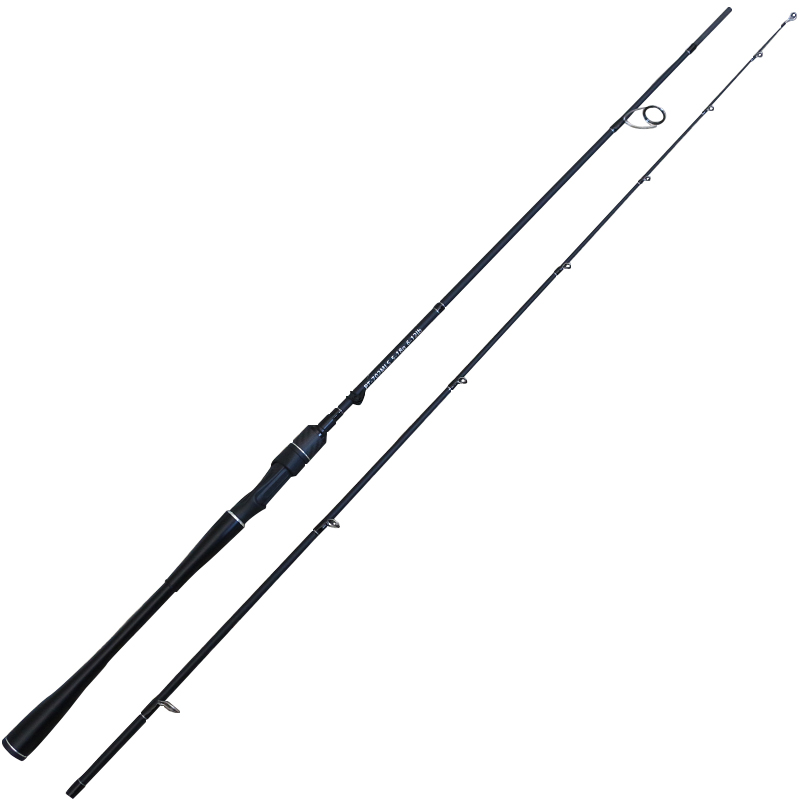
Power on a Fishing Rod: what it really means
Power is the “backbone” rating of a Fishing Rod—how much force it takes to bend the blank. A high-power Fishing Rod is stiffer and stronger; a low-power Fishing Rod bends more easily. Think of power as the load rating of a Fishing Rod.
Common Fishing Rod power labels (from lighter to heavier) include:
Ultra-Light (UL)
Light (L)
Medium-Light (ML)
Medium (M)
Medium-Heavy (MH)
Heavy (H)
Extra-Heavy (XH)
What power changes on a Fishing Rod
Power affects three things on a Fishing Rod more than anything else:
Lure weight range
Every Fishing Rod power is designed to cast a certain lure weight range safely. If you throw a lure that is too heavy for a Fishing Rod, the Fishing Rod may overload and feel “whippy,” or worse, break. If the lure is too light for a Fishing Rod, the Fishing Rod won’t load properly and your cast will be short and inaccurate.
Hook-setting force
A higher-power Fishing Rod transfers more force into the hook. This is helpful when you use thick hooks, fish at long distance, or pull fish out of weeds. A lower-power Fishing Rod is more forgiving and helps prevent snapping light line during a hard hookset.
Fish control
A stronger Fishing Rod can steer fish away from cover and handle stronger runs. A lighter-power Fishing Rod is better for small fish, finesse rigs, and light line.
If you’ve ever seen a Fishing Rod designed for big payloads (for example, lure weight 120g-180g), that’s a clue it expects higher power and stronger components. A light-power Fishing Rod is simply not built for that job.
Action on a Fishing Rod: what it really means
Action describes where a Fishing Rod bends along its length under pressure. Action is not strength; action is bend profile and recovery behavior.
Common Fishing Rod action labels include:
Slow
Moderate
Moderate-Fast
Fast
Extra-Fast
Where different actions bend
Extra-Fast Fishing Rod: bends mostly in the tip section
Fast Fishing Rod: bends in the top third
Moderate-Fast Fishing Rod: bends in the upper half
Moderate Fishing Rod: bends toward the middle
Slow Fishing Rod: bends deep, often through most of the blank
What action changes on a Fishing Rod
Action affects four performance areas on a Fishing Rod:
Sensitivity and bite detection
Fast and extra-fast Fishing Rod actions often feel “crisper,” making it easier to detect taps and subtle bites.
Casting feel and timing
Moderate actions can feel smoother and more forgiving on the cast, especially with moving baits.
Hookup timing
A fast-action Fishing Rod helps drive single hooks quickly. A moderate-action Fishing Rod can give fish a split-second to load the blank, which can help with certain bites.
Landing consistency
Moderate actions can keep pressure during head shakes and reduce the chance of pulled hooks, especially with treble-hook lures.
Power vs. action: how to read a Fishing Rod rating correctly
A Fishing Rod is not “good” because it’s Medium-Heavy, and it’s not “bad” because it’s Medium. The right Fishing Rod depends on your lures, hooks, cover, and fish size. Power answers “how much force,” and action answers “where it bends.” You need both.
Here’s a quick example:
A Fishing Rod that is Medium power + Fast action can feel like a versatile, responsive tool.
A Fishing Rod that is Medium power + Moderate action can feel more forgiving and smoother.
A Fishing Rod that is Heavy power + Fast action can feel powerful and direct—great for pulling fish out of cover, but less forgiving.
Two Fishing Rod models can share the same printed rating and still feel different due to blank material and taper, which we’ll cover below.
Featured-snippet comparison table: power and action in plain English
| Rating | What it means on a Fishing Rod | What it changes most | Best beginner mindset |
| Power | How hard it is to bend the Fishing Rod | Lure range, hooksets, fish control | Match power to lure weight first |
| Action | Where the Fishing Rod bends | Sensitivity, forgiveness, landing | Match action to hook style/technique |
How to choose Fishing Rod power by lure weight and fishing conditions
Most anglers should start with the lures they throw most often. Your “middle” lure range should match the sweet spot of your Fishing Rod.
General power guide for a Fishing Rod
UL/L Fishing Rod: tiny lures, small species, very light line
ML Fishing Rod: finesse rigs, smaller soft plastics
M Fishing Rod: the classic all-around category
MH Fishing Rod: heavier lures, stronger hooks, light-to-moderate cover
H/XH Fishing Rod: heavy cover, big fish, heavy baits
If you fish in current, thick weeds, docks, or you frequently throw large lures, a higher-power Fishing Rod helps control fish and set hooks. If you fish open water with smaller lures, a lower-power Fishing Rod helps cast farther and keeps fish pinned on light line.
How to choose Fishing Rod action by technique and hook type
A useful shortcut: action often follows hook style.
Single-hook techniques
For jigs, worms, many soft plastics, and single-hook lures, a faster Fishing Rod action often helps. A fast Fishing Rod transfers power quickly, which helps drive the hook point in.
Treble-hook techniques
For crankbaits and many hard baits with treble hooks, many anglers prefer moderate or moderate-fast Fishing Rod action. A more forgiving Fishing Rod helps keep fish hooked through surges and head shakes.
Surf and heavy payload situations
If you are casting heavy baits such as lure weight 120g-180g, action selection also affects how the Fishing Rod “loads” during the cast. A Fishing Rod that loads smoothly can help you cast efficiently without feeling like the tip collapses.
Why today’s Fishing Rod materials change how ratings feel
Modern buying trends matter because two Fishing Rod models with identical ratings can behave differently depending on materials and construction.
Carbon fiber and high-modulus trends
Lightweight blanks such as carbon fiber have become popular because they reduce fatigue and improve feel. You may also see terms like IM7 Carbon or 30T Carbon. In general, these materials can make a Fishing Rod feel lighter and more responsive, and can make a fast-action Fishing Rod recover more quickly. That’s why some anglers say one Fishing Rod feels “faster” even when the printed action looks similar.
Composite designs for durability and forgiveness
A composite blank often blends different materials to balance strength, durability, and a forgiving bend. This can make a Fishing Rod feel smoother under load—useful when you want shock absorption.
Travel and telescopic builds
A telescopic Fishing Rod is chosen for portability, but you still need to match power and action to your lure range. Portability should never replace correct performance. A Fishing Rod can pack small and still be the wrong power for your baits.
Components that influence Fishing Rod performance beyond power/action
Power and action are the foundation, but components affect durability and comfort—especially for beginners who want a dependable Fishing Rod.
stainless steel guides improve toughness
ceramic inserts reduce line friction and wear
EVA foam grip improves comfort and reduces hand fatigue
saltwater-friendly materials reduce corrosion risk
Even the reel system can change how the whole Fishing Rod setup feels. Beginners often value smoothness, which is why specs like 5+1 ball bearings and multi-disc drag get attention. While these aren’t power/action ratings, they influence how smoothly your Fishing Rod fights fish and manages sudden runs.
Practical “buying checklist” to pick the right Fishing Rod rating
Use this quick method to choose your Fishing Rod:
Identify your most-used lure size and weight range. Pick Fishing Rod power to match.
Decide your hook style: mostly single hooks → faster Fishing Rod action; mostly trebles → more moderate Fishing Rod action.
Consider your environment: cover/current calls for more power in a Fishing Rod.
If you travel, consider a telescopic Fishing Rod, but keep the correct rating as the priority.
For durability, prioritize stainless steel guides, ceramic inserts, and if needed saltwater resistance.
FAQs
Is Fishing Rod power the same as Fishing Rod action?
No. Fishing Rod power is how much force it takes to bend the Fishing Rod (strength). Fishing Rod action is where the Fishing Rod bends (bend profile). A Fishing Rod can be strong (high power) but still bend high on the blank (fast action).
What Fishing Rod power is best for beginners?
A Medium Fishing Rod is often the easiest starting point because it covers many lure sizes and species. If you throw lighter lures, a Medium-Light Fishing Rod can be better. If you throw heavier lures or fish cover, a Medium-Heavy Fishing Rod can be more appropriate.
What Fishing Rod action should I choose for versatility?
Many anglers find a Fast or Moderate-Fast Fishing Rod action versatile. A fast Fishing Rod helps with single-hook techniques and bite detection. A moderate-fast Fishing Rod can be more forgiving across multiple lure styles.
Why does my Fishing Rod feel stiffer than its rating?
Different blanks, tapers, and materials can change feel. A Fishing Rod made with carbon fiber, IM7 Carbon, or 30T Carbon may recover faster and feel crisper. A composite Fishing Rod may feel smoother and more forgiving even at the same printed rating.
Do Fishing Rod power and action matter for saltwater?
Yes. Power and action still determine casting and fish control, but saltwater adds corrosion pressure. A Fishing Rod with stainless steel guides and ceramic inserts, plus good maintenance, will usually last longer.
Do reel features change Fishing Rod power and action?
No, reel specs don’t change the printed Fishing Rod power and Fishing Rod action. But a smooth reel—often described with 5+1 ball bearings—and a reliable multi-disc drag can make the overall Fishing Rod setup feel more controlled and forgiving when fighting fish.

