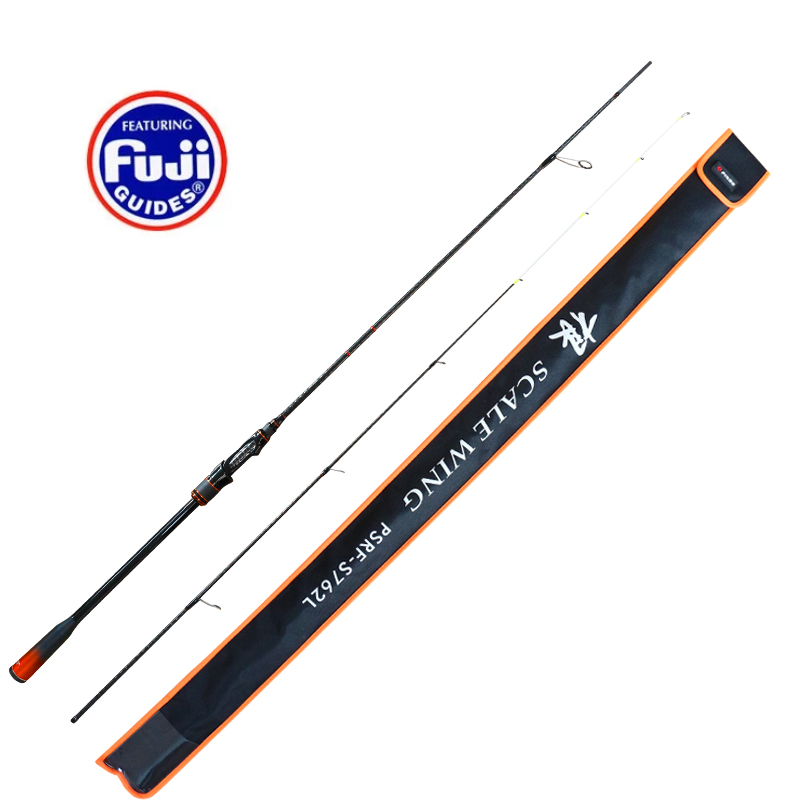
Anglers often hit a wall at the checkout stage when staring at a rack of identical blanks, trying to decipher test curve ratings. You fear a mismatch between the rod specifications and the actual conditions on the bank. Choosing the wrong test curve carries heavy operational costs. Select a rod that is too stiff, and you will pull hooks right at the landing net. Pick a rod that is too soft, and you fail to hit the required distances or control fish near dangerous snags.
Moving beyond basic definitions requires a strict technical evaluation. You need to align test curve specifications with your venue requirements, casting distances, and lead weights. This framework helps you finalize a confident purchasing decision, ensuring your gear matches your exact approach and eliminates the guesswork that leads to lost fish.
Key Takeaways
The Technical Definition: A test curve measures the exact weight required to pull a rod tip to a 90-degree angle from the butt, serving as a baseline for rod power, not necessarily rod action.
The Distance Trade-off: A higher test curve builds a highly capable long casting carp rod but sacrifices the shock-absorption necessary for close-quarter fish playing.
The All-Rounder Benchmark: A 3.0lb to 3.25lb test curve remains the statistical sweet spot for most medium-to-large venues, balancing casting capability with fish-playing safety.
Manufacturer Variances: The performance of a specific test curve is heavily influenced by the carbon blank's taper and recovery rate. A 3lb rod from one manufacturer's specific range (e.g., Korda Kaizen or Shimano Tribal) may perform and feel distinctly different from a 3lb rod from another brand.
Understanding the Test Curve Metric (The Baseline)
The 90-Degree Bend Standard
The test curve is the standardized industry metric for quantifying static rod power. Manufacturers determine this rating through a simple mechanical test. They clamp the rod butt horizontally and suspend incremental weights from the tip ring. The exact weight required to pull the tip downward until it forms a perfect 90-degree angle with the butt section becomes the stated test curve. If it takes exactly three pounds of dead weight to achieve this angle, the rod gets a 3lb test curve rating. This measurement provides a reliable baseline. It lets you compare the sheer stiffness and lifting power of different blanks across various ranges. It does not tell you how the rod casts, but it tells you how much force it takes to bend it.
It is also important to note that carbon blanks experience fatigue over years of heavy use. A rod that tested at exactly 3.25lb fresh out of the factory will gradually soften after hundreds of casts with heavy leads and prolonged battles with large fish. The resin micro-fractures internally, reducing the blank's recovery speed. If you are purchasing second-hand rods, a 3.5lb test curve might perform closer to a 3.25lb rating due to this natural degradation. Always test the compression of a used blank before committing to the purchase.
Test Curve vs. Rod Action
Many anglers confuse rod power with rod action. The test curve dictates the power. The action dictates how and where the rod bends under load. A fast-taper action rod bends primarily in the top third of the blank. This offers rapid tip recovery for punching leads into headwinds. A through-action or parabolic rod bends progressively down to the handle. This provides a massive cushion for playing fish at close range. A 3lb fast-action rod casts entirely differently than a 3lb through-action rod. The fast-action variant requires an aggressive, fast casting stroke to compress the stiffer lower sections. The through-action variant compresses easily with a smoother, slower casting motion. You must understand this distinction before buying.
The Role of Blank Materials
Modern construction techniques significantly alter how a specific test curve feels in your hands. The ratio of carbon fiber to resin, alongside the specific carbon tonnage used, dictates the blank's recovery speed. High-tonnage carbon produces a crisp, lightweight blank. It snaps back to a straight position instantly after you release the lead. This rapid recovery reduces tip bounce. It minimizes line friction through the guides and adds yards to your cast. Lower-tonnage carbon, often mixed with higher resin content, produces a heavier but more durable blank. It has a slower recovery. This slower response softens the feel of the test curve. It makes the rod more forgiving during aggressive headshakes at the net.
Success Criteria: Framing Your Freshwater Fishing Rod Needs
Venue Size and Topography
Evaluating your primary fishing environment is the first step in selecting the correct specification. Small, intimate estate lakes and narrow canals rarely require casts exceeding 50 yards. In these environments, a softer blank excels. It allows you to flick light leads under overhanging trees with precision. Large, windswept gravel pits demand specialized equipment. Reaching feeding fish at 120 yards against a crosswind requires a stiff, powerful blank capable of generating high tip speeds. Matching the rod to the venue ensures you are neither under-equipped for distance nor over-equipped for close-quarter margin stalking.
Payload Requirements
The test curve correlates directly with your optimal casting weight. A reliable mathematical rule of thumb dictates that you can safely cast 1oz of lead for every 1lb of test curve, plus a fractional buffer of about 0.5oz. For example, a 3lb test curve rod optimally handles a 3oz to 3.5oz lead. This calculation changes drastically when you introduce solid PVA bags or heavy Method feeders. A loaded solid bag can easily weigh upwards of 5oz. Attempting to power-cast a 5oz payload with a 2.75lb rod will over-compress the blank. It destroys casting accuracy and risks structural failure. You must calculate the total weight of your terminal tackle before finalizing your rod choice.
Here is a practical breakdown for calculating your true payload:
Weigh your standard lead (e.g., 3oz).
Add the weight of your rig, bait, and lead clip system (approx. 0.5oz).
Factor in any PVA products. A small mesh stick adds 1oz, while a tightly packed solid bag adds 2oz to 3oz.
Compare the total combined weight against your rod's optimal casting range.
The aerodynamics of your chosen lead also impact how the test curve performs during the cast. A 3oz aerodynamic distance lead cuts through the air efficiently, allowing a 3lb rod to recover quickly and hit maximum yardage. However, casting a 3oz flat pear lead or a bulky gripper lead creates significant air resistance. This drag forces the rod tip to bend further forward during the flight of the lead, slowing down the recovery and reducing distance. You must pair the correct lead shape with your test curve to maximize casting efficiency.
Target Fish Size and Snag Proximity
The presence of heavy weed beds, dense lily pads, or sunken timber dictates the need for a higher test curve far more than the actual weight of the target fish. Exerting immediate stopping power is mandatory in hostile environments. Stopping a 20lb fish from burying itself in a sunken tree requires significantly more rod power than playing a 40lb fish in open, snag-free water. A higher test curve provides the necessary backbone to clamp down on the spool and physically turn a fish away from danger. If your venue is heavily snagged, you must scale up your rod power to ensure fish welfare and prevent breakages.
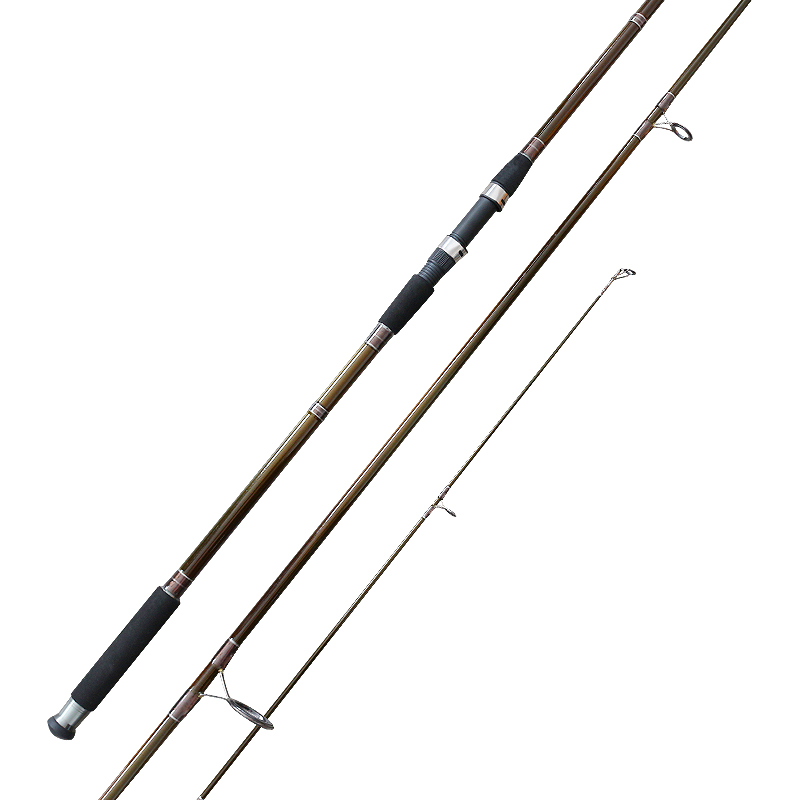
Evaluating Test Curve Categories (Solution Approaches)
Test Curve Application Guide
| Test Curve Range |
Primary Venue Type |
Optimal Casting Weight |
Key Advantage |
Main Limitation |
| 2.5lb to 2.75lb |
Small ponds, canals, margins |
2oz to 3oz |
Maximum shock absorption at the net |
Cannot cast heavy PVA bags or reach extreme distances |
| 3.0lb to 3.25lb |
Medium to large lakes |
3oz to 3.75oz |
Highly versatile balance of power and playability |
Struggles to consistently hit 130+ yards |
| 3.5lb to 3.75lb+ |
Extreme range, heavy rivers, snags |
4oz to 5oz+ |
Unmatched backbone for heavy payloads |
Highly unforgiving at close range, risking hook pulls |
2.5lb to 2.75lb: The Margin and Small Water Specialists
Rods falling into the 2.5lb to 2.75lb category are purpose-built for close-quarter applications. Their optimal use case includes margin stalking, boat work, and fishing small waters where casting distances rarely exceed 60 yards. The primary performance advantage lies in the maximum shock absorption under the rod tip. When a fish makes a sudden, explosive lunge right at the landing net, the soft blank folds and absorbs the kinetic energy. This drastically reduces the risk of tearing the hook from the fish's mouth. The limitation is a severe lack of casting power. These rods cannot punch heavy leads into strong headwinds. They buckle under the bulky weight of solid PVA bags.
3.0lb to 3.25lb: The All-Rounder Sweet Spot
The 3.0lb to 3.25lb range represents the most versatile configuration for a freshwater fishing rod. This specification is engineered for medium to large lakes requiring casting distances between 70 and 110 yards. The performance advantages are numerous. These blanks handle moderate PVA bags and standard lead clips with ease. They generate enough tip speed to reach feeding areas accurately. Simultaneously, they retain enough tip forgiveness to ensure safe netting during the final stages of a fight. The main limitation is extreme range. You will struggle to hit distances beyond 130 yards consistently without highly specialized casting techniques and perfectly tuned terminal tackle.
3.5lb to 3.75lb+: The Long Casting Carp Rod
Stepping up to the 3.5lb and 3.75lb+ category enters the realm of extreme range fishing, heavy river currents, and extracting fish from dense weed beds. A long casting carp rod in this bracket offers unmatched backbone. It compresses heavy leads exceeding 4oz, storing massive amounts of potential energy before releasing it to achieve maximum velocity. This stiffness is also required to drag heavy leads out of thick silt or gravel bars. These rods are highly unforgiving at close range. The stiff blank refuses to yield during sudden lunges. You must rely heavily on a loosely set reel drag and the natural stretch in a monofilament mainline to prevent hook pulls.
The Ultimate Dilemma: 12ft 3.0lb vs. 12ft 3.5lb
The most common buyer hesitation occurs when choosing between a 12ft 3.0lb and a 12ft 3.5lb blank. A 3.5lb rod offers future-proofing. It guarantees you will never be under-gunned if you decide to visit a massive inland sea or need to cast heavy solid bags to an island margin. The 3.0lb variant offers superior fish-playing enjoyment and safety for the average angler who rarely casts beyond 100 yards. If your daily fishing involves standard leads and moderate distances, the 3.0lb rod will land more fish successfully by preventing hook pulls at the net. Choose the 3.5lb only if your specific tactics demand heavy payloads and extreme yardage.
Material and Design Trade-offs (Features-to-Outcomes)
Rod Length vs. Test Curve Dynamics
Rod length fundamentally alters the leverage and perceived stiffness of a stated test curve. A 10ft 3lb rod feels significantly stiffer than a 12ft 3lb rod. The shorter blank provides a shorter lever. This means you have direct, immediate pulling power over the fish. This shorter lever generates less tip speed during the cast, reducing overall distance. A 12ft or 13ft rod provides a longer lever, allowing you to generate massive tip velocity to launch leads toward the horizon. When selecting a carbon carp rod, you must factor in how the length manipulates the compression of the test curve during both casting and playing.
Subduing Big Carp on Shorter Rods
Targeting 30lb to 40lb+ carp on 10ft rods requires specific mechanical considerations. Because the shorter blank lacks the long, sweeping shock absorption of a 12ft rod, a 3.0lb test curve on a 10ft blank provides the exact backbone needed to control large fish in tight swims. The shorter length prevents the unwieldy leverage issues associated with maneuvering a 12ft rod under tree canopies or inside a compact bivvy. The 3.0lb rating ensures the rod does not fold entirely under the weight of a heavy fish. It maintains directional control while steering the carp away from marginal snags.
When netting a large carp on a 10ft rod, follow these mechanical steps to prevent hook pulls:
Keep the rod tip low during the final stages of the fight to prevent the fish from breaking the surface too early.
Back off the reel drag by two clicks as the fish approaches the marginal shelf.
Use the rod's backbone to steer the fish, rather than lifting it vertically.
Allow the fish to take short bursts of line directly from the reel, compensating for the lack of blank length.
Sink the landing net deep and draw the fish over the cord using a smooth, horizontal sweep of the rod.
Guide Sizing and Placement
The size and placement of the guide rings interact directly with the rod's test curve and intended purpose. Higher test curve rods designed for distance casting typically feature 50mm butt guides. These oversized rings facilitate the rapid passage of thick mainlines and heavy shock leader knots. They reduce friction as the line coils off a big pit reel. Lower test curve rods, designed for shorter ranges, often utilize 40mm butt guides. The smaller rings reduce the overall weight of the blank. This preserves the crisp action and prevents the rod from feeling tip-heavy during close-quarter stalking.
Implementation Risks: Common Purchasing Mistakes
Over-gunning (The Ego Trap)
Many anglers fall into the trap of purchasing a 3.5lb+ rod purely for its perceived distance capabilities, despite rarely fishing beyond 60 yards. This over-gunning results in a severe lack of blank compression during the cast, leading to inaccurate placement. Using a stiff distance rod at short range leads to lost fish at the net. The rod acts like a broomstick, transferring every headshake directly to the hook hold. Without the cushioning effect of a softer blank, the hook simply tears free from the fish's mouth during the final moments of the fight.
Under-gunning in Hostile Environments
Using a soft 2.75lb rod near heavy snags introduces severe fish welfare risks. When a hooked carp surges toward a sunken tree, a soft rod will bend entirely to the butt, leaving you with zero directional control. The rod bottoms out, and the fish dictates the fight. This lack of stopping power results in fish becoming tethered in underwater obstacles, leading to broken lines and trailing rigs. You must match the rod's power to the hostility of the environment. Prioritize control over close-quarter playability when hazards are present.
Ignoring the Payload
Failing to account for the total weight of your terminal tackle is a fast track to rod damage. Anglers often assume a 3lb rod can handle any rig. A loaded solid PVA bag packed with pellets and a heavy inline lead can easily exceed 5oz. Attempting a forceful overhead cast with this payload will instantly overload a 3lb test curve rod. The blank will fold past its optimal compression point, killing the cast and potentially fracturing the carbon fibers. Always weigh your fully loaded rigs to ensure they fall within the rod's optimal casting weight parameters.
Brand-to-Brand Inconsistencies
Assuming all test curves are identical across different manufacturers is a costly mistake. A 3lb rod from one brand may utilize a fast-taper, high-tonnage carbon layup, making it feel incredibly stiff and powerful. Another brand's 3lb rod may feature a progressive, through-action design, feeling much softer and more forgiving. You must consult manufacturer-specific guides and rod charts to understand how their specific carbon layups affect the stated test curve. Never buy blindly based on the number printed on the blank without researching the intended action of that specific rod range.
The origin and manufacturing process of the carbon cloth play a massive role in these inconsistencies. High-end Japanese Toray carbon, often used in premium rods, provides an incredibly stiff and fast-recovering blank. A 3lb rod built on this material will feel rigid and powerful. Conversely, rods built on standard composite carbon blends will feel much softer, even if they carry the exact same 3lb rating. The composite blend uses more glass fiber, which adds weight and flexibility. You must physically handle the rods in a tackle shop or consult detailed reviews to understand the true nature of the blank.
Conclusion
Selecting the correct test curve is a mathematical balance between your required casting payload, your target distance, and the absolute necessity for shock absorption at the landing net. Ignoring any of these three pillars results in compromised performance. You will either lose fish at close range or fail to reach feeding zones. By mapping your venue's topography and calculating your terminal tackle weight, you can pinpoint the exact specification required for your angling approach. A well-chosen Carp Rod acts as an extension of your arm, providing total control from the cast to the net.
To finalize your setup and ensure optimal performance on the bank, execute these next steps:
Default to a 3.0lb or 3.25lb 12ft blank for general use across medium to large venues.
Scale down to a 2.75lb test curve if your angling is exclusively focused on margin stalking or small estate lakes under 60 yards.
Scale up to a 3.5lb+ test curve strictly if you fish at extreme distances or need to extract fish from dense weed beds.
Pair high test curve distance rods with large big pit reels to maximize casting efficiency.
Match softer, shorter blanks with standard freespool reels to maintain perfect balance and maneuverability.
FAQ
Q: What does a 3lb test curve mean on a carp rod?
A: A 3lb test curve indicates that it takes exactly three pounds of dead weight applied to the tip ring to pull the rod tip to a 90-degree angle from the butt section. This metric defines the static power and stiffness of the blank, establishing a baseline for its optimal casting weight and stopping power.
Q: Should I choose a 3lb or 3.5lb test curve for an all-round 12ft rod?
A: A 3lb test curve is ideal for general fishing up to 100 yards with standard leads, offering great shock absorption at the net. Choose a 3.5lb test curve only if you frequently use heavy solid PVA bags, cast at extreme ranges, or fish near heavy snags requiring extra stopping power.
Q: What is the best test curve for a 10ft carp rod targeting 30-40lb fish?
A: For targeting large fish, 10ft rods typically perform best in the 3.0lb range. The shorter length reduces the rod's natural shock absorption, requiring a slightly softer curve to maintain a safe fish-playing action while still offering enough raw power to control heavy carp in tight swims.
Q: How does a rod's test curve affect casting distance?
A: Higher test curves feature stiffer blanks that can compress heavier leads and recover their straight shape much faster. This rapid tip recovery and ability to handle heavier payloads directly translate to increased yardage and higher velocity when the rod is compressed correctly during the cast.
Q: Can I use a high test curve rod for close-quarter fishing?
A: Yes, but it carries risks. Stiff blanks lack shock absorption, increasing the chance of hook pulls during sudden lunges at the net. To compensate, you must use a monofilament mainline with high stretch and back off your reel drag significantly to cushion the fish's movements.
Q: Does a stiffer test curve help land larger carp?
A: Not necessarily. The test curve dictates your casting weight and your ability to stop fish from entering snags, not the size of the fish you can catch. A 40lb carp can be safely and easily landed on a soft 2.75lb rod in open water without heavy weed or obstacles.

