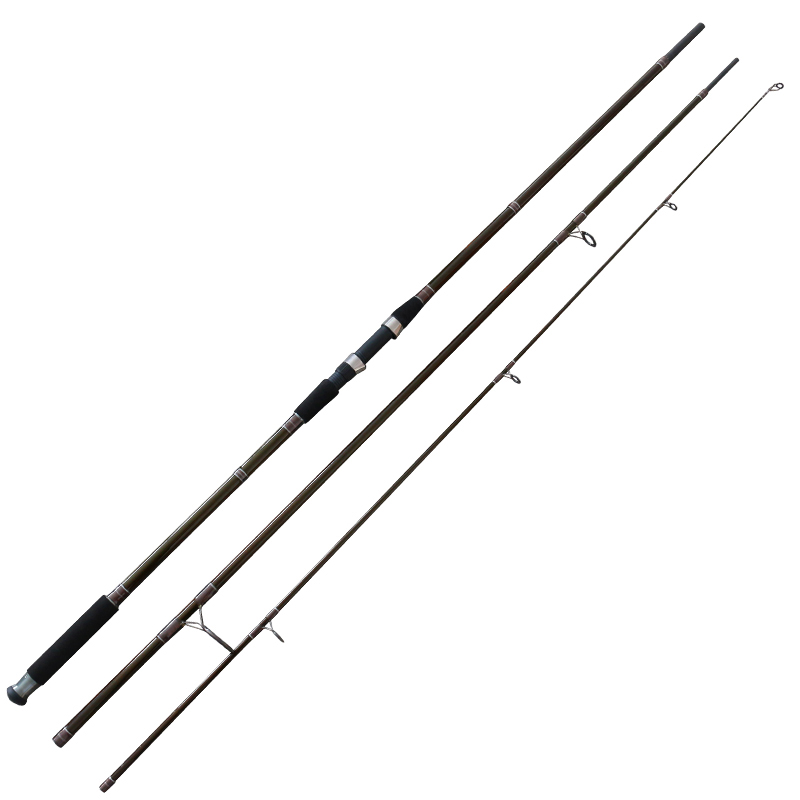
Selecting the wrong Fishing Rod length often leads to compromised casting accuracy. You might lose fish due to poor leverage. You could also experience physical frustration in restrictive environments. Many anglers treat gear length as a purely aesthetic or arbitrary choice. In reality, length directly dictates casting physics, lure control, and hook-setting power. A minor variation of just a few inches completely alters your presentation on the water. If you constantly snag trees or struggle to drive hooks deep into a fish, your equipment dimensions are likely the culprit. We designed this evidence-based evaluation framework to help you navigate these choices. You will learn how to properly match equipment length to specific target species, dense environments, and distinct physical requirements. Applying these principles ensures every cast maximizes both efficiency and physical comfort.
Key Takeaways
- The Golden Rule of Length: Shorter rods prioritize pinpoint accuracy and control; longer rods prioritize casting distance and shock absorption.
- The Baseline Standard: A 7-foot fishing rod is the industry-standard starting point for general-purpose freshwater and light inshore fishing.
- Environment Dictates Gear: Overhead canopy, boat decking, and shore access should heavily weight your length decision before factoring in target species.
- Portability Trade-offs: Specialty options like a telescopic fishing rod solve travel constraints but require specific durability evaluations.
The Evaluation Framework: How Length Dictates Mechanics
Length operates as the fundamental physical lever between you and the fish. Understanding the basic mechanics behind this lever prevents costly purchasing mistakes. We evaluate these mechanics across three core dimensions.
Casting Distance vs. Accuracy Trade-off
Physics governs every cast you make. A longer lever arc generates significantly higher lure velocity. Increased velocity directly translates to greater casting distance. Open water anglers rely on this mechanical advantage to reach distant targets. However, this extended arc increases your margin of error. A slight mistiming in your release point sends the lure wildly off course.
Conversely, a shorter lever arc minimizes this margin of error. Shorter setups keep the lure closer to your body during the swing. You gain pinpoint accuracy as a result. You sacrifice maximum distance, but you can effortlessly drop a bait into a narrow gap between submerged logs. We highly recommend evaluating your local waters to see which trait matters more.
Leverage and Hook-Setting Power
Your ability to move fishing line quickly depends entirely on rod length. When you swing a longer blank, the tip travels a much greater distance. This sweeping motion picks up slack line incredibly fast. Deep-water hooksets require rapid slack removal. If you fish jigs in thirty feet of water, a longer lever ensures the hook penetrates the fish's jaw before they spit the bait.
Shorter options move less line per swing. You must reel down faster to compensate. They perform exceptionally well for close-quarters combat where line bow is minimal. Close-range topwater strikes demand instant, short snaps rather than massive sweeping motions.
Fatigue and Ergonomics
Fishing for eight hours imposes a serious physical toll on your body. Wielding longer, heavier equipment accelerates shoulder and wrist fatigue. The extended weight situated far from your grip acts as a continuous lever working against your muscles. Heavy offshore setups demand robust physical endurance.
Agility defines shorter setups. They feel weightless in your hand. You can impart rhythmic, erratic actions to your lures all day without cramping. Evaluating your physical stamina remains a crucial step before committing to an unwieldy nine-foot setup.
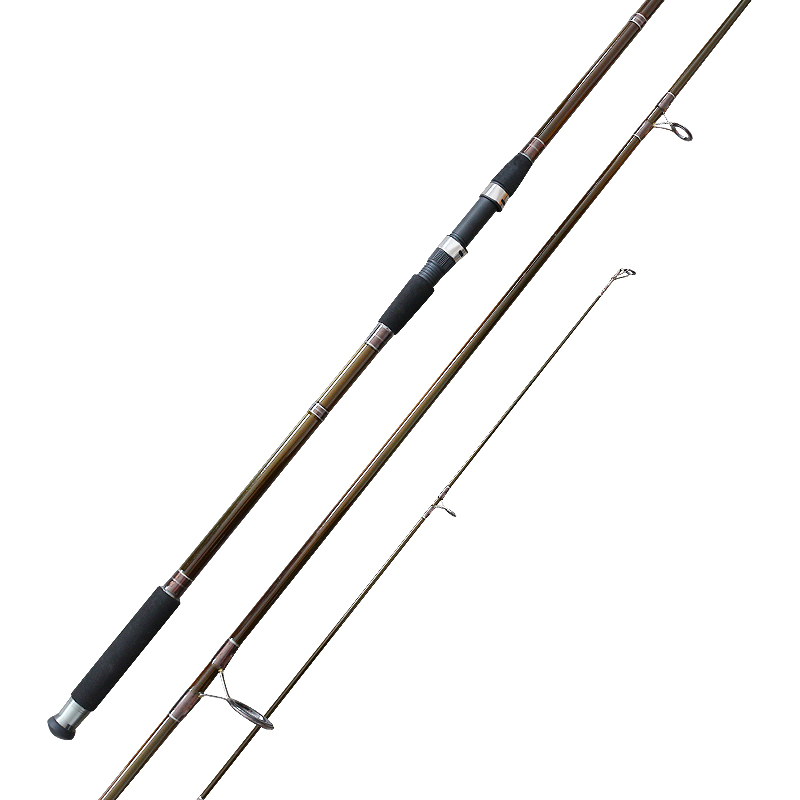
Matching Fishing Rod Length to Environment and Style
Your physical fishing environment dictates your ideal length far more than the specific fish species. Overhead branches, boat layouts, and shore access define your operational limits.
Short Rods (Under 6'6") – Precision and Confined Spaces
These compact tools excel in restrictive zones. Heavy brush creeks demand them. Kayak anglers favor them for easy handling. Vertical jigging applications benefit from their stiff, short profiles. Dropping baits under low-hanging docks requires a side-arm skip cast. Short blanks make this specific cast effortless.
The performance reality centers on lure control. You severely limit your maximum casting distance. However, you gain unparalleled control for techniques requiring constant rod twitching. Walking-the-dog surface lures or snapping jerkbaits feels natural and precise. The primary risk involves reduced shock absorption. When a heavy fish makes a sudden surge near the boat, a short blank lacks the flex to absorb the energy. You risk snapping the line if your drag is too tight.
Medium Lengths (6'6" to 7'6") – The All-Around Baseline
This category dominates the industry. Bass fishing relies heavily on these dimensions. General freshwater applications thrive here. Light inshore saltwater anglers utilize them daily. They represent the ultimate middle ground.
The performance reality provides an optimal balance. You achieve moderate casting distances while retaining highly manageable accuracy. You can skip a jig under a dock or launch a spinnerbait across a flat with the exact same tool. If you can only purchase one single item, a 7-foot medium-heavy setup is the most versatile baseline available. It handles eighty percent of standard fishing scenarios efficiently.
Long Rods (7'6" and Up) – Distance and Open Water
Open environments remove all casting restrictions. Surf casting requires massive length to clear crashing waves. Pier fishing demands long levers to steer fish around pilings. Big swimbait applications use them to lob heavy lures safely. Sweeping hooksets, like those used for Carolina rigs, require extreme length to move massive amounts of line.
The performance reality focuses entirely on maximizing reach. You can hit breaking fish from afar. You can explore offshore structures efficiently. The inherent risk lies in maneuverability. They become highly unwieldy in wooded areas. Small boats feel cramped when swinging them. You require significantly more clearance to cast safely without hooking your fishing partner.
Below is a summary chart highlighting these environmental trade-offs:
Chart: Length Application Summary | Length Range | Primary Advantage | Major Drawback | Best Environments |
| Under 6'6" | Pinpoint accuracy, low fatigue | Poor distance, low shock absorption | Dense creeks, docks, kayaks |
| 6'6" to 7'6" | Extreme versatility, balanced handling | Master of none | General lakes, standard boats |
| 7'6" and Up | Maximum distance, great line pickup | Unwieldy, requires clearance | Surf, piers, open water flats |
Rod Length vs. Angler Height: Does Size Matter?
Many beginners fall into a common logical trap. They assume tall anglers must buy long gear, while shorter anglers must buy short gear. We need to evaluate this assumption against actual on-water physics.
Debunking the Myth
We must clarify a fundamental rule. Equipment length maps primarily to the fishing application, not strictly your overall height. A six-foot-five angler fishing a tiny, overgrown creek still needs a five-foot-six setup to avoid hitting trees. A five-foot-two angler casting from an open beach still requires an eight-foot setup to clear the shore break. The environment dictates the tool.
Where Height Actually Factors In
Body mechanics do play a secondary role in specific niche scenarios. You should monitor two distinct situations where your physical stature influences the decision.
- Wading: When you wade waist-deep in a river, your physical elevation drops drastically. You must keep the rod tip elevated above the current during the retrieve. Shorter anglers wading deep often benefit from slightly longer equipment to maintain this crucial clearance angle.
- Kayak and Belly Boat Fishing: Seated anglers face severe ergonomic restrictions. Your casting arc shrinks. You cannot use your legs for leverage. Rods exceeding seven feet and two inches become notoriously difficult to manage. Landing a fish requires bringing it close to the hull. Long blanks force you to reach awkwardly behind your back to net the catch.
Actionable Advice
Instead of matching the entire blank to your height, evaluate the handle. Scale the grip length to your forearm length. A massive rear grip catches on the jacket of an angler with short arms. A tiny rear grip fails to provide leverage for someone with long arms. Proper handle scaling drastically improves casting comfort.
Portability vs. Performance: Evaluating the Telescopic Fishing Rod
Modern travel demands flexibility. Traditional one-piece blanks fail miserably when you navigate airports or hike dense mountain trails. This reality forces us to evaluate collapsible alternatives.
The Business Case for Telescopic
Severe transportation constraints require specific engineering. Backpacking deep into the wilderness makes carrying a seven-foot carbon tube impossible. Air travel imposes massive oversize baggage fees. Compact car trunks simply cannot accommodate standard equipment. A telescopic fishing rod solves these exact bottlenecks. They collapse into a fraction of their working length. You can stash them inside a standard backpack or slide them under a car seat.
Evaluation Dimensions
You must understand the inherent engineering trade-offs when choosing collapsible gear. We judge them on two critical performance metrics.
- Action and Sensitivity Curve: A traditional one-piece blank bends in a perfectly smooth, continuous arc. Telescopic models utilize multiple ferrules. Ferrules are the sliding joints connecting each section. These joints inherently create flat spots in the bending curve. Energy transfer stutters as it passes through the thick overlapping carbon. Sensitivity decreases slightly compared to a premium one-piece equivalent.
- Durability: Moving parts introduce failure points. Collapsible models face a higher risk of failing under heavy loads if the joints are not properly seated. Furthermore, grit, dirt, or fine beach sand easily infiltrates the sliding mechanisms. Once sand enters the joints, the sections jam firmly in place. Regular cleaning is mandatory.
Shortlisting Verdict
We recommend a collapsible model strictly as a secondary or dedicated travel option. Do not purchase one as your primary, everyday tool for heavy-duty tournament use. When you do buy one, prioritize high-modulus carbon fiber builds. Cheap fiberglass versions feel utterly lifeless. Premium carbon fiber effectively mitigates the dead spots created by the joints.
Shortlisting Logic: How to Finalize Your Purchase
You now understand the mechanics, environmental constraints, and portability factors. Translating this knowledge into a final purchase requires a disciplined, step-by-step approach. Follow this sequence to prevent buyer's remorse.
Step 1: Identify the Primary Bottleneck
Evaluate your most frustrating experiences on the water. Is your main issue reaching breaking fish fifty yards away? If so, you desperately need length. Do you constantly snag lures on overhanging branches while trying to cast into tight cover? If so, you need a much shorter setup. Identify the single biggest obstacle limiting your success. Let that obstacle dictate your baseline dimension.
Step 2: Factor in Transport
Never buy gear without measuring your storage limits. Ensure the chosen dimensions physically fit inside your vehicle. Measure your boat's rod locker. Measure your garage storage racks. Buying an eight-foot swimbait stick only to realize it requires bending the tip against your car windshield is a common, expensive oversight. Forced bending during transport causes micro-fractures in the carbon, leading to catastrophic failure on your next hookset.
Step 3: Pair with Rod Power and Action
Remember this fundamental rule: length represents only one-third of the performance equation. You must pair it with the appropriate power and action to execute specific techniques.
- Power: This denotes stiffness. Heavy cover requires heavy power to drag fish out of weeds. Open water finesse techniques require light power to protect thin lines.
- Action: This dictates where the blank flexes. Fast action flexes near the tip, providing instant hook-setting power for single-hook lures. Moderate action flexes near the middle, keeping treble hooks pinned during erratic fights.
- Integration: A 7-foot heavy power, fast action setup behaves entirely differently than a 7-foot medium power, moderate action setup. Lock in your length first, then adjust the power and action to match your lure weights.
Conclusion
There is no universal best dimension in the fishing world. You will only find the most efficient length designed for a specific operational environment. Shorter dimensions offer unmatched precision and agility in heavy cover. Medium dimensions provide excellent versatility for general applications. Long dimensions dominate open water scenarios requiring maximum distance and line pickup. Your physical surroundings always dictate the appropriate tool.
Your next steps are clear. Audit your primary fishing locations and list the typical heavy cover or open water features you encounter. Evaluate your standard lure weights. Once you finalize the most appropriate length, proceed to match the new setup with a proportionately sized reel. A perfectly balanced combo reduces wrist fatigue and elevates your overall efficiency on the water.
FAQ
Q: What is the best fishing rod length for a beginner?
A: 6'6" to 7'0" - provides the most forgiving learning curve for both distance and accuracy.
Q: Is a longer rod better for casting further?
A: Yes, due to a wider casting arc, provided the lure weight matches the rod's load rating.
Q: Can I use a 7-foot rod for kayak fishing?
A: Yes, but 7 feet is generally the upper limit for comfortable seated hooksets and landing fish without high-sticking.
Q: Do multi-piece rods perform worse than one-piece rods?
A: Modern 2-piece rods offer near-identical performance, though multi-section telescopic rods do sacrifice some sensitivity and smooth action.

