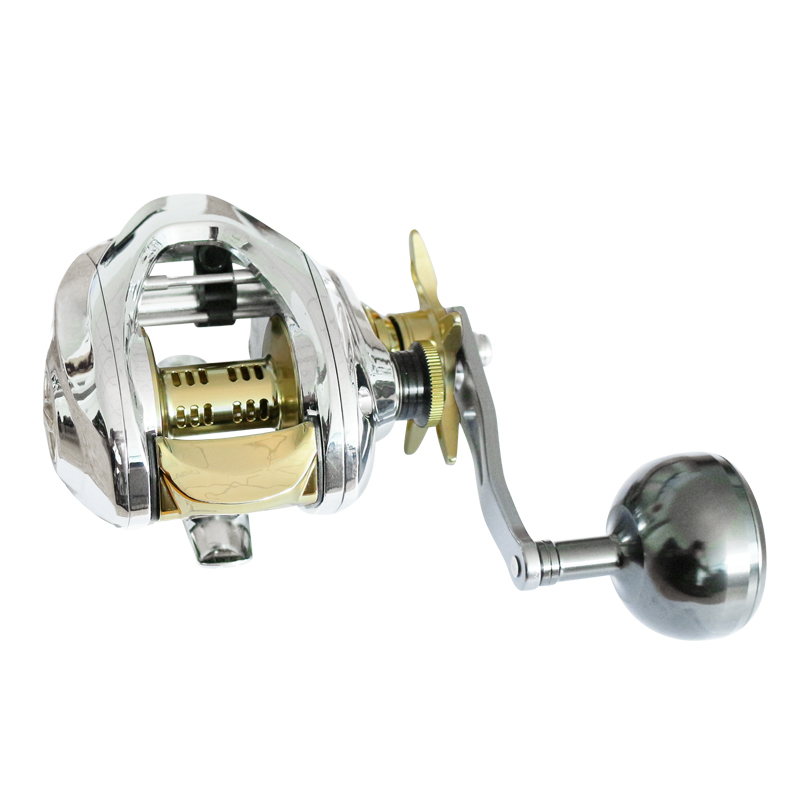
Anglers often lose trophy catches because their tackle cannot keep up with explosive runs or sudden directional changes. Standard gear simply falls short when a fish charges the boat or dives into dense vegetation, leaving dangerous slack in the line. This operational gap occurs because traditional reels lack the rapid line pickup necessary for fast-moving targets, heavy cover extraction, or long-distance casting. You need specialized equipment to pull slack instantly and stay tight on aggressive predators.
A modern speed spool fishing reel—originally inspired by Lew's innovative designs—solves this problem through high-speed, low-profile baitcasting mechanics. We will explore how to evaluate these advanced tools, match gear ratios to specific tactical demands, and master the learning curve to improve your success on the water. You will learn to build a transparent, criteria-based framework for evaluating, selecting, and implementing this gear based on your specific environmental demands.
Key Takeaways
A speed spool fishing reel prioritizes rapid line retrieval, typically featuring gear ratios of 7.1:1 or higher.
Success relies on balancing retrieval speed with structural torque and drag capacity to handle heavy cover.
Evaluating these reels requires looking past bearing counts to focus on braking systems, frame rigidity, and corrosion resistance.
Adoption requires a learning curve; proper thumb management and braking calibration are essential to mitigate line backlash.
The Anatomy and Mechanics of a Speed Spool Reel
Defining the Baseline
The term "speed spool" describes a specific class of fishing equipment. It primarily refers to low-profile baitcasters. Engineers design them for exceptionally high inches-per-turn (IPT) retrieval rates. You use them when speed dictates fishing success. Traditional round reels prioritize line capacity and brute winching power. Low-profile speed spools prioritize ergonomics, palmability, and rapid line management. They sit lower on the rod blank. This gives you better wrist control during aggressive techniques.
High Gear Ratios Explained
To understand a speed spool, you must understand gear ratio math. A gear ratio represents how many times the spool revolves per single handle turn. A 7.5:1 ratio means the spool spins seven and a half times every time you crank the handle fully. An 8.3:1 ratio spins it over eight times.
This math translates directly into IPT. IPT measures the actual length of line retrieved per crank. High ratios yield high IPT. However, physics demands a mechanical trade-off. Higher retrieval speed generally means lower winching power. You cannot simply winch a heavy fish to the boat using the reel alone. You must pump the rod to move the fish. Then, you use the high-speed reel to pick up the resulting slack.
Gear Ratio Category | Typical IPT (Inches Per Turn) | Mechanical Advantage | Primary Application |
Standard (5.x:1 - 6.x:1) | 21" - 26" | High Winching Power | Deep cranking, heavy resistance baits |
High-Speed (7.1:1 - 7.5:1) | 27" - 31" | Balanced Power & Speed | All-around casting, versatile presentations |
Ultra-Speed (8.1:1 - 10.x:1) | 32" - 40"+ | Maximum Line Pickup | Flipping, pitching, burning topwater baits |
Braking Systems and Cast Control
High gear ratios create high-velocity spool rotation. When you cast, the spool spins incredibly fast. If it spins faster than the lure flies, the line loops over itself. This creates spool overrun, commonly called backlash. Modern braking systems prevent this.
Centrifugal braking systems use small internal friction blocks. They slide outward against a brake ring during the initial cast. This controls peak spool speed. Magnetic braking systems use adjustable magnets. They apply consistent slowing force throughout the entire cast. Dual-braking systems combine both technologies. They use advanced braking algorithms to prevent overrun during high-velocity casts. You get the initial control of centrifugal blocks. You also get the fine-tuned landing control of magnets.
When to Upgrade: Use Cases and Tactical Applications
Solving the Retrieval Deficit
You should upgrade your gear when standard reels fail your tactics. A 5.4:1 or 6.2:1 reel creates a retrieval deficit. This happens when you cannot pick up slack fast enough. If a bass strikes your jig and swims straight toward you, standard reels cannot keep up. You lose tension. The fish spits the hook. High-speed models eliminate this deficit. They keep your line tight during crucial split-second maneuvers.
Burning Baits and Topwater Action
Speed is essential for specific presentations. You often need to keep buzzbaits, spinnerbaits, and topwater lures in the optimal strike zone. Slow reels force you to crank frantically. This causes severe angler fatigue over a long day. High IPT allows you to "burn" baits across the surface effortlessly. You maintain a steady, comfortable cranking rhythm. The lure still moves at maximum velocity. This triggers aggressive reaction strikes from predators.
Extracting Fish from Heavy Cover
Fishing in heavy cover demands immediate authority. When you pitch a jig into dense vegetation or submerged timber, the strike is violent. You must pull the fish away from the structure immediately after the hookset. If you give them a fraction of a second, they will wrap your line around branches or lily pads. High IPT allows you to drag fish up and out instantly. You gain crucial feet of line before the fish can react.
Surf and Coastal Applications
Coastal anglers also face unique retrieval challenges. High retrieval speeds benefit anglers who cast into crashing waves. You often need to retrieve quickly across shallow sandbars to avoid snagging the bottom. You must keep your lure above sharp rocks and debris.
Many anglers constantly search for the best surf fishing reel to handle tough coastal conditions. Large spinning reels typically dominate heavy surf environments. However, specialized saltwater-grade speed spools are increasingly popular. Anglers utilize them for targeted, repetitive casting in coastal wading scenarios. If you wade the flats for redfish or cast to jetty snook, a low-profile high-speed reel offers superior precision. It allows you to fire dozens of casts rapidly without fatigue.
Key Evaluation Criteria for Speed Spool Reels
Bearings and Smoothness (Quality over Quantity)
Many anglers fall for the bearing count myth. They assume a reel with 15 bearings is inherently better than one with six. We must debunk this. More bearings do not guarantee better performance. Cheap bearings corrode quickly. They add unnecessary weight and friction points.
Focus instead on bearing quality. A high-speed spool requires shielded, stainless steel, or ceramic ball bearings. Ceramic bearings offer extreme longevity and incredible friction reduction. They allow the spool to achieve higher maximum speeds. Shielded stainless bearings prevent grit and moisture intrusion. Five high-quality shielded bearings will always outperform twelve cheap, unshielded ones.
Drag System Power and Materials
Your reel needs a drag system capable of handling high-speed impact. When a fish strikes a fast-moving bait, the collision force is massive. Assess the drag washer materials carefully. Carbon fiber washers dominate modern high-quality reels. They dissipate heat effectively. They remain smooth under heavy pressure. Felt drag washers compress and glaze over time. They become jerky and unreliable.
Establish strict baseline drag requirements. You need 15 to 20 lbs of maximum drag to complement a high-speed gear set. This power ensures you can lock the spool down when hauling fish out of heavy cover.
Frame Materials and Torque Resistance
Frame rigidity is a critical evaluation metric. High-speed retrieval under heavy load generates massive internal torque. You must evaluate aluminum versus graphite frames.
Graphite Frames: They are lightweight and inexpensive. However, they flex under heavy loads. When the frame flexes, the internal gears misalign. This causes grinding, premature wear, and eventual failure.
Aluminum Frames: They provide exceptional rigidity. An aluminum frame prevents gear misalignment entirely. It locks the pinion gear and main gear in perfect synchronization.
You must choose an aluminum frame for high-speed, heavy-cover applications. The slight increase in weight provides a massive increase in durability and torque resistance.
Implementation Risks: The Learning Curve and Maintenance
Managing the "Bird's Nest" (Backlash)
You must acknowledge the primary risk of adoption: spool overrun. Backlash occurs when the spool spins faster than the lure travels. The line fluffs up, reverses direction, and creates a tangled mess. This often frustrates new users. You can mitigate this through proper calibration.
Follow these required calibration steps to minimize user error:
Tie on your selected lure.
Tighten the spool tension knob on the side plate completely.
Press the thumb bar to disengage the spool. The lure should not drop.
Slowly loosen the tension knob until the lure falls smoothly to the ground.
Watch the spool when the lure hits the floor. It should stop spinning immediately. If it keeps spinning, tighten the knob slightly.
Set your magnetic or centrifugal braking system to roughly 50% power.
Adjust the brakes downward gradually as your thumb control improves.
Maintenance Realities and Saltwater Degradation
Complex, high-speed gear sets require consistent maintenance overhead. High ratios mean the gears undergo more revolutions per cast. This increases friction and wear. You cannot ignore maintenance protocols.
Freshwater environments demand basic care. You should oil the spool bearings lightly every few months. You must inspect the worm gear (the level wind mechanism) for debris. Use a soft brush to remove dirt. Apply light grease to the main gear annually.
Saltwater environments require aggressive protocols. Salt crystalizes and destroys tight-tolerance gears. You must rinse the reel with a gentle mist of fresh water after every coastal trip. Never use high-pressure spray. Pressure drives salt deep into the gear housing. Re-lubricate the exterior moving parts weekly. Perform a full teardown and internal greasing twice a year.
How to Shortlist the Right Speed Spool Fishing Reel
Match Gear Ratio to Primary Lure Type
You must establish a framework for selecting the correct gear ratio. Do not buy the fastest reel blindly. Match the ratio to your primary tactics.
Select a 7.x:1 gear ratio for all-around speed. This ratio offers versatility. It picks up line quickly but retains enough winching power for medium-diving crankbaits or chatterbaits. Select an 8.x:1 or higher ratio for highly specialized techniques. Use these ultra-fast reels for flipping, pitching, or burning topwater frogs. They excel when you work the bait with the rod tip and only use the reel to retrieve slack.
Assess Line Capacity vs. Profile Size
You must balance line capacity against ergonomic requirements. Low-profile reels sit comfortably in your palm. This reduces wrist strain. However, their compact size limits spool depth. If you fish thick fluorocarbon line, it takes up substantial spool space. You might run out of line on long casts.
Assess your primary line type. Braided line has a very thin diameter. A low-profile reel can hold plenty of 50 lb braid. If you prefer 20 lb fluorocarbon, you might need a slightly larger profile size to hold sufficient yardage. Always balance these two factors.
Budget vs. Longevity Trade-offs
Identify diminishing returns in high-end price tiers. A $150 reel offers a massive performance jump over a $50 reel. However, a $500 reel only offers marginal improvements over a $250 reel. You pay a premium for magnesium components and cosmetic finishes at the highest tiers.
Recommend prioritizing structural integrity over flashy aesthetics. Allocate your budget toward frame material and braking system reliability. A mid-tier reel with a solid aluminum frame and dual brakes will outlast a premium reel built entirely from composite plastics.
Conclusion
A high-speed baitcaster is a specialized tool designed to solve specific retrieval and line management problems. It eliminates the operational gap found in slower gear. It allows you to stay tight on fast fish, extract trophies from heavy cover, and burn baits efficiently. You must respect the learning curve and properly maintain the complex internal mechanisms. When implemented correctly, it transforms your approach to aggressive angling techniques.
Actionable Next Steps:
Audit Your Rod Specifications: Ensure your current rod action and power rate high enough to support fast hooksets. A heavy-power, fast-action rod pairs best with high-speed gear.
Identify Your Primary Tactic: Write down the three lures you throw most frequently to determine if a 7.x:1 or 8.x:1 ratio suits your style best.
Perform a Gear Check: Inspect your current reel line capacities to see if transitioning to thinner braided line will optimize a new low-profile purchase.
Commit to Thumb Training: Dedicate your first two practice sessions purely to spool tension calibration and thumb-stop techniques.
FAQ
Q: What is the best gear ratio for an all-around speed spool fishing reel?
A: A ratio between 7.1:1 and 7.5:1 serves as the best all-around option. It balances rapid line pickup with adequate winching power. You can comfortably fish a wide variety of lures, from jigs to spinnerbaits, without losing leverage during a fight.
Q: Can a speed spool reel be used as the best surf fishing reel?
A: Yes, in specific scenarios. While large spinning reels dominate heavy surf for distance casting, low-profile high-speed reels excel for coastal wading. Anglers use specialized saltwater-grade models to rapidly cast plugs and jigs around jetties, flats, and shallow sandbars.
Q: What is the difference between a speed spool reel and a standard baitcaster?
A: The primary difference is the gear ratio and inches-per-turn (IPT). Standard baitcasters utilize 5.x:1 or 6.x:1 ratios for high-torque cranking. Speed spools utilize 7.1:1 or higher ratios, prioritizing rapid slack pickup and fast lure retrieval over brute winching power.
Q: How do I prevent backlash on a high-speed spool?
A: You prevent backlash by properly calibrating the reel before casting. Tighten the spool tension knob until the lure falls slowly when the thumb bar is pressed. Next, set your magnetic or centrifugal brakes to 50%. Finally, use your thumb to gently stop the spool just before the lure hits the water.

