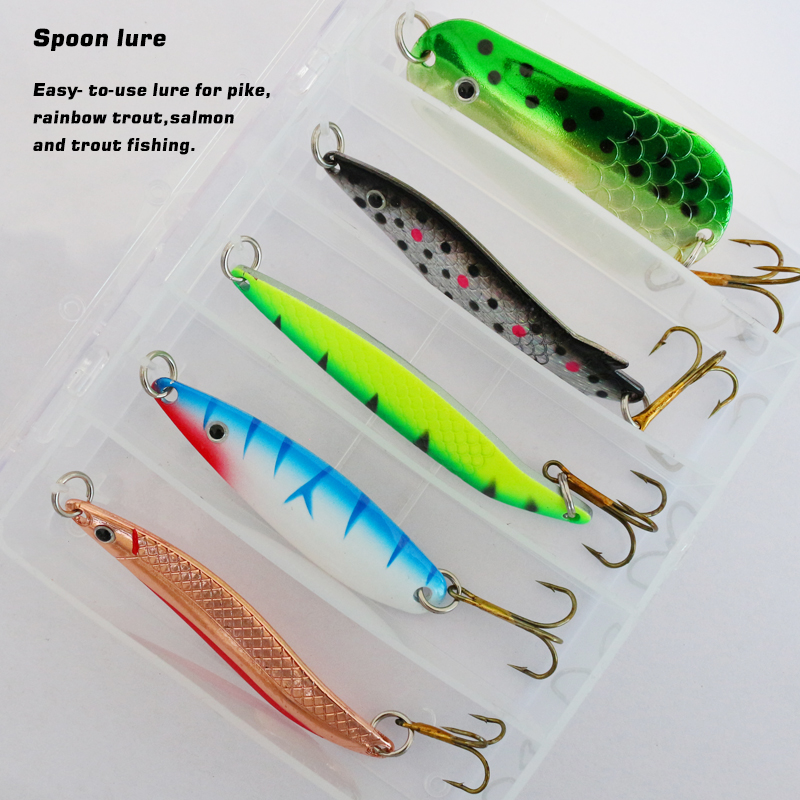
Making a wooden Fishing Lure requires more than just whittling a stick. The process demands an understanding of hydrodynamics, material buoyancy, and structural integrity. This transition marks a distinct shift from casual hobbyist to precision craftsman. Poorly balanced lures easily capsize in rough water. Weak hardware often fails when you finally hook a trophy fish. Furthermore, improper sealing always leads to rapid waterlogging and ruined action. We will provide a reliable, physics-based framework. You will learn to design, weight, and finish a highly functional wooden bait step-by-step. You can finally stop relying on commercial guesswork. By mastering these core mechanics, you gain total control over your presentation. We guide you through material selection, precise shaping, dynamic weighting, and professional sealing. Following this method guarantees your custom creation performs perfectly on the water.
Key Takeaways
**Material Selection:** Untreated hardwoods and softwoods (like Poplar) offer predictable buoyancy; avoid chemically treated woods that warp and reject paint.
**Structural Integrity:** Heavy-duty targets (like Musky or Pike) require full through-wire construction over standard screw eyes to prevent mechanical failure.
**Dynamic Weighting:** A lure’s swimming action (glide, wake, or walk) is strictly dictated by exact weight distribution, requiring blind water-testing before final assembly.
**Finishing Protocol:** Multiple thin coats of epoxy vastly outperform single thick layers for waterproofing and long-term durability.
1. Project Framing: Defining the Lure’s Core Mechanics
You must establish structural criteria before making any cuts. This ensures your final product meets specific demands. We use a straightforward evaluation framework to define the core mechanics.
The Three-Question Evaluation Framework
Ask yourself three vital questions before you start. First, identify your target species. This determines the necessary bite resistance. Pike require wire reinforcement. Bass allow for lighter hardware. Second, choose your bait profile. Are you building a jerkbait, popper, or glide bait? The profile dictates required wood density and overall blank dimensions. Finally, determine the operating depth. Depth strictly determines your lip angle, overall weight, and buoyancy requirements.
Wood Density and Buoyancy Assumptions
Different woods behave uniquely in water. You must align wood properties to your chosen profile.
| Wood Type | Density & Buoyancy | Best Application | Workability |
| Poplar | Medium density, consistent high buoyancy | Topwater poppers, shallow cranks | Extremely easy to carve and sand |
| Oak / Hardwoods | High density, lower buoyancy | Sinking glide baits, deep divers | Durable but requires power tools |
| Balsa | Very low density, maximum buoyancy | Finesse crankbaits, ultra-light baits | Fragile, requires heavy topcoat sealing |
You face a severe implementation risk if you choose the wrong lumber. Explicitly avoid using pressure-treated wood. Chemical saturation alters natural buoyancy unpredictably. These chemicals also actively repel sealants and paints. Your finish will peel off in sheets.
2. Hardware and Structural Architecture
You must evaluate internal hardware solutions early. Base your decision on scalability, cost, and risk of failure. A well-built Fishing Lure relies entirely on its internal skeleton.
Hardware Path A: Screw Eyes & Cotter Pins (Standard/Low-Cost)
This path suits bass, panfish, and standard topwater models. Execution remains simple. Bed your screw eyes or modified cotter pins in waterproof expanding polyurethane glue. You can also use 5-minute epoxy. Coat the threads entirely before insertion. However, this method carries inherent risk. Short threads strip out under extreme torque. Heavy fish apply massive rotational stress during a fight.
Hardware Path B: Through-Wire Construction (High-Durability)
Trophy fishing, musky hunting, or saltwater surfcasting demand extreme durability. You must use through-wire construction. Execute this by routing a continuous channel from the nose to the tail. Embed a single stainless steel wire inside the channel. You can also use upcycled thick copper wire. This forms a closed-loop system. The advantage is massive. You face zero risk of component separation. The breaking strain becomes the wire itself, not the wood. Even if a fish crushes the wooden body, the wire holds the hooks securely.
Acoustic Upgrades (Optional)
You can trigger lateral line strikes by adding sound. Implement rattle chambers by cross-drilling the blank. Embed solid brass beads inside the cavity. Cap the ends using plastic or wood filler. Brass creates a sharp, high-frequency click. This sound travels far underwater and provokes aggressive reaction bites.
3. Shaping the Blank: Precision Cutting and Symmetrical Tapering
You now move from raw material to a hydrodynamically sound body. Always use standardized templates. This decision stage ensures your lure swims straight instead of spinning wildly.
Anatomical Templating
Freehanding almost always fails. Asymmetry causes the lure to roll or pull heavily to one side. We call this "blowing out." You can prevent this using a strict anatomical templating process.
Draw a precise 2D profile of your desired bait on thick paper.
Cut out the template and affix it flat against the wood side.
Use a scroll saw or coping saw to remove the negative space carefully.
Keep the blade perfectly perpendicular to maintain straight vertical edges.
Topwater builders can use a simple hack for poppers. Place a coin on the nose of your blank. Trace around it. Place a pencil eraser on the tail and trace it. These perfect concentric circles give you an even, tapered sanding guide. Connect the circles visually as you sand.
Establishing the Center Reference Line
Your blank needs a definitive boundary. Draw a continuous line around the exact center of the cut wood. Use a ruler to measure the exact midpoint on the top, bottom, nose, and tail. Connect these points. Use this line as your absolute boundary for chamfering and rounding edges. Whether using a belt sander or a Dremel, always stop at this center line. This rule guarantees lateral symmetry.
4. The Physics of Weighting: Testing and Balancing
Weighting represents the most critical performance variable. You must systematically test and apply ballast. One minor mistake here ruins the blank entirely.
Pre-Weight Sealing
Raw wood absorbs water instantly. You must temporarily seal your wood before testing. Tightly wrap the body in plastic wrap or apply a thin coat of sanding sealer. This prevents water absorption from skewing your buoyancy metrics during the test.
The Rubber Band Water Test (Mock Setup)
Never drill ballast holes blindly. Use the rubber band water test first. Suspend scrap lead weights using rubber bands securely wrapped around the body. Place the rig in a test tank or sink. You must account for the exact weight of your intended hooks and split rings. Hang the hooks from the rubber bands in their exact future positions. Move the lead weights forward or backward until you achieve the desired posture.
Mechanics of Weight Placement by Lure Type
Different swimming actions require precise, distinct weight distributions. Use this summary chart to guide your ballast placement.
| Lure Category | Required Posture | Weight Distribution Rule | Expected Action |
| Glide Baits | Perfectly horizontal descent | Balanced evenly across the center line. Maximize length-to-width ratio. | Wide side-to-side sweeping motion. |
| Wakebaits | High buoyancy, pinned bottom | Low, centralized center of gravity in the belly. | Bulging surface wake without rolling over. |
| Walking Baits | Tail-down angle (approx. 45 degrees) | Biased heavily toward the tail section. | Zigzag pivot action (Walk-the-Dog). |
If the head or tail of a glide bait dips first, the gliding action is destroyed. Wakebaits roll over in heavy current if their weight sits too high. Walking baits need a tail-down bias. The submerged tail acts as the pivot point for the zigzag action.
Casting the Ballast
Once you locate the perfect balance point, mark the spots. Drill specific cavities into the belly. Melt scrap lead into wooden dowel molds. Match the dowel diameter to your drill bit exactly. Drop these custom lead cylinders into the belly cavities. Secure them permanently using waterproof epoxy. Sand the belly flush once the epoxy cures.
5. Assembly, Waterproofing, and Professional Finishing
Your final stage seals the wood against water intrusion. You can apply scalable, high-quality aesthetics without needing an expensive commercial paint booth.
The Sealing Protocol
Apply 1:1 clear epoxy resin over the entire sanded body. We learned an important implementation lesson through experience. Multiple micro-thin coats provide vastly superior adhesion. They outlast a single thick layer. Thick layers chip easily upon impact. Apply two to three thin coats. Let each coat cure over 24-hour intervals. Use a micro-torch briefly across the wet surface. The heat pops surface bubbles instantly, leaving a glass-like finish.
Cost-Effective Custom Paint Framework
Start by applying a solid base enamel or primer. White or silver works best for most baitfish patterns. You can create a highly realistic scale pattern using a simple texture hack. Tightly wrap a repurposed mesh bath scrubber (loofah) around the body. Clamp the mesh tightly using binder clips. Spray a contrasting top-coat color over the mesh. Wait five minutes, then carefully remove the mesh. This reveals a uniform, highly realistic scale pattern underneath.
Lip/Bill Installation (For Diving Lures)
Diving models require a lip. Cut a precise slot into the nose or under the chin. You can secure a polycarbonate sheet or upcycled rigid plastic lip into this slot. The angle dictates your diving depth. Ensure the lip remains perfectly perpendicular to your center line. If the lip tilts left or right, your Fishing Lure will spiral out of control during retrieval.
Conclusion
A meticulously built wooden bait offers exceptional value. You gain better durability than hollow mass-produced plastics. You dictate customizable sink rates. You create bespoke acoustic signatures unavailable in tackle shops. We recommend starting your journey with a simple topwater popper. This allows you to master the sanding, sealing, and painting processes. Once comfortable, advance to multi-jointed, internally weighted glide baits. Finally, rig your finished creation with appropriately sized split rings and treble hooks. Perform a real-world line test in shallow water. Observe the action closely. You can gently bend the front line tie to tune the swimming direction if necessary.
FAQ
Q: Why does my homemade fishing lure swim on its side?
A: This usually happens due to asymmetrical sanding. Off-center hook hangers or an incorrectly angled diving lip also cause rolling. You can often fix minor rolls by re-tuning the front eyelet. Gently bend the eyelet in the opposite direction of the roll.
Q: Why did the epoxy finish bubble and peel?
A: Bubbling often occurs due to applying epoxy in a high-humidity environment. You might have mixed the 1:1 ratio inaccurately. Failing to let the base paint outgas completely before sealing traps solvents, causing peeling later.
Q: Can I use brass rods instead of lead for weighting?
A: Yes. Brass is an excellent, non-toxic alternative to lead. It requires drilling deeper or wider cavities due to its lower density compared to lead. However, brass dowels offer exact, easily calculable weight control.

