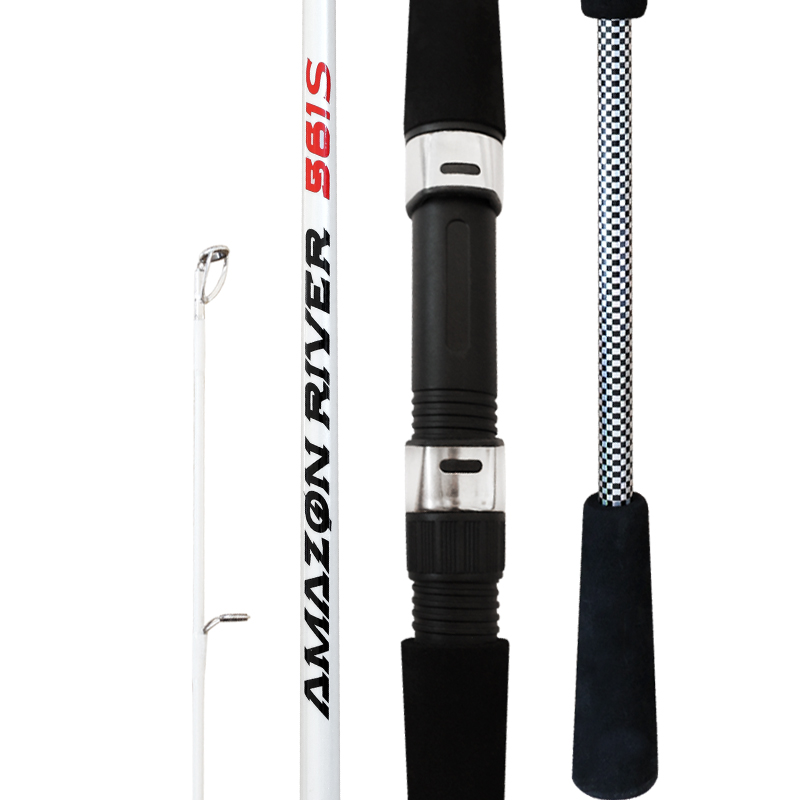
While most anglers ask how far a fishing rod can cast, technical anglers understand this is the wrong question—the critical metric is casting accuracy; landing a lure three inches off-target often means a missed strike or a snagged rig. Precision separates productive days on the water from frustrating ones, especially when targeting heavy cover or specific structure. Inconsistent casting accuracy is frequently blamed on angler error or wind, but is often a direct result of inferior blank construction, unaligned rod spines, or poor material recovery rates that introduce lateral deflection during the casting stroke. When a rod twists or wobbles under load, the lure strays from the intended flight path. To eliminate variables and maximize strike rates, anglers must evaluate how a Fishing Rod is constructed—specifically analyzing material composition, spine alignment, and taper—to select a tool engineered for directional stability.
Spine and Axis Alignment: A fishing rod blank built off its straightest axis or without regard to its natural spine will twist under load, throwing casts off the intended trajectory.
Material Recovery Rate: High-modulus materials minimize blank oscillation; a rod that stops vibrating immediately after the cast transfers energy more linearly to the lure.
Torsional Stability: Blanks engineered to resist twisting (torsional deflection) maintain guide alignment during the forward stroke, ensuring the line travels perfectly straight.
Component Synergy: Even a perfectly constructed blank will suffer in accuracy if paired with overly heavy or high-frame guides that create a detrimental lever-arm effect.
The Anatomy of a Fishing Rod Blank: Framing the Accuracy Problem
Defining Success Criteria for Casting Precision
True accuracy requires the rod tip to travel in a perfectly straight line during the forward casting stroke without lateral wobble. When you load the rod during the backcast and release that stored energy forward, the tip must track vertically. Any deviation left or right alters the lure's trajectory before it even leaves the guides. You need absolute mechanical consistency to hit small targets like dock pilings, overhanging brush, or specific current seams. If the tool itself introduces a variable, your muscle memory cannot compensate effectively.
We identify the primary mechanical failure points as blank warp, uneven wall thickness, and residual oscillation. Blank warp forces the rod to kick to one side when flexed. Uneven wall thickness, often a result of poor rolling techniques during manufacturing, causes the rod to bend unpredictably under load. Residual oscillation occurs when the tip bounces after the cast is made, creating friction as the line slaps the guide rings. Eliminating these flaws is mandatory for technical casting.
To evaluate a blank for these failure points, builders and anglers use specific diagnostic methods:
Sight down the blank from butt to tip against a light background to identify any natural curvature or warp.
Flex the tip against a smooth surface to feel for uneven resistance, which indicates inconsistent wall thickness.
Perform a static load test by hanging a weight from the tip to observe the natural bending curve.
Execute a dry cast and watch the tip section to measure how many seconds it takes for the oscillation to stop completely.
The Manufacturing Reality: Warp and the "Straightest Axis"
Acknowledge the implementation reality: no tubular rod blank is perfectly straight due to the mandrel wrapping and curing process. Blanks are built by cutting patterns of prepreg carbon, wrapping these material flags around a tapered steel mandrel, wrapping them tightly in cellophane tape, and baking them in an oven. The heat causes the resin to flow and cure. As the materials shrink and settle during this thermal cycle, slight curves naturally develop. Recognizing this inherent warp is the first step in building or selecting an accurate rod.
Explain how a pronounced curve or warp, if placed off-line to the direction of the cast, forces the rod tip to pull left or right upon energy release. The blank always wants to return to its natural resting state. When forced to flex against its warp, the stored energy releases laterally. Aligning the straightest axis with the casting plane prevents this directional pull. If the curve points directly up or directly down, the rod will track straight during a standard overhead cast.
Material Composition: Evaluating Carbon Fiber vs. Composite Blanks
The Role of Modulus and Recovery Rate
Evaluate how a pure carbon fiber fishing rod delivers a faster "recovery rate" (the speed at which the blank returns to a straight, static position after being flexed). High-modulus carbon materials possess a high stiffness-to-weight ratio. When you bend a high-modulus blank, it snaps back to center almost instantly. This crisp response is what anglers feel as "sensitivity," but mechanically, it is the foundation of casting efficiency.
Connect recovery rate to accuracy: slower recovery causes tip bounce, which creates friction in the guides and alters the lure's flight path. When the tip oscillates up and down, the line hits the ceramic guide rings repeatedly. This friction slows the lure down and pulls it off its intended trajectory. A fast-recovering carbon blank shoots the line cleanly through the dead center of the guides, maintaining velocity and directional stability.
Trade-Offs: Glass, Composites, and Action Dampening
Analyze the addition of fiberglass in blank construction: slower action, deeper bend, and increased durability. Fiberglass has a much lower modulus than carbon. It bends further and takes longer to return to straight. This makes glass excellent for reaction baits like crankbaits, where you want a delayed hookset and a parabolic bend to keep treble hooks pinned in a thrashing fish. The material absorbs shock exceptionally well.
Assess the accuracy penalty: slower materials increase the time the blank spends in a flexed state, widening the margin for lateral angler error during the cast. If your wrist rolls slightly during a slow, sweeping cast with a glass rod, the lure veers significantly off target. Composites dampen the action but require flawless casting mechanics to maintain precision. You trade pinpoint accuracy for fish-landing forgiveness.
| Material Type | Modulus Rating (Approx.) | Recovery Rate | Torsional Stability | Casting Accuracy Impact |
| High-Modulus Carbon Fiber | 40-50+ Million | Very Fast | High | Excellent precision; minimal tip bounce. |
| Standard Graphite | 30-33 Million | Moderate | Moderate | Good baseline accuracy; slight oscillation. |
| Composite (Carbon/Glass) | Mixed | Slow to Moderate | Moderate to Low | Forgiving action; requires strict mechanical form. |
| Pure Fiberglass | Under 15 Million | Slow | Low | Poor pinpoint accuracy; high lateral deflection risk. |
The "Spine" Debate: How Blank Alignment Dictates Fishing Rod Trajectory
What is the Rod Spine?
Define the spine objectively: the natural stiff axis of the blank caused by the overlap of material flags during the rolling process. When the prepreg carbon sheet wraps around the steel mandrel, the point where the material ends creates a thicker line down the length of the blank. Because there is more material along this line, it resists bending more than the rest of the tube. Every tubular rod has at least one spine, and many have a secondary spine opposite the primary one.
Spine Alignment vs. Straightest Axis Alignment
Evaluate the two primary rod-building philosophies for accuracy. Approach A involves building on the spine to prevent the rod from twisting under the load of a heavy fish. Builders who favor this method locate the spine and place the guides directly on it (for casting rods) or exactly opposite it (for spinning rods). The theory is that when the rod is fully bent fighting a fish, it will not try to twist in the angler's hand.
Approach B is optimized for accuracy: building on the straightest axis to ensure the casting plane remains perfectly vertical, regardless of the spine's location. Technical casters argue that the force exerted during a cast is far more sensitive to lateral deflection than the force of fighting a fish. By aligning the straightest axis with the target, the rod tip tracks perfectly straight during the forward stroke, eliminating lateral pull and maximizing lure placement precision.
Practical Guide: How to Find the Spine and Determine Alignment
Step-by-step diagnostic test: flexing the blank against a flat surface to locate the natural "jump" or hard spine.
Wrap a piece of masking tape around the blank near the middle to use as a marking surface.
Support the tip of the rod with one hand at a 45-degree angle.
Place the butt section on a smooth, hard surface.
Apply downward pressure to the mid-section with your free hand to induce a bend.
Roll the blank slowly under your hand; you will feel it naturally "snap" or jump into a resting position.
The outside of the curve in this resting position is the effective spine. Mark it on the tape.
Analyzing the "90% of Anglers" gap: how to inspect a factory rod to verify if the guide train aligns with either the spine or the straightest axis. Most anglers never check this. Look down the rod from butt to tip. If the guides veer left or right of the natural curve, the rod will twist during the cast. You can perform the spine test on a finished rod; if the guides end up pointing sideways when the rod finds its resting spot, the rod was not built on the spine.
Implementation Risks in Factory vs. Custom Rods
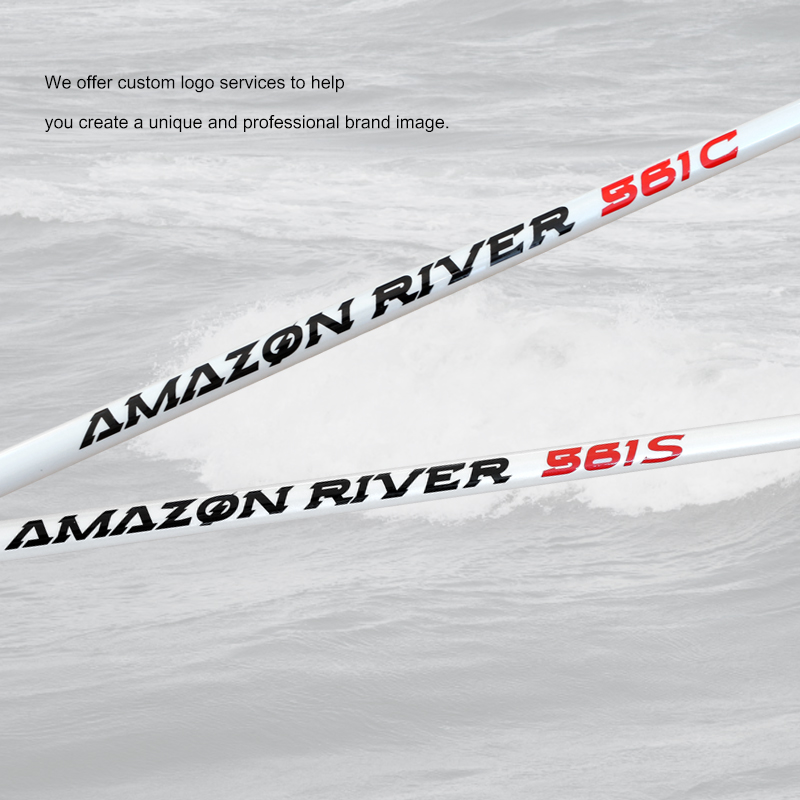
Highlight the risk of mass-produced rods ignoring both spine and straightest axis to prioritize decal visibility. Factory assembly lines move fast. Workers often place the blank in the wrapping machine based on where the manufacturer's logo is printed, ensuring the branding looks perfect on the retail rack. This completely ignores the mechanical properties of the blank, guaranteeing torsional twist and compromised accuracy on the water.
Decision framework: why technical anglers commission custom builds or seek premium manufacturers with strict axis-alignment quality control. When you control the alignment, you dictate the rod's performance. Custom builders ensure the straightest axis aligns perfectly with the guide train for maximum directional stability. They test every blank individually before wrapping the first guide, ensuring the finished tool performs exactly as intended.
Taper, Action, and Power: Matching Blank Dynamics to Application
How Taper Dictates the Flex Point
Explain the relationship between the blank's taper (change in diameter from butt to tip) and its action (where it bends). A steep taper, where the butt is thick and the tip narrows rapidly, creates a fast action. The rod bends primarily in the upper third. A gradual taper creates a moderate or slow action, bending down into the mid-section or all the way to the handle. The physical geometry of the mandrel dictates this flex profile.
Evaluate fast-action tapers for precision: a stiffer lower section with a flexible tip requires less physical movement from the angler, tightening the casting loop. You can load the rod with a quick, compact flick of the wrist. This generates high line speed and drives the lure directly at the target with minimal wind interference. Less body movement means fewer biomechanical variables introduced into the casting stroke.
Application-Specific Evaluation: The Freshwater Spinning Rod
Analyze the requirements for a freshwater spinning rod used in highly technical environments. Consider scenarios like skipping baits under boat docks, pitching unweighted plastics to laydowns, or firing small jigs into tight pockets in the reeds. You need pinpoint accuracy in tight quarters. A sloppy, slow-action rod will fail in these scenarios because the wide casting loop will catch on overhanging obstacles.
Feature-to-outcome: a fast-action, medium-power blank provides the exact loading characteristics needed for short, high-velocity, precision casts. The soft tip loads quickly with light baits, generating the necessary energy for the cast. Meanwhile, the stiff backbone provides the stopping power required to pull fish away from heavy cover immediately after the strike. This combination of a fast tip and solid power is the foundation of technical freshwater applications.
Torsional Stability and Blank Weight
The Impact of Torsional Twist on Guide Alignment
Define torsional stability: the blank's resistance to twisting on its own axis when flexed. When you cast, the weight of the lure and the friction of the line apply torque to the rod. If the blank lacks torsional rigidity, it will twist. This throws the guides out of alignment. Advanced blank designs use multi-directional carbon scrims—wrapping materials at 45-degree or 90-degree angles to the main longitudinal fibers—to increase hoop strength and prevent this twisting.
Explain how off-axis guide placement or poor blank construction causes the rod to twist during the cast, throwing the line out of the vertical plane. When the guides twist laterally, the line follows, pulling the lure off target. If you cast overhead and the rod twists 15 degrees to the right, your lure will land to the right of your target. High-quality resins and specific carbon wrapping patterns prevent this twist, keeping the energy transfer linear.
Evaluating the Lightweight Spinning Rod Advantage
Assess the physical benefits of a lightweight spinning rod: reduced angler fatigue leads to better biomechanical consistency over an eight-hour fishing session. A heavy rod degrades your casting mechanics. Your wrist tires, your elbow drops, and your release point becomes inconsistent. A lighter blank allows you to maintain sharp, precise casting strokes all day, ensuring your last cast is as accurate as your first.
Scalability and trade-offs: ensure weight reduction is achieved through advanced resin systems (like silica nano-matrix) rather than simply thinning the blank walls, which compromises torsional rigidity. A thin-walled rod will crush under load or twist violently during a cast, destroying the accuracy you sought to gain. Premium manufacturers reduce weight by using less resin and higher-tonnage carbon, maintaining the structural integrity and hoop strength required for precision casting.
Component Integration: The Lever Arm Effect
Guide Frame Height and Weight
Analyze how the components attached to the blank alter its natural construction benefits. Guides add weight and change the flex profile. Heavy stainless steel guides slow down the blank's recovery rate, inducing tip bounce. The height of the guide frames also plays a critical role in torsional stability. A blank that performs perfectly bare can become inaccurate once heavy components are wrapped onto it.
Explain the "lever arm" effect: high-frame guides place the line further from the blank, increasing the torque applied to the rod and exacerbating twist. When the rod bends, the line pulls against the top of the guide ring. This increased distance from the center axis of the blank multiplies the twisting force. Lowering the line path reduces this torque, keeping the blank stable under heavy loads.
Mitigating Risks with Low-Frame Micro-Guides and Layout
Evaluate low-profile guide trains and micro-guides for reducing swing weight, dampening line slap, and keeping the line's energy closer to the blank's center axis. Micro-guides use tiny rings (often size 4 or 5) that sit very close to the blank. This drastically reduces the overall weight added to the tip section, preserving the fast recovery rate of high-modulus carbon.
Smaller rings also dampen line slap faster. As the line comes off the reel in wide coils, the micro-guides choke those coils down immediately, funneling the line efficiently and reducing friction. Most importantly, by keeping the line close to the blank, micro-guides minimize the lever arm effect. The rod tracks straighter, delivering the lure with exceptional precision and maximizing the mechanical advantages of a well-built blank.
To optimize a guide layout for accuracy, builders follow specific spacing protocols:
Place the stripper guide at the exact distance where line coils begin to naturally choke.
Use a rapid reduction train to get the line down to the blank quickly.
Space running guides closely together near the tip to distribute stress evenly and prevent the line from cutting across the blank's curve.
Ensure the tip-top tube size matches the blank perfectly to prevent excess epoxy buildup.
Conclusion
Casting accuracy is not solely an angler skill; it is a mechanical output heavily dependent on blank straightness, material recovery rate, and torsional stability. When evaluating a premium fishing rod or selecting a blank for a custom build, prioritize high-modulus carbon fiber for fast recovery, verify the alignment of the straightest axis along the intended casting plane, and ensure the guide train minimizes torsional torque. Take the following actions to improve your equipment:
Test your current rods by flexing them on a smooth surface to locate the spine and check for straightest axis alignment.
Inspect the guide train on your factory rods to ensure they do not veer off the blank's natural curve.
Upgrade to low-profile or micro-guide setups on future rod purchases to minimize torsional torque and the lever-arm effect.
Select fast-action tapers for applications requiring short, precise casts in heavy cover.
FAQ
Q: Does rod weight affect casting distance and accuracy?
A: Yes. Heavier blanks generally have slower recovery rates, which can reduce accuracy due to tip oscillation. A lighter blank allows for higher tip speed and crisper stops, improving both distance and directional control.
Q: What is the spine of a fishing rod blank?
A: The spine is the naturally stiffer axis of the blank, created by the overlap of carbon or glass materials during the manufacturing process.
Q: How do I quickly test my fishing rod to find its spine?
A: Support the tip of the rod with one hand, place the butt on a smooth surface, and apply downward pressure to the mid-section with your other hand. Roll the blank; the spot where the rod naturally snaps or resists rolling and wants to rest is the spine.
Q: Should a fishing rod be built on the spine or the straightest axis for accuracy?
A: For maximum casting accuracy, advanced builders recommend aligning the guides along the straightest axis of the blank to ensure the rod flexes in a perfectly vertical plane, minimizing lateral deflection.
Q: How does carbon fiber improve casting precision over fiberglass?
A: Carbon fiber has a higher modulus than fiberglass, resulting in a faster recovery rate. This means the rod stops vibrating faster after the cast, keeping the line traveling straight.
Q: Why does my fishing rod twist when I cast?
A: Rod twist occurs when the rod is not built on its straightest axis, when high-frame guides create a lever-arm effect, or when the blank lacks the structural integrity to resist twisting under load.

