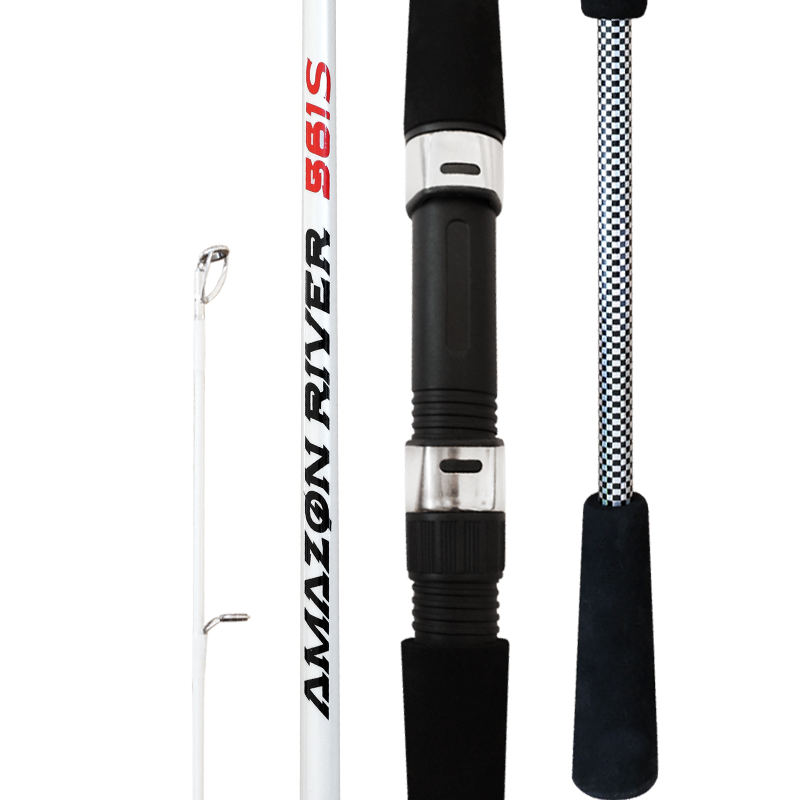
While rod blanks receive the majority of marketing attention, the guide layout is the mechanical interface that translates blank potential into actual on-the-water performance. Anglers and custom builders often invest heavily in premium blanks, only to experience compromised casting distance, line slap, or catastrophic blank failure due to suboptimal guide spacing and sizing. The reality is that the finest carbon matrix in the world cannot overcome a poorly designed guide train. Evaluating a Spining Rod requires looking past the brand name and analyzing the specific guide train architecture. You must examine how it manages line flow, distributes static loads, and impacts overall rod balance. A well-executed layout tames line coils instantly, keeps wet line off the blank, and ensures stress is distributed evenly across the rod's curvature. By understanding the mechanics of guide placement, you can accurately assess rod quality and select a tool that maximizes your casting efficiency and fighting power.
Line Management is Geometric: Modern rapid reduction guide layouts control line coils faster than traditional "cone of flight" setups, significantly improving casting distance and reducing wind knots.
Static Load Determines Durability: Proper guide placement ensures the line follows the natural curvature of a carbon fiber fishing rod under heavy load, preventing localized stress points that lead to snapping.
Empirical Layouts Outperform Charts: Static deflection and empirical spool measurements yield far superior layouts than static, pre-calculated manufacturer guide charts.
Weight Dictates Sensitivity: Oversized or excessive guides add swing weight, dampening the responsiveness of a lightweight spinning rod and causing angler fatigue.
Factory Inconsistencies Exist: Even identical rod models from major manufacturers can feature varied guide sizes or spacing across different production runs, making visual inspection critical before purchase.
The Mechanics of Line Flow on a Spinning Rod
The Coiling Effect and the Stripper Guide
When you open the bail and cast, the line does not travel in a straight path. It leaves the fixed spool in wide, rapid coils. The physics of this unspooling process create significant friction potential. The stripper guide—the first and largest guide on the rod—serves a specific function. It must capture these chaotic coils and begin funneling them into a linear path without abruptly killing the lure's momentum. The relationship between your reel's spool diameter, the spool lip angle, and the stripper guide is absolute. If the stripper guide is placed too close to the reel, the line crashes into the ring, killing casting distance. If it is placed too far away, the line slaps wildly against the blank. The optimal height and distance of this guide depend entirely on the specific geometry of the reel pushing the line.
Rapid Reduction Layouts vs. Traditional Cone of Flight
For decades, rod builders relied on the "Cone of Flight" concept. This outdated method used a gradual, linear reduction of guide sizes from the stripper guide all the way to the tip. It resulted in heavy rods with poor line control, as the coils were allowed to travel too far up the blank before being fully tamed. Modern performance relies on the Rapid Reduction strategy. Systems like the Fuji KR Concept force the line down to the blank quickly. They utilize high-frame, small-ring guides to choke the line coils in a much shorter distance. You get increased casting accuracy, virtually zero line slap against the blank, and vastly improved energy transfer during the cast. By controlling the line faster, the rod channels energy forward rather than losing it to lateral friction.
| Feature | Cone of Flight | Rapid Reduction |
| Guide Frame Height | Low to medium progression | High frames on reduction guides |
| Ring Sizing | Gradual step-down (e.g., 30, 25, 20, 16) | Steep step-down (e.g., 20, 10, 5.5) |
| Line Control Speed | Slow, allows coils to travel far | Fast, chokes coils immediately |
| Overall Weight | Heavy, dampens blank action | Lightweight, preserves crispness |
The 4-Step Architecture of a Modern Rapid Reduction Layout
A modern guide layout is a highly engineered, four-step architectural system designed to control and carry line efficiently.
The Stripper Guide: Positioned and sized precisely to catch the initial line coil off the reel. Its high frame keeps the line angle optimal.
The Reduction/Transition Train: Typically two to three progressively smaller, high-frame guides. These rapidly choke the wide line coils into a tight, straight path.
The Choke Guide: The exact point on the blank where the line is fully controlled and begins running parallel to the rod.
The Running Guides: A series of small, low-profile guides extending from the choke point to the tip-top. They carry the tamed line smoothly along the blank's curvature.
Empirical Placement: Moving Beyond Manufacturer Guide Charts
Generic manufacturer guide charts are merely starting points. They fail to account for your unique reel choice, specific spool geometry, and the exact type of line you spool up. Relying solely on a printed chart often results in a compromised layout. Advanced builders use empirical methods to find the true choke point. The "27X Method" involves multiplying the reel's spool diameter by 27 to mathematically project the ideal physical choke point location on the blank. Alternatively, the "Table Edge Method" uses the actual upsweep angle of the reel's spool axle to project a straight line to the blank, pinpointing where the line naturally wants to intersect the rod. These empirical methods determine the optimal stripper guide position based on actual hardware geometry rather than pre-determined, rigid measurements.
Evaluating Guide Spacing and Blank Deflection
Guide Preparation: Protecting the Carbon Fiber Fishing Rod Blank
A hidden cause of catastrophic blank fractures lies right beneath the guide wraps. Sharp, un-prepped guide feet can easily gouge the surface of a high-modulus carbon fiber fishing rod under heavy loads. When the rod bends, a sharp guide foot acts like a chisel against the carbon matrix. Proper guide foot preparation is non-negotiable. Builders must grind, file, and taper the metal foot before installation. This removes burrs and creates a smooth, gradual ramp. A properly tapered foot ensures the wrapping thread climbs smoothly onto the guide and prevents the metal from creating a localized stress riser that could snap the blank during a heavy hookset.
Temporary Mounting Techniques for Layout Testing
Before a single drop of epoxy is applied, the layout must be tested dynamically. Custom builders and rigorous quality control inspectors mount guides temporarily to evaluate line flow and stress distribution under load. Several temporary binding methods exist. Slices of surgical tubing offer excellent grip and allow builders to slide guides up and down the blank easily. Micro dental bands provide a tighter hold for thin-diameter tip sections. Specialized low-tack masking tape is also common, though it can sometimes obscure the blank's natural bend if applied too heavily. The goal is to secure the guides firmly enough to handle line tension while remaining adjustable.
The Role of Static Load Distribution (The Static Deflection Test)
Static load testing is the definitive process for finalizing guide placement. It involves bending the rod to its maximum safe deflection to observe the exact path of the line. This test reveals how well the guides distribute stress across the blank.
Secure the rod handle firmly in a rod wrapper or holding jig at a 45-degree angle.
Thread a high-visibility line through the reel and all temporarily mounted guides.
Attach a weight to the end of the line, allowing the rod tip to load smoothly and naturally.
Inspect the line path between each guide, looking for "bowstringing" where the line cuts sharply across the blank's curve.
Adjust guide spacing incrementally until the line follows the exact contour of the bent blank without touching it.
Stress Distribution on a Carbon Fiber Fishing Rod
High-modulus carbon fiber is incredibly strong but highly sensitive to point-loading. It requires distributed loading to survive extreme bends. Every guide acts as a load-bearing point. If guides are spaced too far apart, the blank takes the brunt of the stress in concentrated areas, increasing the risk of structural failure. However, there is a strict trade-off. Adding more guides improves stress distribution, but it also adds physical weight to the blank. Excessive weight negatively impacts the rod's recovery speed and dampens sensitivity. The perfect layout finds the exact balance: using just enough guides to keep the line off the blank and distribute stress evenly, without adding unnecessary mass.
Weight, Balance, and Guide Sizing
Micro-Guides and the Lightweight Spinning Rod
Micro-guides have revolutionized modern rod design by drastically minimizing the physical weight added to the top third of the rod. These tiny guides reduce the overall mass that the blank must carry. This reduction directly impacts swing weight. When you reduce mass near the tip, you increase the rod's crispness. A lightweight spinning rod equipped with micro-guides recovers much faster after a cast, eliminating tip bounce. It also drastically improves sensitivity. For finesse techniques where detecting subtle bites is paramount, shedding excess guide weight allows the angler to feel exactly what the lure is doing underwater without fighting the rod's own inertia.
Trade-offs: Casting Distance vs. Knot Clearance
While micro-guides offer incredible benefits for weight reduction and line control, they present one primary limitation: knot clearance. Passing heavy connection knots between braided mainline and fluorocarbon leaders can be problematic. Bulky knots like the Double Uni knot will catch on micro-guide rings, causing severe casting distance reduction and potential guide damage. Streamlined knots like the FG knot pass through much easier. When evaluating a layout, you must size the running guides based on the heaviest leader knot you intend to cast. If you frequently use heavy leaders and thick connection knots, you must compromise slightly on weight and opt for slightly larger running guides to ensure smooth knot passage.
Application-Specific Guide Layouts
Optimizing the Freshwater Spinning Rod for Finesse
Finesse fishing demands specific layout characteristics. When optimizing a freshwater spinning rod for light-line applications like drop shotting or ned rigging, weight reduction is the primary goal. These layouts rely heavily on single-foot, high-frame guides. Single-foot guides require half the thread and epoxy of double-foot guides, keeping the blank highly responsive. The high frames are necessary to keep lightweight fluorocarbon or thin braid off the blank, especially in wet conditions where surface tension can cause the line to stick to the rod, killing casting distance.
Heavy-Duty and Inshore Considerations
Heavy-duty applications require a completely different approach. When dealing with heavy drag pressures, large reels, and aggressive predatory fish, structural rigidity takes precedence over extreme weight reduction. These layouts often necessitate double-foot stripper guides to withstand the torque generated by large fish. Frame material also becomes critical. Inshore environments demand corrosion-resistant materials. Titanium frames offer the best strength-to-weight ratio and complete corrosion immunity, while high-grade Stainless Steel provides a durable, cost-effective alternative for heavy-duty freshwater and light saltwater use.
Implementation Risks and Quality Control (Buyer's Framework)
Identifying Factory vs. Custom Layout Discrepancies
Mass production introduces variables. It is a common reality that identical factory rod models can exhibit different guide sizes or spacing across different production runs. Supply chain shifts, part shortages, or loose manufacturing tolerances can alter the final product. When inspecting a factory rod, use a strict checklist. Sight down the blank to check guide alignment; a misaligned reduction train will choke the cast. Verify the choke point visually to ensure it makes sense for the rod's length. Finally, inspect the guide wraps for excessive epoxy build-up. Heavy, football-shaped epoxy wraps stiffen the blank, add dead weight, and ruin the rod's natural action.
Assessing Guide Frame and Ring Materials
Understanding ring materials helps you evaluate the true value of a rod. The ring must dissipate heat generated by friction and resist grooving from braided line.
| Material | Characteristics | Best Application |
| Aluminum Oxide | Basic, heavier, standard heat dissipation. | Entry-level rods, monofilament line. |
| Alconite | Excellent durability, good heat dissipation, cost-effective. | Workhorse rods, standard braid and fluorocarbon. |
| SiC (Silicon Carbide) | Extremely hard, superior heat dissipation, heavier than Torzite. | Heavy drag applications, fast-running fish. |
| Torzite | Ultra-light, incredibly smooth, allows for thinner rings. | Premium finesse rods, maximizing blank recovery. |
Paying a premium for Titanium frames and Torzite rings makes sense when building an ultra-light finesse rod where every fraction of an ounce matters. For a heavy-duty flipping stick or a standard inshore rod, Stainless Steel frames with Alconite or SiC rings provide exceptional performance at a much more reasonable cost.
Conclusion
Perform a visual alignment check by sighting down the rod blank from the butt to the tip to ensure all guides are perfectly straight.
Conduct a gentle static deflection test in-store by pressing the rod tip against a carpeted floor to check for line bowstringing.
Verify the running guide sizes against the specific leader knots you tie most frequently to prevent casting interference.
Consult a custom rod builder if your specific reel and line combination requires a non-standard rapid reduction layout.
FAQ
Q: How does the stripper guide affect casting distance on a spinning rod?
A: The stripper guide controls the initial wide line coils coming off the reel spool. If its height and ring size are optimized for the specific reel, it funnels the line smoothly, minimizing friction and preventing the line from slapping against the blank, which maximizes casting distance.
Q: What is a rapid reduction guide layout?
A: A rapid reduction layout uses a short series of high-frame, small-ring guides to quickly choke the wide coils of line down to the rod blank. This modern system improves line control, reduces overall rod weight, and increases casting accuracy compared to older, gradual reduction methods.
Q: Why is static deflection testing important?
A: Static deflection testing reveals how the line travels under heavy load. It ensures the guides are spaced correctly to distribute stress evenly across the bending blank. Proper spacing prevents the line from cutting across the curve, which protects the rod from localized stress and breakage.
Q: Do micro-guides cause problems with leader knots?
A: Yes, micro-guides can catch bulky connection knots like the Double Uni knot, reducing casting distance and potentially damaging the guides. Anglers using micro-guides should utilize streamlined knots like the FG knot or size their running guides slightly larger to accommodate their preferred leader connections.
Q: Are titanium guide frames worth the extra cost?
A: Titanium frames are highly beneficial for ultra-light finesse rods because they significantly reduce swing weight, improving rod crispness and sensitivity. They are also completely corrosion-resistant, making them an excellent investment for dedicated saltwater anglers.

