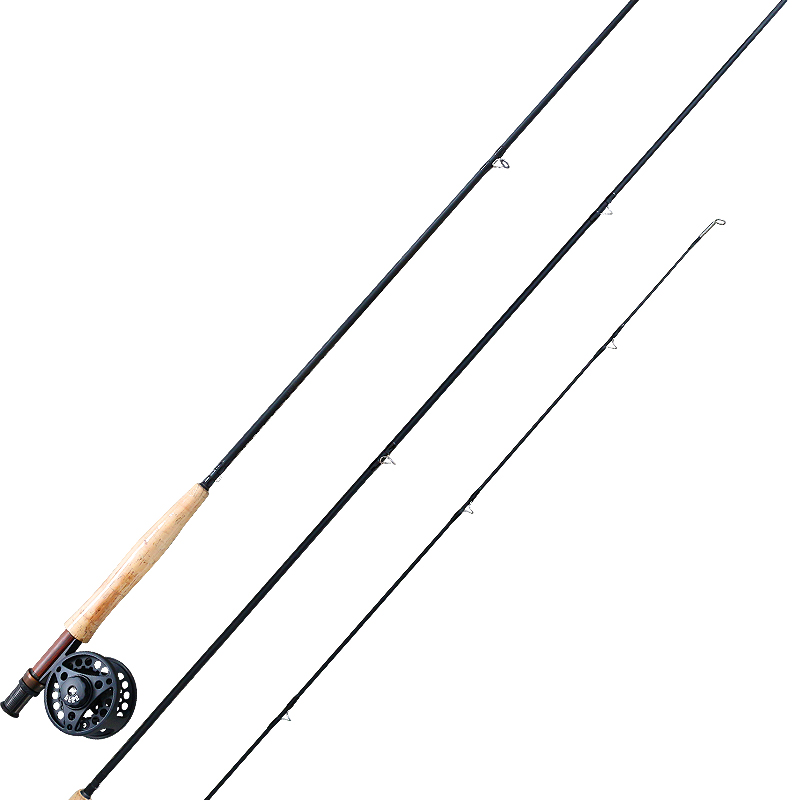
In river environments, casting accuracy consistently outperforms maximum distance. Missing a target seam by six inches often results in a compromised drift and a refused fly. Anglers frequently evaluate and purchase a Fly Rod based on its ability to cast 70 feet in a parking lot. This ignores the technical demands of mending, roll casting, and precise short-range presentations required on moving water. A tight loop thrown 80 feet across a lawn does not translate to threading a dry fly under a low-hanging willow branch while managing conflicting surface currents.
To select a tool built for technical river accuracy, buyers must evaluate specific design elements. You need to look at taper profiles, material recovery speeds, and action classifications rather than relying on generalized marketing claims. Understanding how a rod loads at 20 feet determines true on-water performance. Moving past the obsession with distance casting allows you to focus on the mechanical attributes that actually dictate success in dynamic river ecosystems.
Taper dictates precision: A rod with a soft, compliant tip paired with a powerful butt section allows for efficient loading at short distances while maintaining the backbone needed for line control.
Material recovery is critical: Modern carbon fly rod blanks minimize tip oscillation (bounce) after the casting stroke, resulting in tighter loops and superior directional accuracy.
Payload dictates design: The ideal rod weight and length must be evaluated against the aerodynamic resistance of the flies used and the physical constraints of the river, not just the target species.
Action trade-offs are inevitable: Ultra-fast rods excel in high winds but often lack the finesse and short-range loading capabilities required for delicate dry fly presentations.
Post-cast performance matters: A true river fishing rod must excel not just in the cast, but in the drifting and fighting positions, offering the leverage to mend line and the flex to protect light tippets.
Defining Success Criteria for a River Fishing Rod
Accuracy vs. Distance in Moving Water
The primary casting zone for most river fishing applications falls strictly between 15 and 40 feet. Within this window, the mechanics of accuracy rely entirely on directional control, loop stability, and efficient energy transfer. Directional control depends on the rod tip tracking in a perfectly straight line during the forward stroke. Any lateral deviation or twisting in the blank sends the energy off-target, causing the fly to land outside the intended feeding lane. Loop stability requires a smooth acceleration to a sudden stop. This allows the unrolling line to form parallel top and bottom legs that cut through wind resistance and deliver the leader accurately.
Distance casting relies on aerializing long sections of line to load the rod. River accuracy relies on water-loading efficiency and line control features. You must frequently execute roll casts, single-handed Spey techniques like the Snap-T or Double Spey, and quick directional changes without false casting. A highly specialized river fishing rod must possess a taper that bends deeply enough under the weight of only 10 to 15 feet of fly line to generate a proper D-loop. It needs to transfer energy forward without requiring the momentum of a standard overhead backcast. If the blank is too stiff, it simply will not load at these short distances, forcing you to overpower the casting stroke and destroy your accuracy.
Beyond the Cast: Drifting and Fighting Dynamics
A fly rod spends a fraction of its operational life actually casting. The majority of your time on the water is spent in the drifting position. Once the fly lands, the rod becomes a line management tool. Tip stiffness directly impacts your ability to execute reach mends, stack mends, and manage complex currents. If the tip is too soft, lifting the line off the water to mend requires excessive arm movement. This inevitably pulls the fly out of its natural drift and creates drag. A tip that is too stiff lacks the tactile feedback necessary to mend small sections of line with subtle wrist flicks.
When transitioning to the fighting position, the dynamic shifts entirely. The necessity of a forgiving mid-section becomes apparent when protecting ultra-fine tippets from breaking during sudden runs or head shakes. When you hook a heavy trout on 6X tippet, the rod must act as a shock absorber. There is a delicate balance between having enough butt-section leverage to steer heavy fish out of fast currents or away from submerged log jams, and maintaining enough tip compliance to prevent pulled hooks. A rod that remains completely rigid through the middle third will consistently snap light tippets when a fish surges near the net.
The Payload Factor: Matching Design to Fly Selection
Rod design must handle varying aerodynamic loads rather than just the physical weight of the fly. A highly wind-resistant dry fly, such as a size 8 foam hopper pattern, creates immense drag during the casting stroke. It acts like a parachute, requiring high line speed to turn over the leader. Conversely, a heavy, multi-fly nymph rig with tungsten beads, split shot, and a large strike indicator creates a concentrated mass that hinges and kicks violently during false casting. The taper must accommodate these opposing physical forces.
The baseline requirement for any river setup is that the rod must generate sufficient line speed to turn over the intended leader and fly combination without overpowering the presentation. Pushing a heavy nymph rig requires a rod with substantial mid-section power to open the loop slightly, preventing the weights from tangling with the fly line. Presenting a size 20 dry fly on a 12-foot leader requires a rod that can generate high line speed with a tight loop, turning over the long monofilament softly without splashing the water and spooking wary fish.
Core Design Elements: How Taper and Action Influence Precision
Understanding Rod Taper Profiles and Design Philosophies
The anatomy of a taper designed for pinpoint accuracy relies heavily on a soft-compliant-quick tip section. This means the top 15 to 20 inches of the blank bend easily under the minimal weight of a short line, yet recover to a straight position instantly when the cast stops. This compliance allows the rod to load at 20 feet. The quick recovery ensures the energy transfers cleanly into the fly line without sending shockwaves down the leader.
Beneath this compliant tip, the rod must transition into significant butt section power reserves. This lower-section stiffness is required for lifting heavy sinking lines off the water, fighting fish in heavy currents, and executing long reach mends where a large volume of line must be repositioned instantly. The transition zone between the tip and the butt dictates the rod's loading characteristics at varying distances. Manufacturers utilize different design philosophies to manage this transition.
Progressive tapers feature a smooth, continuous increase in stiffness from tip to butt. They offer seamless energy transfer, making them highly intuitive to cast. As more line is aerialized, the rod bends deeper into the blank in a predictable manner. Compound tapers utilize specialized flex points and distinct zones of stiffness. A compound taper might feature a very soft tip, a surprisingly stiff upper-mid section to drive tight loops, and a softer lower-mid section to protect tippets. These require a more precise casting stroke but offer highly specialized performance for technical presentations.
Action Categories and Their Real-World Trade-Offs
Action describes where the rod flexes under a standard load. Selecting the right action requires accepting specific trade-offs based on the river conditions you face most often. Fast action rods bend primarily in the top quarter of the blank. They generate high line speeds and punch through heavy winds with ease. However, they struggle to load at distances under 25 feet, making them a poor choice for small creeks or technical dry fly fishing where delicate presentations are required.
Medium-fast action rods represent the industry standard for versatility. They bend through the top third of the blank, offering a balance between presentation finesse and moderate power. They load well at short distances but still possess enough backbone to cast a double-nymph rig or a small streamer. Medium-slow action rods bend deeply into the lower half of the blank. They provide superior close-range accuracy and maximum tippet protection, but they lack the power to cast heavy rigs or punch through strong headwinds.
Fly Rod Action Category Comparison
| Action Type | Primary Flex Zone | Strengths | Real-World Trade-Offs |
| Fast Action | Top 25% of the blank | High line speed, excellent wind resistance, long-distance capability. | Poor short-range loading (under 25 feet), increased risk of tippet breakage on the strike. |
| Medium-Fast Action | Top 35% of the blank | Versatility, balances presentation finesse with moderate power. | May struggle slightly in gale-force winds or when casting exceptionally heavy streamer rigs. |
| Medium/Slow Action | Top 50% to full blank | Superior close-range accuracy, delicate presentation, maximum tippet protection. | Limited scalability for heavy rigs, struggles in wind, poor long-distance loop stability. |
Material Science: Evaluating the Carbon Fly Rod
Modulus, Resin, and Recovery Speed
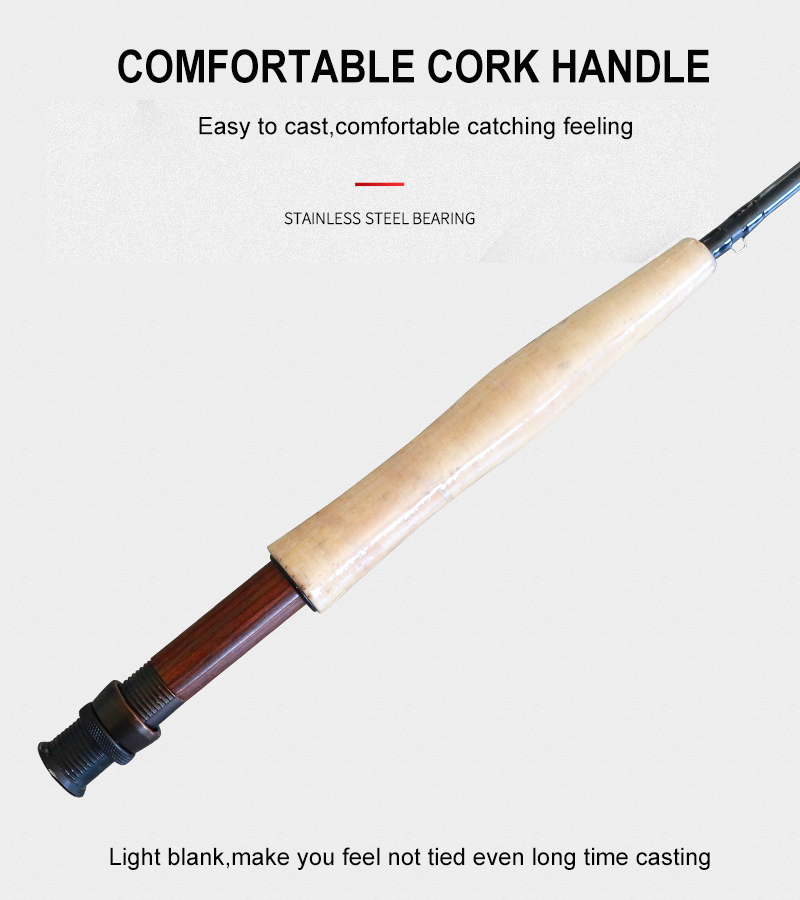
The performance of a modern carbon fly rod is dictated by the interplay between graphite modulus and resin systems. High-modulus graphite refers to the stiffness-to-weight ratio of the carbon fibers. A higher modulus material is stiffer, meaning rod designers can use less material to achieve the desired flex profile. This reduction in material directly improves blank recovery speed, which is the most critical factor in casting accuracy.
Recovery speed is the time it takes for the rod tip to return to a static, straight position after the forward stop of the casting stroke. There is a direct correlation between fast recovery speed, reduced tip bounce, and the stabilization of the casting loop. If a rod tip oscillates up and down after the stop, those waves travel down the fly line. This creates a tailing loop, causing the fly to kick off-target or tangle with the leader. High-modulus carbon minimizes this oscillation, ensuring the energy travels in a perfectly straight line toward the target.
Modern resin systems, particularly those utilizing silica nano-matrix technology, bind the carbon fibers together while reducing overall blank weight. Traditional resins added dead weight and dampened the rod's crispness. Nano-resins penetrate the carbon fibers more effectively, increasing crush strength and impact resistance. This maintains the structural integrity required to handle heavy fish in fast water without adding unnecessary mass to the blank.
The Role of a Lightweight Fly Rod in Casting Fatigue
When evaluating a lightweight fly rod, you must differentiate between physical weight and swing weight. Physical weight is the total mass of the rod measured in ounces on a scale. Swing weight is the perceived weight during the casting stroke, dictated by how that mass is distributed along the blank. A rod that is exceptionally light on a scale can feel heavy and sluggish in the hand if too much material is concentrated near the tip.
Swing weight directly impacts casting fatigue during high-repetition river fishing. Executing hundreds of roll casts, mends, and false casts over a ten-hour day strains the wrist and forearm. A rod with a low swing weight allows for faster acceleration and sharper stops with less physical effort. This helps you maintain casting accuracy late into the day when muscle fatigue typically causes sloppy loops and poor presentations.
Balancing the pursuit of ultra-lightweight materials against the need for structural durability is an engineering challenge. Blanks with extremely thin walls to reduce weight are highly susceptible to impact damage. A heavy tungsten split shot striking a thin-walled blank during a tailing loop can cause micro-fractures. These invisible fractures compromise the carbon fibers, leading to catastrophic failure when fighting a fish or executing a roll cast later in the day.
Sizing Your Setup: Length and Weight Considerations
Matching Rod Length to River Environments
The 9-foot rod serves as the baseline standard for universal river application. It provides the optimal geometric angle for lifting line off the water, clearing low obstacles during the backcast, and executing standard reach mends. For the vast majority of medium to large rivers, the 9-foot length offers the best compromise between casting leverage and line control. It allows you to mend line over conflicting currents while maintaining enough compactness to cast tight loops under moderate tree cover.
Scenarios for downsizing to 8-foot or 8.5-foot rods involve tight canopy streams, brush-choked environments, and small freestone creeks. In these settings, casting room is severely restricted. A shorter rod allows you to form tight loops under overhanging branches and execute bow-and-arrow casts where a 9-foot rod would constantly snag the surrounding foliage. The trade-off is a reduced ability to mend line over complex currents at a distance, as the shorter lever cannot lift as much line off the water.
Upsizing to 9.5-foot or 10-foot rods is necessary for technical tailwaters requiring extended reach mends, high-sticking, and Euro-nymphing applications. In these scenarios, line control supersedes tight-loop casting. The extra length allows you to keep the fly line entirely off the water, maintaining direct contact with the nymphs and eliminating drag caused by surface currents. The longer lever also provides superior roll casting capabilities, making it easier to reposition heavy rigs without false casting.
Rod Length Application Guide
| Rod Length | Ideal Environment | Primary Technique | Limitations |
| 8'0" - 8'6" | Small creeks, heavy canopy, brushy banks. | Short-range dry flies, bow-and-arrow casts. | Poor mending capability, limited reach over currents. |
| 9'0" | Medium to large rivers, open banks. | Universal application, dry flies, light nymphs. | Can be unwieldy in very tight brush. |
| 9'6" - 10'0" | Technical tailwaters, large freestone rivers. | Euro-nymphing, high-sticking, long reach mends. | Heavy swing weight, difficult to cast tight loops under branches. |
Selecting the Right Line Weight for River Dynamics
Line weight dictates the mass available to load the rod and carry the fly to the target. Matching the weight to the river size and payload is non-negotiable for accuracy. A 3-weight or 4-weight setup is optimized for delicate presentations, small water, and light payloads. These weights excel at presenting small dry flies on long, fine leaders without spooking wary fish in flat water. They lack the mass to turn over heavy indicator rigs or punch through strong winds.
The 5-weight remains the benchmark for versatility. It is capable of handling standard dry flies, light nymph rigs, and small streamers. It possesses enough mass to cut through moderate afternoon winds while retaining enough finesse for spring creek presentations. If you can only carry one rod on a river, a 9-foot 5-weight covers the widest range of fishing scenarios.
Stepping up to a 6-weight is necessary for heavy streamers, large rivers, heavy multi-nymph rigs, and significant wind mitigation. The extra mass of a 6-weight line turns over large, air-resistant patterns like articulated streamers or heavy stonefly nymphs. It also provides the backbone required to pull large fish out of heavy current seams and steer them away from submerged structure.
Line Weight and Payload Matrix
| Line Weight | Optimal Fly Sizes | Primary Application | Wind Resistance |
| 3wt - 4wt | Size 16 to 24 | Spring creeks, delicate dry flies, micro-nymphs. | Poor. Struggles in anything over a light breeze. |
| 5wt | Size 10 to 20 | General river fishing, hopper-dropper rigs. | Moderate. Handles standard afternoon winds. |
| 6wt | Size 4 to 12 | Heavy streamers, double tungsten nymph rigs. | Excellent. Cuts through strong headwinds easily. |
Implementation Risks: Avoiding Common Purchasing Mistakes
Decoding Manufacturer Claims
Taking marketing buzzwords like "unprecedented power," "ultimate finesse," or "laser accuracy" at face value without understanding the underlying taper leads to poor purchasing decisions. Manufacturers often highlight a single attribute, masking the inevitable trade-offs. Learn to translate specifications into real-world applications. Recognize that a rod heavily marketed for power and distance will almost certainly sacrifice the short-range loading required for technical dry fly accuracy at 20 feet. Evaluate the taper description, action rating, and material composition rather than the promotional adjectives printed on the tube.
The "Parking Lot Cast" Fallacy
Evaluating a rod based on maximum distance casting on grass without a leader or fly attached is a critical error. A bare fly line cutting through the air behaves entirely differently than a line anchored by a 9-foot leader and a wind-resistant fly. To gauge true loading characteristics, test casting must occur at realistic river distances between 20 and 40 feet. Use a simulated rig, such as a yarn indicator or a heavy yarn fly, to replicate the aerodynamic drag and payload weight the rod will actually experience on the water. If the rod cannot form a tight loop at 25 feet with a yarn indicator attached, it will fail you on the river.
Line Matching and Over-Lining
Mismatching line weight to rod action destroys the designer's intended taper performance. A common mistake is over-lining, which involves putting a 6-weight line on a fast-action 5-weight rod to force it to load at shorter distances. While this bends the rod deeper, it severely dampens the blank's recovery speed, causing tip bounce and wide, sloppy loops. Adhere to AFFTA grain-weight standards. Understand how specific line tapers interact with the rod's stiffness profile before altering the line weight. A weight-forward line with a short, aggressive head will load a fast rod differently than a standard double-taper line.
Conclusion
Define your primary river size and most frequently used fly types to establish a baseline line weight and rod length.
Shortlist two to three rods within that specific weight and length class, focusing on medium-fast tapers with high-modulus recovery.
Conduct test casts strictly within the 20-to-40-foot range using a simulated leader and fly rig to gauge short-range loading.
Evaluate the rod's ability to execute roll casts and reach mends on moving water, rather than just standard overhead casts.
FAQ
Q: What specific design features make a fly rod accurate?
A: Accuracy is driven by a straight-tracking blank, a compliant tip that loads at short distances, and a fast recovery speed. High-modulus carbon minimizes tip oscillation after the casting stroke, ensuring the energy travels in a straight line and forms tight, stable loops without lateral deviation.
Q: Is a faster action rod better for river fishing?
A: Not necessarily. While fast-action rods excel in high winds and long-distance casting, they often lack the flexibility to load properly at the 15-to-30-foot range common in river fishing. Medium-fast actions generally provide better versatility for mending, roll casting, and short-range accuracy.
Q: How does rod length affect casting accuracy and line mending on a river?
A: A standard 9-foot rod offers the optimal angle for lifting line and executing reach mends over complex currents. Shorter rods increase accuracy in tight, brushy environments but sacrifice mending capability. Longer rods maximize line control and drift management but can feel unwieldy for tight-loop dry fly casting.
Q: Why choose a carbon fly rod over fiberglass for technical accuracy?
A: Carbon fiber offers a significantly higher stiffness-to-weight ratio and faster recovery speed than fiberglass. This allows carbon rods to generate tighter loops, higher line speeds, and superior directional tracking, which are necessary for cutting through wind and delivering flies with pinpoint precision.
Q: What is the best weight for a lightweight fly rod used in trout streams?
A: A 4-weight or 5-weight is ideal for most trout streams. A 4-weight excels at delicate dry fly presentations and light nymphing, while a 5-weight provides the versatility to handle larger dry flies, heavier nymph rigs, and moderate winds without overpowering the presentation.

