The fly fishing industry often obsesses over extreme distance casting. Brands aggressively market ultra-stiff rods promising effortless 80-foot launches. However, this marketing bias actively penalizes anglers fishing in standard river environments. In these technical waters, precision dictates success much more than raw power. Accurate river casting means controlling your loop shape and managing line speed effectively. You must present flies delicately at distances of 20 to 50 feet. Anglers face tricky currents, overhanging branches, and structural obstacles daily. A high-performing river fishing rod focuses on rapid recovery and tactile feedback rather than sheer stiffness. You need equipment engineered specifically for loop control. Selecting the proper taper, material, and rod action is the most reliable way to improve your short-to-medium range accuracy. Mastering these close-quarter presentations turns a frustrating day into a highly productive one.
Key Takeaways
- Action vs. Recovery: A fast-action rod isn't inherently more accurate; recovery speed (how fast the rod returns to straight) is the true metric for loop control.
- Material Efficiency: A modern carbon fly rod provides the dampening properties necessary to eliminate tip bounce, a primary killer of casting accuracy.
- Taper Matters Most: Mid-flex and progressive tapers offer the loading efficiency required for tight-quarter river casting, outperforming pure tip-flex designs in close-range scenarios.
- Intentional Sizing: Rod length and weight must be dictated by the specific river canopy and target fly size, not generic industry defaults.
The Distance Illusion: Why "Fast Action" Doesn't Guarantee Accuracy
Many anglers fall victim to clever marketing campaigns. They purchase ultra-fast rods marketed specifically for extreme distance. These anglers often hit the river and face immediate frustration. They find their new gear entirely unresponsive. It feels dead and inaccurate at typical river casting ranges. Most trout fishing happens well under 40 feet. At these shorter distances, an overly stiff blank becomes a significant liability.
We call this the stiffness trade-off. Overly stiff rods require excessive line weight to load properly. If you only have 20 feet of line outside the tip, a fast-action rod barely bends. This lack of flex strips you of vital tactile feedback. You cannot feel the rod load during your backcast. Without this feedback, your timing suffers immensely. Your loops open up, and precision vanishes entirely. You end up forcing the cast using arm strength instead of relying on rod mechanics.
Furthermore, ultra-stiff rods punish minor casting flaws. A highly skilled tournament caster handles the rigidity perfectly. However, the average angler experiences collapsed loops and tailing knots. When you fish a standard river, you constantly adjust your angles. You negotiate slippery rocks, wade through heavy currents, and cast from awkward positions. You rarely get the luxury of a perfect stance. In these chaotic conditions, an unforgiving, stiff rod becomes your worst enemy. It demands absolute perfection.
Accuracy requires a completely different approach. You must reframe your primary goal. You need a rod engineered to load deeply using minimal line. A properly loaded blank delivers precision roll casts effortlessly. It allows you to mend line effectively over complex currents. It also helps you punch bulky dry flies through variable river winds. Real-world accuracy depends entirely on this close-range responsiveness.
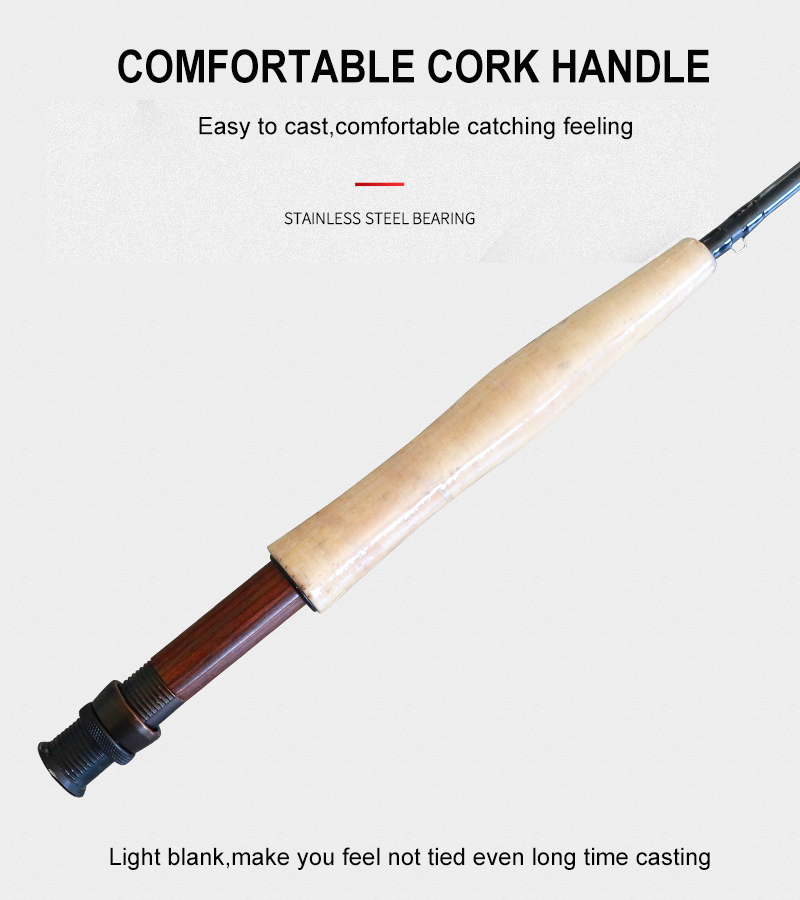
Anatomy of a Precision River Fishing Rod
Let's break down how progressive tapers work in real-world environments. A progressive taper transfers energy smoothly from the butt section directly to the tip. It avoids the binary stiff or soft feel common in entry-level models. As you extend more line, the rod bends deeper into the mid-section. This dynamic flexing creates ultimate loop control. You can adjust your casting stroke instinctively. When you need to cast 15 feet, only the tip loads. When you push to 40 feet, the mid-section engages. This adaptability defines true accuracy.
Recovery speed remains the critical metric for accuracy. We must distinguish recovery speed from rod flex or action. Action describes where the rod bends. Recovery speed describes how fast it returns to a perfectly straight position. A slow recovery causes the rod tip to vibrate after you stop your cast. This bouncing tip throws tailing loops instantly. It sends chaotic waves down the fly line, completely destroying your accuracy. Crisp recovery ensures energy transfers cleanly into the fly line.
Swing weight dynamics also play a massive role in precision. Swing weight refers to how heavy the rod feels during the casting stroke. A rod might weigh three ounces on a scale but feel sluggish in your hand. Poor mass distribution increases angler fatigue quickly. Heavy tips force you to make larger, sloppier micro-adjustments. A balanced setup keeps your casting hand relaxed. You can make subtle tracking corrections effortlessly throughout the day.
Casting Profile Comparison by Taper Design
| Taper Type |
Load Distance |
Loop Control |
Best Application |
| Tip-Flex (Fast) |
Long (50ft+) |
Requires perfect timing |
Heavy wind, large streamers |
| Mid-Flex (Progressive) |
Short to Medium (20-40ft) |
Highly intuitive feedback |
Dry flies, technical nymphing |
| Full-Flex (Slow) |
Very Short (under 25ft) |
Rhythmic and relaxed |
Small brushy creeks |
Material Science: Evaluating Carbon Fly Rods for Tactile Feedback
Fishing blank technology has evolved rapidly over the last two decades. Early fiberglass and legacy graphite materials felt heavy and dampened poorly. They offered great durability but lacked crisp responsiveness. Today, manufacturers utilize modern high-modulus graphite and advanced nano-resin technologies. These material upgrades completely transform the casting experience on the river.
A well-designed carbon fly rod provides distinct structural advantages. It offers the highest strength-to-weight ratio available on the market. Engineers can design much thinner blank diameters. These slim profiles cut through harsh winds efficiently. Thinner blanks also drastically improve your tracking. Tracking refers to the straight-line path of the rod tip during your stroke. Excellent tracking prevents horizontal line deviations, ensuring the fly hits your exact target consistently.
Premium lightweight resins also provide vital dampening properties. Manufacturers use silica nano-resins to bond the carbon fibers tightly. This advanced construction prevents micro-fractures inside the blank. It maintains structural integrity without adding bulky weight. When you punch a cast into the wind, the rod stores intense kinetic energy. Cheap materials release this energy violently, causing excessive tip oscillation. High-quality carbon fibers absorb this excess energy instantly. They dampen the vibration. This rapid stabilization translates directly to tighter, more predictable loops. You get a tactile connection to the fly line without messy aftershocks.
Sizing Your Setup: Weight and Length for Specific River Scenarios
Choosing the correct dimensions requires intentional sizing. You cannot rely on generic industry defaults like the standard 9-foot 5-weight for every river. Rod length and line weight must match your specific environment perfectly. Taking time to assess your local waters prevents costly gear mismatches.
First, consider the implementation realities of rod length. Let's look at typical water types and how length impacts your approach:
- Small and Canopied Streams: Focus on 7’0” to 8’0” rods. Shorter blanks help you navigate dense brush easily. They excel at tight bow-and-arrow casts. You avoid snagging overhanging branches during standard overhead strokes. They also feel remarkably light in hand.
- Medium to Large Freestones: Look for 8’6” to 9’0” rods. The extra length provides necessary leverage for elevated line mending. It keeps your line off the water, creating longer drag-free drifts. You can easily reach across faster currents to hit soft seams holding fish.
Weight selection translates specific features directly into outcomes. Your target fly size dictates this choice heavily. Let's break down the optimal ranges for river accuracy.
- 3-Weight to 4-Weight Options: These sizes are ideal for a lightweight fly rod setup. They prioritize dry flies and delicate surface presentations. The lighter line lands softly, preventing spooky trout from scattering. They also protect fine tippets during aggressive strikes, reducing break-offs.
- 5-Weight to 6-Weight Options: These represent the utilitarian choice for varied conditions. They generate the mass needed to turn over heavy nymph rigs safely. You can cast bulky indicator setups without collapsing your loop. They also punch large terrestrial patterns, like foam hoppers, through stiff afternoon winds easily.
How to Evaluate and Select Your Next Fly Rod
Testing rods properly guarantees a smart purchase. You need a reliable shortlisting logic before visiting a fly shop. Most anglers test rods by stripping out 70 feet of line in a parking lot. They aim for maximum distance on concrete. Do not do this. It tells you absolutely nothing about river accuracy. Instead, test the rod at 25, 35, and 45 feet. Use a standard 9-foot leader with a yarn indicator attached. These distances mirror real-world river scenarios perfectly. If possible, test casting on grass or actual water.
Assess the "feel" carefully during these short casts. Look for a blank that communicates its load point clearly. Your casting hand should sense the exact moment the line straightens behind you. If the rod feels stiff and vague at 30 feet, put it back on the rack. You want intuitive feedback, not a frustrating guessing game.
Pay close attention to component quality as well. Components influence overall tracking stability significantly. Single-foot guides reduce thread wraps and epoxy weight, lowering the swing mass. Traditional snake guides pass connection knots smoother. High-quality cork grips allow for a relaxed, pressure-free hold. A relaxed grip minimizes unwanted wrist rotation during the power stroke.
Finally, map your primary river type to a specific rod tier. Identify your most frequent casting distances and typical fly sizes. Use this data to choose a dedicated Fly Rod model. By prioritizing real-world conditions over marketing hype, you guarantee better days on the water. Establish these clear next steps before making any final purchasing decisions.
Conclusion
Consistently accurate river casting is rarely an accident. It is a direct product of matching rod taper, recovery speed, and advanced materials to realistic casting distances. Ditching the industry obsession with raw distance allows you to focus on practical fishing applications. A rod optimized for 30-foot precision will catch significantly more fish than one built solely for 80-foot bombs.
Before making your next purchase, conduct a final verification. Remind yourself to prioritize gear that feels intuitive and loads easily at short range. A blank requiring tournament-level mechanics to perform will fail you on a tight, brushy stream. You need responsiveness, tactile feedback, and loop control above all else.
Take action by exploring specific product configurations tailored strictly to your local waters. Book a hands-on casting demonstration at your local shop and test at realistic distances. Consult a professional sizing guide to dial in the perfect length and line weight. Investing time in this detailed selection process pays massive dividends in your casting precision.
FAQ
Q: Does a lightweight fly rod cast further?
A: Not necessarily further, but it reduces swing weight and fatigue. This allows for more precise, repeatable casting mechanics over a long day on the river. Lighter setups help you maintain tight loops and delicate presentations without exhausting your forearm, which ultimately improves your effective fishing range in technical water.
Q: What is the best rod action for dry fly accuracy?
A: Medium-fast or progressive actions are generally best. They load easily at short distances to protect light tippets while maintaining enough recovery speed to form tight loops. This balanced flex profile gives you the tactile feedback necessary to drop dry flies softly on target without spooking wary fish.
Q: How does a carbon fly rod compare to fiberglass for small streams?
A: Carbon offers faster recovery and lighter weight. It is ideal for precision tracking and punching through variable winds. Fiberglass provides deeper flex and extreme durability, which is excellent for ultra-short, rhythmic casting. However, fiberglass sacrifices some tracking stability at longer ranges compared to modern high-modulus carbon blanks.

