
Author: Site Editor Publish Time: 2026-07-17 Origin: Site

Selecting tackle based solely on brand prestige or visual appeal often leads to trouble. You might face mismatched gear, broken lines, missed hooksets, or terrible casting distances. To build an effective tackle system, you must decode two primary physical properties. We call these properties Power and Action. Power dictates the overall resistance to bending. Action determines exactly where the blank bends and how fast it recovers. You cannot afford to guess these specifications.
Our objective is to equip you with a concrete framework. You will learn to evaluate rod specs accurately. We will help you pair the correct power and action to your specific target species, lure weights, and casting techniques. Stop relying on luck and start engineering your success on the water. Proper alignment ensures your gear performs exactly as intended.
Understanding rod physics helps you catch more fish. Mechanics transfer energy seamlessly from your hands down the blank and directly into the hook point. Every casting motion and hookset relies on this energy transfer. If you use mismatched gear, you interrupt this crucial flow of force. A poorly selected setup fundamentally works against you during a fight.
Consider the tangible cost of misalignment. Imagine using an extremely stiff rod to throw treble-hook crankbaits. The lack of flex tears the small hooks straight out of the fish's mouth. Conversely, bringing a light rod into heavy weed cover guarantees broken gear. The rod simply lacks the muscle to pull a large fish through dense vegetation. You lose the fish, the lure, and potentially the rod itself.
General industry standards do exist across manufacturers. However, slight variances frequently occur between brands. A Medium rating from Brand A might feel identical to a Medium-Heavy from Brand B. You must always test the flex yourself or consult the specific lure weight ratings printed directly on the blank. Do not assume universal uniformity across the market.
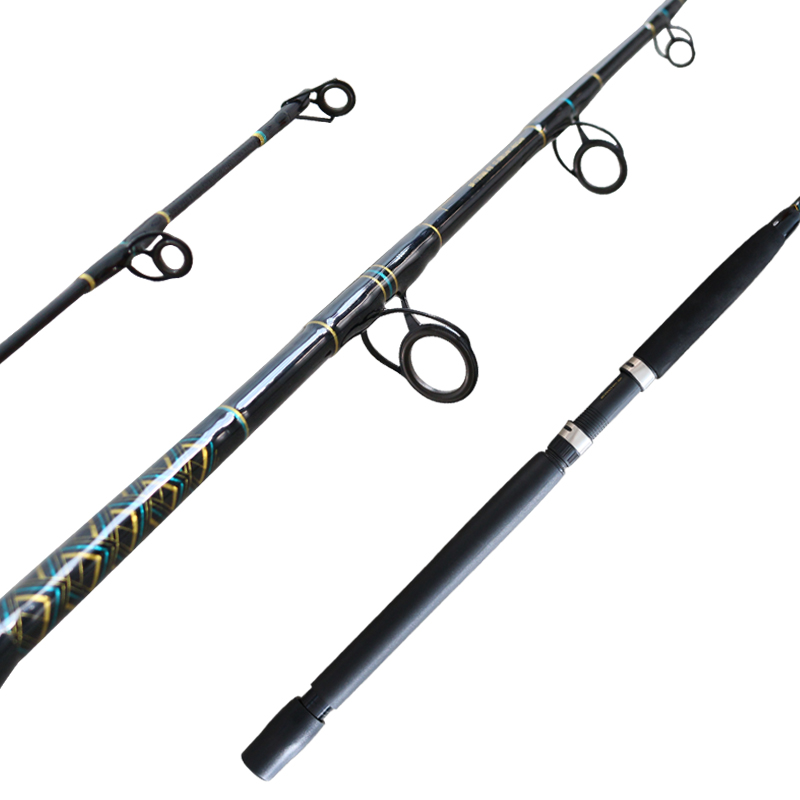
Power defines the exact amount of pressure required to flex the rod. Anglers often refer to this characteristic as the "backbone." It determines the lifting strength available to you during a fight. A proper Fishing Rod must have the right backbone to match your intended targets.
We divide power into several distinct solution categories. Each category solves a specific presentation problem on the water.
Always verify the manufacturer’s printed line test and lure weight ratings before making a purchase. Exceeding these printed limits immediately voids warranties. Worse, it risks catastrophic failure mid-cast. The table below illustrates the standard power spectrum and typical rating capacities.
| Power Rating | Typical Lure Weight Range | Typical Line Test Range | Primary Application Focus |
|---|---|---|---|
| Ultra-Light (UL) | 1/64 oz – 1/16 oz | 2 lb – 6 lb | Panfish, Trout, Micro-finesse |
| Medium (M) | 1/4 oz – 5/8 oz | 8 lb – 14 lb | Crankbaits, Jerkbaits, Topwater |
| Medium-Heavy (MH) | 3/8 oz – 1 oz | 12 lb – 20 lb | Jigs, Spinnerbaits, Texas Rigs |
| Extra-Heavy (XH) | 1 oz – 4+ oz | 25 lb – 80 lb+ | Large Swimbaits, Heavy Flipping |
Action describes the specific point along the blank where bending begins under load. It also dictates the speed at which the tip returns to its straight, neutral position after you release pressure. Action controls the dynamic behavior of the entire system.
We categorize action across a spectrum of performance dimensions. Each speed offers unique advantages.
You must balance inherent trade-offs when selecting action speeds. Fast actions yield superior casting accuracy but heavily punish poor drag settings. Slower actions maximize casting distance and offer extreme forgiveness. However, they sacrifice hook-setting immediacy. To help visualize these trade-offs, review the comparison chart below.
| Action Type | Bend Percentage | Casting Accuracy | Shock Absorption | Optimal Hook Type |
|---|---|---|---|---|
| Extra-Fast | Top 15-20% | Exceptional | Very Low | Thick Single Hooks |
| Fast | Top 25-30% | High | Low | Standard Single Hooks |
| Moderate | Top 40-50% | Average | High | Treble Hooks |
| Slow | Top 60-80% | Low | Exceptional | Micro/Wire Hooks |
Theory only matters if you apply it correctly on the water. You must map rod specifications directly to your chosen techniques. Below is a structured guide to pairing specs perfectly.
Optimal Spec: Medium-Heavy to Heavy Power + Fast to Extra-Fast Action.
Logic: Bottom contact fishing requires extremely high sensitivity. You must feel subtle bottom changes and light bites. A rigid backbone drives thick single hooks securely through soft plastics and into a hard jaw. The fast action transfers your strike energy instantly.
Optimal Spec: Medium Power + Moderate Action.
Logic: Fast-moving baits demand forgiveness. A softer action delays your reaction time just enough to let the fish fully inhale the bait. During the fight, the deep flex prevents small treble hooks from tearing out of the fish's soft mouth tissue.
Optimal Spec: Medium-Heavy Power + Fast Action.
Logic: Many anglers need a highly versatile setup to cover water efficiently. A well-balanced casting fishing rod in MH/Fast can reasonably handle 70% of standard freshwater predator techniques. It acts as the highest-ROI starting point for building a comprehensive tackle arsenal.
Even experienced anglers sometimes misjudge rod specifications. Several implementation risks can ruin an otherwise solid setup. You must proactively avoid these common pitfalls.
Risk 1: Ignoring the Line Material Variable
Line choice drastically alters rod performance. Braided line has zero stretch. Fluorocarbon offers low stretch. Monofilament features high stretch. Pairing zero-stretch braid directly to an Extra-Fast rod creates a high-risk system. It offers zero forgiveness. Fish frequently rip free during sudden runs near the boat.
Risk 2: Overpowering the Lure
Lure weight must align precisely with the blank rating. Throwing a tiny 1/8 oz lure on a Heavy power rod yields disastrous results. The heavy blank simply will not "load" during the backcast. This failure to load destroys casting distance and causes severe bird's nests on baitcasting reels.
Risk 3: Confusing Power with Durability
Many assume a heavier rating means unbreakable gear. This is false. A Heavy rod is not inherently harder to break than a Medium rod if you "high-stick" it. High-sticking means lifting the rod past a 90-degree angle relative to the water. Action dictates stress distribution. High-sticking a fast-action rod places all lifting stress squarely on the fragile tip, causing immediate failure.
Rod selection should never rely on pure aesthetics or generalized online reviews. True success comes from strict alignment between physical properties and application. You must match the rod's power and action to your specific lures, line type, and target environment. Ignoring these rules invites failure and frustration on the water.
Take time to audit your primary tackle boxes today. Categorize your most frequently used lure weights and hook types. Use this concrete data to finalize your rod specifications. Building a purpose-driven arsenal guarantees better casting accuracy, superior hooksets, and ultimately, more fish in the boat.
A: While a Medium-Heavy/Fast setup provides excellent versatility, using one rod for everything severely limits efficiency. You will struggle to cast ultra-light lures and likely tear hooks out on treble-hook baits. Frame a single-rod approach as a "jack of all trades, master of none" compromise.
A: If the lure is too light, the rod simply won't load for the cast. If the lure is too heavy, you will experience sloppy casts and reduced accuracy. Consistently throwing overweight lures creates a high risk of snapping the blank during aggressive backcasts.
A: Yes. A longer rod generally casts further and takes up much more line on a hookset. However, length fundamentally changes the leverage dynamic against the angler. A 7'6" Heavy rod will feel significantly different under heavy load compared to a 6'6" Heavy rod.
