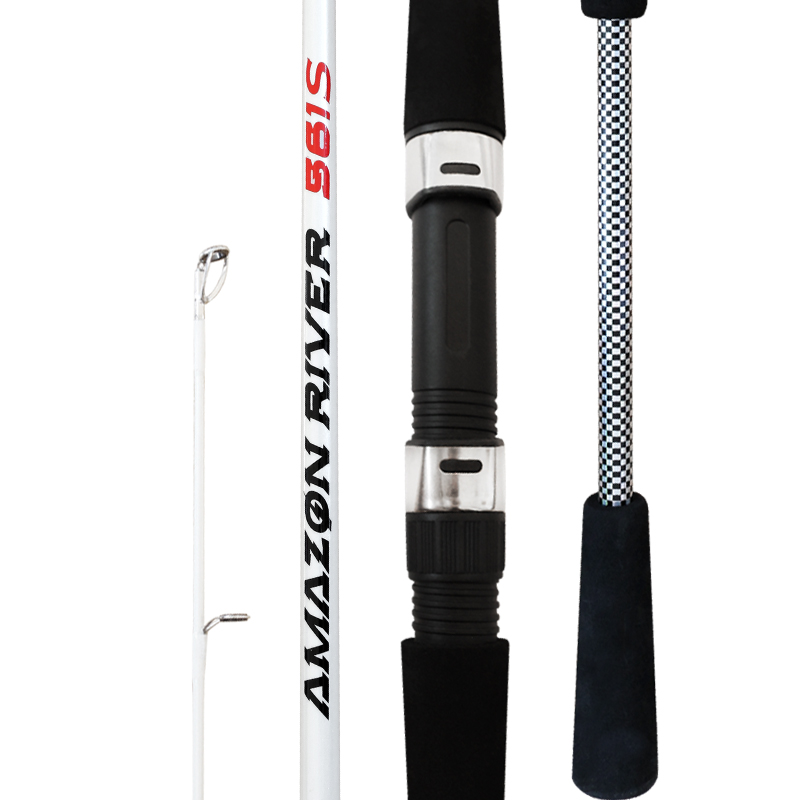
Bite detection relies entirely on mechanical energy transfer, not angler intuition. When a fish strikes a lure, kinetic energy must travel from the hook, through the line, down the blank, and into your hand. If any component absorbs that vibration, you miss the fish. Many anglers struggle to detect subtle strikes because they buy tackle based on vague marketing claims rather than evaluating structural design. A heavy fiberglass blank paired with thick foam grips acts as a shock absorber, masking light bites regardless of your skill level. Recognizing these mechanical limitations helps you build a highly efficient tackle system.
To select a Fishing Rod that genuinely improves strike detection, you must evaluate blank materials, taper actions, component weight, and tip design. You also need to understand how these elements interact with specific line types and environmental variables. Matching the physical properties of your gear to your target species and water conditions ensures you feel or see every strike before the fish spits the hook.
Key Takeaways
Material Stiffness Dictates Tactile Feedback: A high-modulus carbon fiber fishing rod transmits vibration faster and more efficiently than fiberglass, making it the superior choice for feeling subtle, deep-water bites.
Action Determines Visual Cues: Fast-action rods provide immediate tactile feedback, while soft-tipped or moderate-action rods excel at visual bite detection (such as watching the rod tip "relax" on an upward-swimming fish).
Component Dampening is a Liability: Heavy guides, thick epoxy, and dense handle materials absorb kinetic energy, actively reducing a rod's sensitivity.
Visual Enhancements Prevent Missed Strikes: High-contrast tip colors and specialized wraps are critical for visual tracking when tactile sensation is limited by wind, slack line, or distance.
System Synergy is Required: Even the most sensitive lightweight spinning rod is rendered ineffective if paired with high-stretch monofilament line or mismatched lure weights.
The Physics of Bite Detection in a Fishing Rod
Problem Framing (Success Criteria)
A successfully detected bite means your gear translated a minimal underwater disturbance into perceptible tactile or visual feedback. We measure this success by the speed and clarity of the energy transfer. When a fish inhales a bait and spits it out in a fraction of a second, your gear must relay that information instantly. A poorly designed blank absorbs this kinetic energy. It acts as a shock absorber rather than a conduit. You need a system that amplifies underwater contact. If you drag a jig across a gravel bed, you should feel the difference between a rock and a soft mud bottom. If you cannot feel that transition, your setup is failing the basic success criteria for bite detection.
Tactile vs. Visual Strike Indicators
Tactile detection relies on high-frequency vibrations traveling up the blank. When a lure hits gravel or a fish strikes a jig, kinetic energy sends shockwaves through the line and down the carbon fibers. This feedback is mandatory for bottom-contact techniques where you maintain a taut line and rely entirely on feeling the strike through the reel seat. You feel a distinct "tick" or a heavy, spongy weight.
Visual detection depends on the physical deflection or sudden straightening of the tip. You need this for suspended baits, drift fishing, or slack-line scenarios where tactile feedback is impossible. In these situations, you watch the tip for unnatural twitches, heavy loading, or a sudden loss of tension. Visual indicators often register strikes seconds before you feel anything in the handle.
| Detection Type | Primary Indicator | Best Application | Required Gear Feature |
| Tactile | Vibration in the handle | Jigs, Texas rigs, bottom bouncing | High-modulus carbon, exposed reel seat |
| Visual | Tip deflection or relaxation | Drop-shot, live bait, slack line | Soft tip, high-contrast thread wraps |
The Mechanics of the "Upward" (Slack-Line) Bite
An upward bite occurs when a fish takes the bait and swims toward the surface or directly at you. This movement relieves tension on the line. If the tip is pre-loaded by the weight of the lure, this sudden loss of tension causes it to "relax" or spring upward. Tip recovery speed and flexibility dictate your ability to register this negative load change. A stiff, heavy tip will not show this subtle relaxation. You will miss the fish entirely because the line simply goes slack without any visual warning. Soft tips act like a spring scale, constantly measuring the weight of the lure. When that weight disappears, the spring resets, signaling a strike.
The Mechanics of Energy Transfer
Kinetic energy moves through a specific pathway. Understanding this sequence helps you identify where you lose sensitivity.
The fish strikes the lure, generating kinetic energy.
The energy travels up the fishing line.
The line transfers the vibration to the guide rings.
The guide frames push the vibration into the blank.
The blank carries the shockwave down to the reel seat and handle.
Your hand receives the tactile feedback.
Energy loss occurs at connection points and through soft materials. Thick epoxy coatings over guide wraps, heavy stainless steel guide frames, and spongy handle materials all dampen vibration. To maximize sensitivity, manufacturers eliminate unnecessary mass and utilize rigid materials that conduct energy rather than absorb it.
Blank Material and Construction: The Foundation of Sensitivity
High-Modulus Carbon Fiber Fishing Rods
The stiffness-to-weight ratio of carbon fiber makes it the premier material for strike detection. A carbon fiber fishing rod utilizes high-modulus graphite. Higher modulus means the material is exceptionally stiff. This stiffness increases the speed of vibration transmission. When a fish taps a lure, the rigid carbon fibers carry that vibration to the handle with minimal energy loss. Advanced manufacturing processes also reduce the amount of resin used to bind the carbon fibers. Resin dampens vibration. Lower resin content directly correlates to higher tactile sensitivity. Blanks rated at 30-ton or 40-ton carbon offer significantly better feedback than standard 24-ton blanks.
Fiberglass and Composite Blends
Fiberglass offers superior durability and a deep, parabolic flex. However, it severely dampens tactile vibration. The material is inherently softer and heavier than carbon fiber. It absorbs the shock of a strike rather than transmitting it. Composite blends mix fiberglass and carbon fiber to create a hybrid solution. These work well for moving baits like crankbaits, where visual detection and a delayed hookset take priority over raw tactile sensitivity. The softer composite tip allows the fish to engulf the lure without feeling immediate resistance. The carbon backbone then provides the power to drive the hook home.
Solid Carbon vs. Tubular Carbon Blank Tips
Tubular carbon tips are hollow. This construction makes them stiffer and lighter. They excel at transmitting high-frequency vibrations rapidly, providing exceptional tactile feedback for bottom-bouncing techniques. Conversely, solid carbon tips are highly flexible. They serve as superb visual indicators for soft bites. A solid tip bends easily under minimal pressure while retaining the structural backbone of the lower section. Manufacturers frequently utilize solid tips in finesse applications where visual strike detection is paramount, such as ice fishing or micro-jigging.
Rod Action and Power: Balancing Deflection and Backbone
Fast and Extra-Fast Actions
A fast or extra-fast action features a stiffer lower blank with a flexible tip section that accounts for only the top 20 to 30 percent of the total length. This design concentrates vibration transfer directly to your hand. Because the lower section does not bend during a light strike, the kinetic energy travels straight down the blank rather than getting absorbed by a deep bend. These actions suit jigging, Texas rigs, and single-hook applications requiring immediate tactile feedback and rapid hooksets. You feel the bite instantly and have the backbone to drive a thick hook through a bony jaw.
Soft-Tipped Rods and Moderate Actions
Soft-tipped and moderate actions bend further down the blank, often into the middle third. The mechanics of visual bite detection rely heavily on these softer tips, which act similarly to spring bobbers. A softer tip allows a fish to inhale the bait with less initial resistance. This provides you time to visually register the strike. You watch the tip pull down or relax before the fish feels the backbone and spits the hook. This action proves highly effective for walleye, panfish, and techniques utilizing treble hooks where you want the fish to fully commit before applying pressure.
Matching Power to Target Species and Bite Strength
Using a heavy-power blank for light-biting fish creates the "broomstick effect." The gear is so stiff that it eliminates both visual tip deflection and tactile vibration. A one-pound panfish cannot generate enough force to bend a heavy-power bass blank. Power must match the target species. Lighter action ratings preserve sensitivity for subtle freshwater species. They allow the blank to load properly and transmit the minimal energy generated by a small fish. If you fish for crappie, you need an ultra-light or light power rating to see and feel the strikes.
| Power Rating | Target Species | Lure Weight Range | Bite Detection Focus |
| Ultra-Light | Panfish, Trout | 1/64 oz - 1/8 oz | Visual deflection, soft takes |
| Medium | Walleye, Bass | 1/4 oz - 5/8 oz | Balanced visual and tactile |
| Heavy | Pike, Musky, Heavy Cover Bass | 3/8 oz - 1.5 oz | Strictly tactile, heavy vibration |
Component Engineering: Guides, Handles, and Reel Seats
Guide Weight, Placement, and Tip Guide Design
Heavy guides and excessive thread wraps act as shock absorbers. They actively dampen vibration. Reducing weight at the tip accelerates recovery and improves sensitivity. Micro-guides and titanium frames minimize this mass. By keeping the tip section light, the blank transmits vibrations more clearly. Specialized tip-top guides designed to prevent line wrap-around ensure that subtle movements are not masked by tangled line. Proper guide spacing also keeps the line off the blank during a deep bend, ensuring friction does not interrupt the energy transfer.
Handle Materials and Vibration Transmission
Handle materials play a massive role in how well you feel a strike. Harder, denser materials transmit vibration better than soft, spongy materials. Thick EVA foam absorbs shock. Premium cork offers excellent tactile feedback while remaining lightweight. Carbon fiber grips provide the maximum energy transfer possible. They are rigid and hollow, amplifying the vibration directly into your palm. If you prioritize tactile sensitivity above all else, avoid thick foam grips.
Exposed Blank Reel Seats
Reel seats that allow direct finger-to-blank contact provide a significant structural advantage. By bypassing the handle material entirely, your fingers rest directly on the carbon fiber. This setup offers maximum tactile detection. You feel the slightest tick or change in bottom composition without relying on the vibration traveling through cork or foam. Skeletonized reel seats take this a step further by removing excess plastic and metal, reducing overall weight and increasing the surface area of exposed carbon.
Visual Enhancements at the Tip
Visual contrast allows your eye to detect micro-deflections before the vibration travels to your hand. High-contrast tip wraps utilizing neon orange or chartreuse threads are highly effective. Reflective paint bands help during low-light conditions and night fishing. These visual enhancements make it significantly easier to track the tip against dark water or complex backgrounds. They prevent missed strikes when wind or slack line compromises your tactile sensation.
Evaluating Specific Rod Types for Bite Detection
The Lightweight Spinning Rod
Finesse applications like drop-shotting and micro-jigging require specific design parameters. A lightweight spinning rod minimizes overall mass, which directly correlates to sustained focus. Reducing overall weight prevents fatigue. A fatigued angler is less likely to notice subtle changes in line tension or minor tactile vibrations. By utilizing thin-walled carbon blanks and skeletonized reel seats, these setups maintain the high sensitivity required for detecting the lightest bites over long sessions. You can hold the setup for eight hours without losing the physical sharpness needed to react to a split-second strike.
The Freshwater Spinning Rod
A dedicated freshwater spinning rod must balance the need for visual tip movement with tactile feedback. When targeting panfish or walleye, visual detection is often primary. When targeting bass with jigs, tactile feedback takes precedence. For multi-rod stationary setups, such as bank fishing or trolling, the gear must interact effectively with rod holders. The blank needs a soft enough tip to show bites visually while resting in the holder, yet enough backbone to hook the fish once you retrieve it. Length also plays a role here; longer blanks offer more visual sweep when a fish takes the bait.
Implementation Risks, System Variables, and Accessories
The Impact of Fishing Line (The Critical Variable)
Pairing a highly sensitive blank with high-stretch monofilament negates the design advantages. Monofilament stretches under tension. It absorbs the kinetic energy of a strike before it ever reaches the guides. To maximize the transfer of kinetic energy, utilize low-stretch braided line or fluorocarbon. Braid offers near-zero stretch, transmitting vibrations instantly from the lure to the guides. Fluorocarbon sinks and provides excellent slack-line sensitivity.
Braided Line: Zero stretch, maximum tactile feedback, floats.
Fluorocarbon: Low stretch, excellent slack-line sensitivity, sinks.
Monofilament: High stretch, dampens vibration, best for moving baits where delayed hooksets are needed.
External and Mechanical Bite Indicators
Clipping external indicators like bite bells, spring bobbers, or electronic LED alarms directly to the tip introduces mechanical trade-offs. These heavy accessories dampen the natural vibration and alter deflection properties. When choosing gear for use with physical indicators, select a tip diameter and guide spacing that can support the extra weight without sacrificing structural integrity. A tip that is too soft will sag unnaturally under the weight of a bell, rendering it useless for detecting upward bites.
Environmental Interference
Wind, waves, and heavy current create false visual and tactile signals. A strong crosswind bows the line and constantly pulls at the tip, masking the subtle tap of a fish. In adverse conditions, you must adjust length and tip stiffness. Shorter blanks are less affected by wind. Slightly stiffer tips prevent the current from overloading the carbon, allowing you to differentiate between environmental noise and a genuine strike. Keeping your tip close to the water surface also reduces wind interference on the line.
Durability Trade-offs (The Cost of Sensitivity)
High-modulus carbon fiber is inherently more fragile than lower-modulus graphite or fiberglass. The stiffness that provides incredible sensitivity also makes the material brittle under sudden, heavy impacts or improper bending angles. High-sticking a 40-ton carbon blank will shatter it. You must balance the need for extreme bite detection against the risk of breakage in rugged environments. If you fish in heavy cover or target highly aggressive species, a slight reduction in modulus ensures your gear survives the trip.
Conclusion
Audit your current line selection and replace high-stretch monofilament with braided line or fluorocarbon to instantly upgrade your tactile sensitivity.
Inspect your handle and reel seat; if you primarily fish bottom-contact baits, switch to a setup with an exposed carbon reel seat for direct finger contact.
Apply high-visibility tape or thread wraps to the top three guides of your finesse setups to improve visual strike detection in low-light conditions.
Match your power rating strictly to your lure weight to avoid the "broomstick effect" and ensure the tip loads properly on light strikes.
FAQ
Q: Does a lighter fishing rod improve bite detection?
A: Yes. Lighter blanks feature less material mass and lower resin content. This allows kinetic energy to travel through the carbon with less dampening. A lighter setup also reduces hand and wrist fatigue, allowing you to maintain better focus and physical sensitivity over long sessions on the water.
Q: How does rod action affect feeling a bite?
A: Action dictates where the blank bends. Fast and extra-fast actions bend only near the tip, transferring vibration quickly down the stiff lower section to your hand. Slower actions bend deeper, absorbing more kinetic energy and reducing tactile feedback, though they improve visual bite detection.
Q: What is the difference between visual and tactile bite detection?
A: Tactile detection is feeling the vibration or "thump" of a strike through the handle. Visual detection is watching the tip deflect, twitch, or suddenly straighten out. Tactile works best for tight-line, bottom-contact fishing. Visual is mandatory for slack-line or suspended bait presentations.
Q: Why do I miss bites when using a heavy-power fishing rod?
A: A heavy-power blank requires significant force to bend. If a small or light-biting fish strikes, it does not generate enough kinetic energy to flex the stiff carbon or send noticeable vibrations through the thick material. This completely masks the strike from your hands and eyes.
Q: Do rod guides and handle materials affect sensitivity?
A: Yes. Heavy guides and thick thread wraps add mass that absorbs vibration. Soft handle materials like thick EVA foam dampen the kinetic energy before it reaches your hand. Lightweight titanium guides and hard materials like cork or carbon fiber grips transmit vibrations much more efficiently.
Q: How does fishing line type change a rod's bite detection capabilities?
A: High-stretch lines like monofilament act like rubber bands, absorbing the shock of a bite before it reaches the guides. Low-stretch lines like braided line or fluorocarbon transfer energy directly and instantly, maximizing the built-in sensitivity of the carbon blank.
Q: What is an "upward bite" and how do I select a rod tip to detect it?
A: An upward bite happens when a fish takes the bait and swims up, removing tension from the line. To detect this, you need a soft, flexible tip pre-loaded by the lure's weight. When the fish lifts the bait, the tip visually "relaxes" or straightens out.

